Lew Ayres/My Dad (IF You Know? Book Excerpt)
Talk about a doppelgänger.
Lew Ayres.
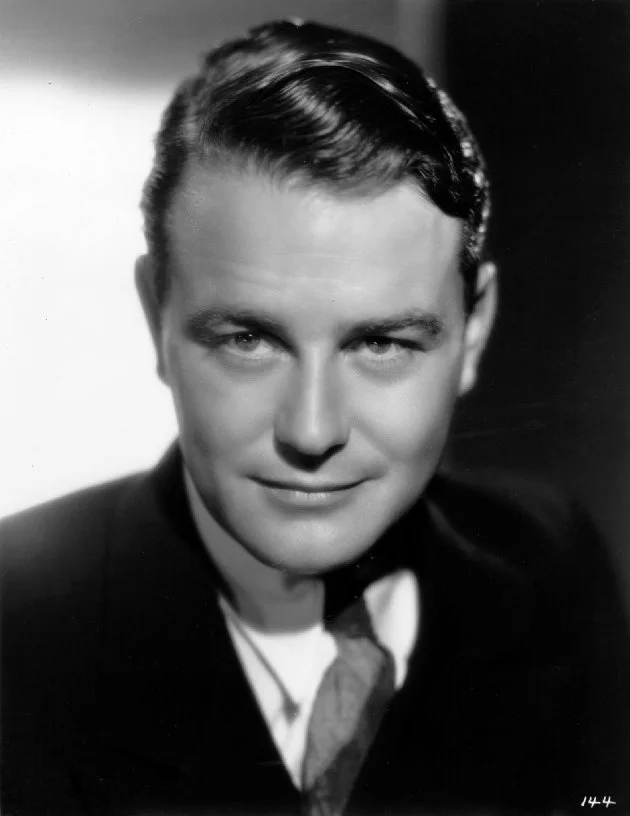
An actor, best known as Dr. Kildare in nine films.
The spitting image of my dad.
I was NOT the doppelgänger of my dad. Yet, I discovered, later in my life, there was more to the story than I had believed.
More mystery.
Yes, my dad looked like Lew Ayres.
But what ELSE?
(IF You Know? Book Excerpt)
…Resemblance?
One last thing about “appearances:” my dad’s physical characteristics.
Again, my small rural hometown was bursting with fair-complected people.
Blue eyes. Blonde hair.
If anything were undeniably true about my dad’s Ashkenazi roots, his physicality would serve as excellent camouflage.
He had pale white skin, blue eyes, and strawberry blonde, wavy hair.
At first glance, I did not “take after him.”
I had darker features.
Perhaps, my skin color was lighter than my mother’s darker skin tone.
How much was I blanched out, being the genetic result of these two people?
How much was my cancer diagnosis attributed to his DNA?
I don’t look like him.
But I see him.
I see something more, something else, going on.
Assimilating. Hiding. Being ashamed. Secrecy.
Were these the features of my male parent?
Did he camp in that belief system, terrified, yet believing, the entire time, that he needed to deny who he was?
Did he know who he was?
Or did the shame just imprison him?
An easy to see, white (Lutheran) man, living on the farm?
“For there is nothing covered, that shall not be revealed; neither hid, that shall not be known.”
Luke 12:2
If You Know?: Cruse, Sheryle: 9798272042019: Amazon.com: Books
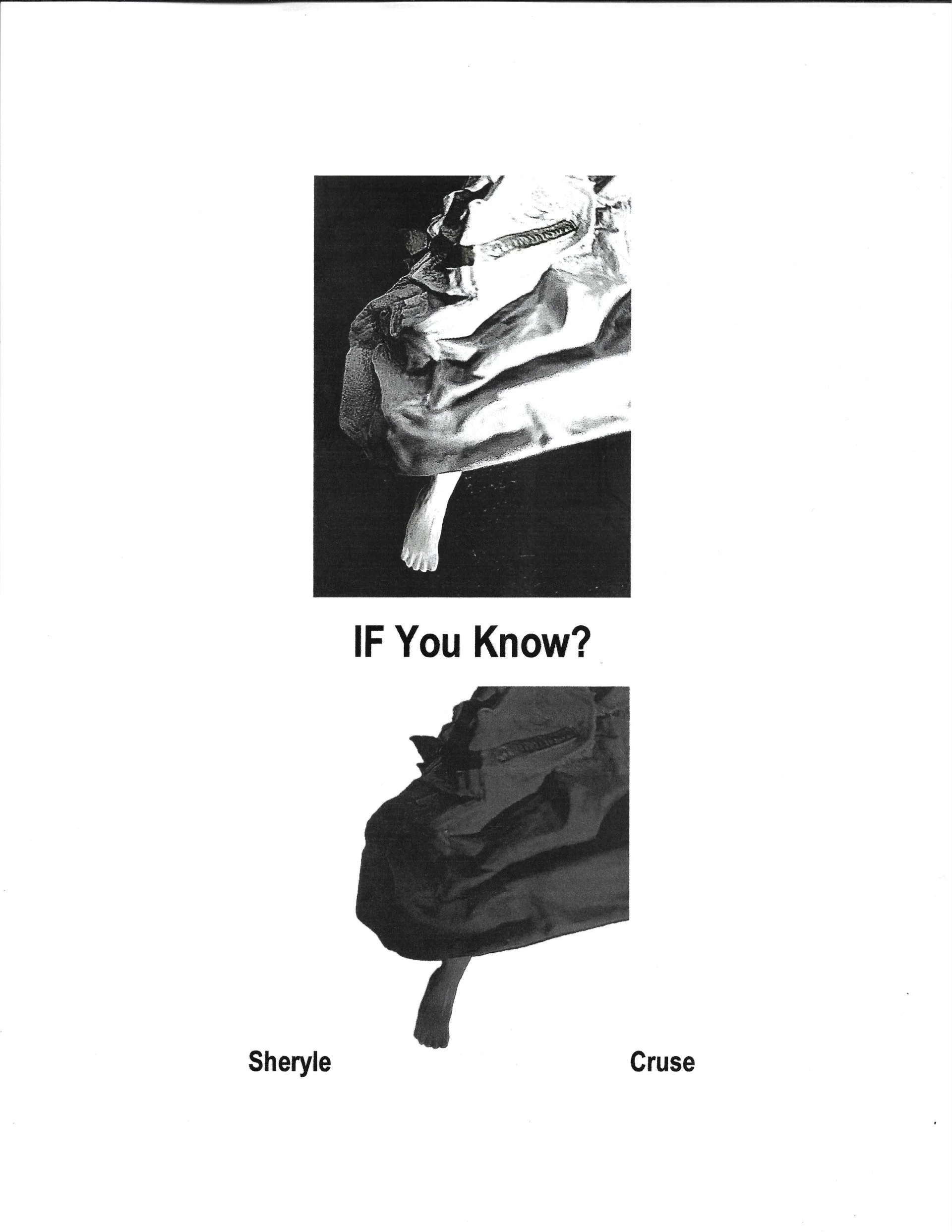
Copyright © 2025 by Sheryle Cruse
CA 27.29 (Cancerventures Book Excerpt)
“My times are in Your Hands..”
Psalm 31:15
Most of us don’t know about something in life until we need to know about it. The CA 27.29 Blood Test was one such thing for me.
Cancer.
Need to know now.
CA 27.29 (Cancerventures Book Excerpt)…
… In May of 2018, I had two nerve-wracking cancer appointments scheduled for the same morning. My CA 27.29 blood test was slated for 7:30, followed by my 8:00 appointment with the new surgeon taking over from newly retired Dr. M.
So, let’s witness the fun.
Just Ask:
First, a tip about the lab, the place where all dreaded blood draws are done.
In a conversation with Joy a couple of weeks before my appointment, I asked if it was possible to have a certain nurse draw my blood for this scary CA 27.29 test.
Yes, it is! The art of the ask!
So, I requested that a note be made in my chart, summoning my angel nurse of butterfly needles to do those early 7:30 a.m. honors.
This angel gets it on the first stick. A 25- gauge butterfly needle (because of my teeny, squirmy veins), administered to the top of my left hand, in the vein right above my wrist bone, and voilà! In and out, little pain, no pin cushion.
But I initially thought this request of mine was too fussy, even by my standards.
(In a British accent) “Yes, Alfred, please bring me my personal bloodwork nurse. Have her meet me on the terrace.”
But no, clinics do comply with such a request.
The lesson here: when, in doubt, ask. Just ask. You never know what is possible. Maybe you could get your preferred individual instead of being at the mercy of a potential hatchet person. Just ask.
The Bloody Waiting Before the Bloody Waiting:
Anyway, the days before my blood test were filled with bargain-y attempts at mental preparation and readying myself for the bad news to visit my life.
I envisioned cancer spreading. Just how seemed to be the bigger question mark. Cancer could go, seemingly, anywhere; it was the jet setter of disease. I had some issues with my eyesight in the past. Would it land there? I had a chronic muscular-skeletal back problem; would it show up there? What about my liver? My lungs? My ovaries? My blood? My bones?
And, of course, let’s not forget my scar site. Would it just camp out there, building bigger cancer campfires, roasting marshmallows on the remaining days of my life?
Would tumors grow, making my chest even more uncomfortable? I was uncomfortable already. The possibility of Lymphedema was one thing. But what if the discomfort in my chest was, indeed, this full-blown cancer campfire?
I teetered back and forth between trying not to lurk in that spot for too long.
But, overall, my predominant thought was this; there was little I could do to change things now. Again, my favorite expression of resignation, “It is what it is.”
It’s pointless to beat myself up for too much of or not enough of fill in the blank; it still wouldn’t change anything. I have tried to eat well, take care of myself and exercise. I’ve tried to deal with my complicated baggage, personal and family traumas, emotions, and spiritual idiosyncrasies. I’ve tried to overcome; I’ve tried to change. I’m still trying.
But, since I have lived enough of my life in a troubling mind-set of “It’s not good enough,” I knew there was no such perfection possible.
None of us can balance life perfectly, for all the talk of moderation and healthy living. That should be an uplifting thought, not one which sends a person nosediving into oblivion. Human beings are vulnerable. Period. Eventually, something, inevitably, breaks down or gets through the protective barrier. If not disease, then an accident, a catastrophe, old age. But something comes.
We’re not meant to last forever in this temporary shell.
So, I took an odd comfort in knowing I was already experiencing my test results, long before blood was drawn, and the CA 27.29 specimen was taken to the lab. I just had yet to hear what those results were.
And hey, I’d already survived “D- Day,” my cancer diagnosis, itself. Some would say that was the worst of it. I don’t know. Part of my dread involved- and still involves- thinking about how much worse things were going to get.
So, the days leading up to CA 27.29 were spent with me praying (come on, you’d pray too), writing, reading, doing laundry, talking to friends and family, running errands. It was the stuff of life. And that struck me how incognito I could be in my stuff of life. There I was, getting groceries, putting clothes into the dryer, seeing movies with Russell, typing on my laptop and no one was the wiser. Life kept going on, even if I felt stuck in cancer.
Still, the mischief maker in me kept wanting to scream out, in the middle of an aisle five or a public space somewhere, “Attention: I have cancer and could possibly be dead soon.”
But I haven’t… yet.
I say that because, who knows? Maybe one day I’ll be in a theater or a Walmart or a Target and just let it rip. Crazier things have happened. People have yodeled and have gotten marriage proposals in these places. I’m sure my outburst would fit right in.
About Butterflies…
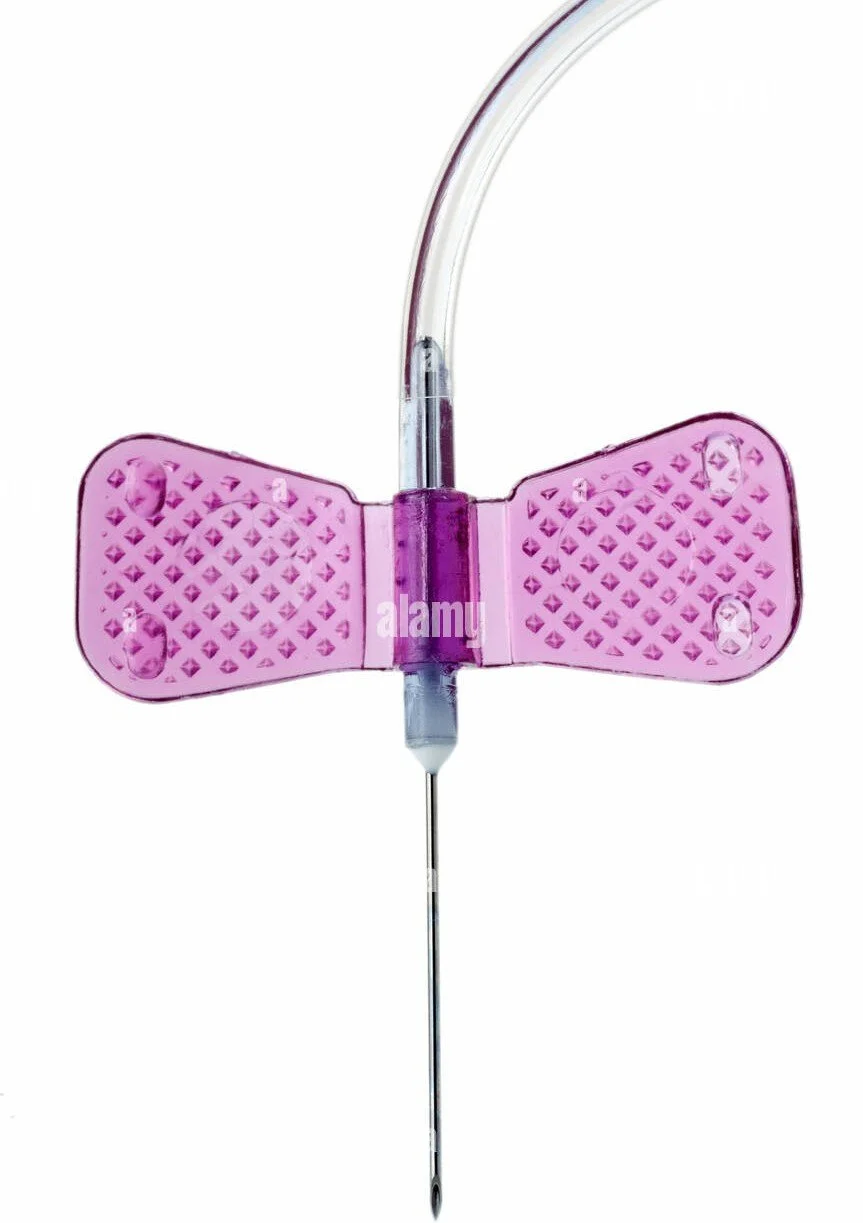
If you have issues with needles and/or veins like I do, investigate the butterfly needle option. I believe they come in sizes, ranging from 18 to 27- gauge. But the most common appear to be the 21, 23 and 25. I love a 25-gauge needle like nobody’s business.
So, ask for them. Because they’re used for pediatric patients and more challenging patients (like yours truly), any good clinic or hospital should have them on hand. I haven’t had to order them for myself yet, but, I suppose, if it came to it, I could, through the internet, obtain and supply my own stash for my bloodletting needs.
“Don’t worry, I’ve brought my own!” I whip them out triumphantly whenever I arrive at the lab.
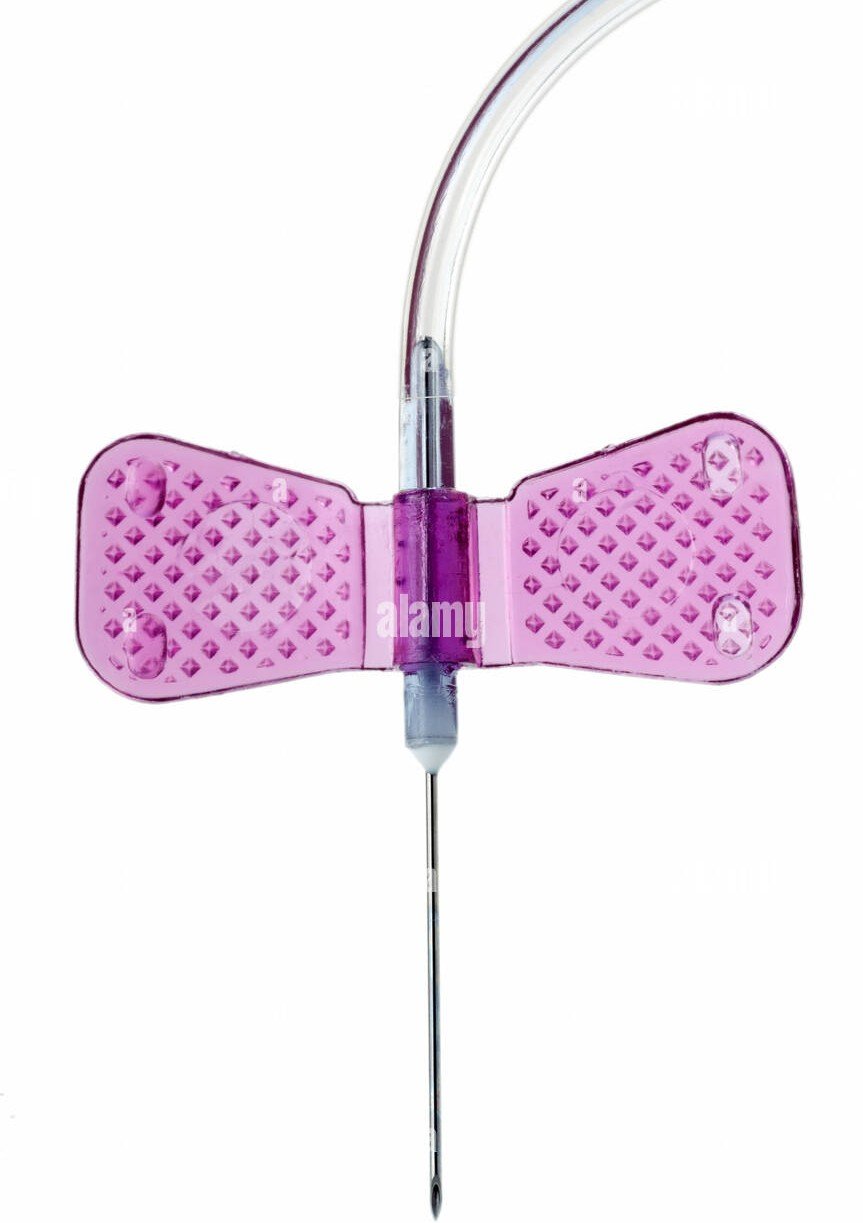
Everyone at the clinic would probably talk about me during their lunch hour. They might even name me “Butterfly Lady.” Endearing.
Drawing Out the Bloody Truth:
So, the morning of the test arrived. I prepared myself as much as I could. I prayed (you know, the begging kind of prayer). I took my notebook with me to record how things went, to later transfer it into this book here. And, of course, I brought my travel cup filled with my woozy juice to prevent lightheadedness directly after I’m stabbed.
I attempted to stay present, in the moment (I am so bad at that, still). I had my six- month checkup with a new surgeon I’d be meeting for the first time, promptly at eight a.m., directly following this 7:30 blood draw. I was trying not to get riled up.
Trying.
(Hubby) came with me for both appointments. We checked in with the Cancer Care downstairs. They wanted me to get this blood drawn in that lab there. I let the receptionist know my angel nurse was my preferred blood drawing person, if possible. I sat in the waiting area and read to pass the nervous time.
Fifteen minutes later, “Sheryle?”
I grabbed my woozy juice and greeted her, expressing my relief she was here, as requested. We strolled into the small blood draw station.
She asked me, “Do you have a problem sitting? I know you prefer to lie down.”
There was one regular light blue chair and one recliner-looking option I’ve used in the past. She struggled a bit to pull out the recliner.
“You know, let’s just go back to a room to have you lie down.”
She took her keys and opened a drawer, getting her supply tray and we walked back into the inner sanctum. We entered an exam room with a hospital bed in it.
I settled into it, reminding her of my fussy blood draw ways, telling her all about the winning combination of her expertise and a 25-gauge butterfly needle to the top of my left hand. She grabbed the butterfly with its tubing, an alcohol packet, and a cotton ball.
“Do you mind if I go after this vein instead?” She pointed to a bifurcated squiggle from my original wrist bone vein. It looked like a green river tributary or a diving rod.
“Whatever gets it on the first stick.”
“Do you have a busy day? What are you going to do after this?”
I closed my eyes and looked away, anticipating what’s to come. A little stick follows.
“Writing. Just so you know, I’m writing about you. When you get a cancer diagnosis, you’re alert to the angels you come across.”
“Awwwh.” She seems touched. I tried to remain still as blood is flowing, “So are you here all day?”
“No, just an appointment with my surgeon to check my scar site.”
“Are you okay?” She continued collecting the sample.
“Yes, I’m fine.” My eyes are still shut.
She took, I believe, two vials. And within a minute, she put pressure on the top of my hand with the cotton ball. She moved over to the counter to seal and label the vials.
“Thanks so much. You are the best nurse I’ve experienced with this. Usually, I encounter someone who gets it after the second or third try.”
(I cannot stress enough how much I love nurses who can get a blood draw on the first stick. To you angels of mercy who make this magic happen, I love you).
“Do you want tape, or do you want to be wrapped?”
“Whatever’s easier.”
“Kids’ Band Aids okay?”
“Sure.”
She made her way back over to me with a teal-colored Band Aid. It has yellow Tweety
Bird heads on it, making different facial expressions.

“Tweety! I love Tweety!”
(I really have loved Tweety since I was a child. Again, cute thing).
“Yeah, most kids don’t even know who he is. They just see a bird.”
(Kids these days).
I sat up and drank my woozy juice.
“Are you okay?”
“Yep, I’m fine. This is just precautionary.”
We gathered our respective things, and she walked me to the swinging doors, back into the waiting area.
“Have a great day.”
“Have a great day. Thanks so much.”
(Hubby) and I went upstairs to wait for my second appointment.
Ask for Band Aids.
From this blood draw episode, I learned another helpful tidbit. I ask for Band Aids whenever possible. The tape nurses wind around the site is okay, but it can get in the way and catch on my clothes. A simple Band Aid, however, is the no muss, no fuss option which just sits there, being a Band Aid…
… The Bloody Results:
That Tuesday came and went; no news arrived. I was anxious to hear, on the phone, about my test results. I wondered if, indeed, no news meant good news.
That same day, (Hubby) also dropped Gracie at our vet for an all-day assessment of her health problems. This was one of the loneliest days of my life. Waiting for important news, one way or another. Beyond my own test results, I was filled with sadness for Gracie, my little Freckle Nose.
The following morning, I called my oncologist’s office and again, requested my test results be mailed to me in hard copy form.
When I heard back from the nurse later that day, she had good news for me. My results were normal. I was told I was 21. Normal. Normal.
The nurse informed me what was next was to schedule a three-month follow-up, repeating the CA 27.29, every three months, in fact. I had now graduated into a “Survivorship Plan,” which meant monitoring. I was thankful. I tried to celebrate. But Gracie’s health issues made that celebration difficult. I waited to hear from clinic scheduling about booking that next appointment.
CA 27.29 Explained:
So, I was now christened with the distinction of “Survivorship.” The CA 27.29 blood test and its results were a part of that classification.
Because I could not attend my appointment with my oncologist to discuss my test results, I asked them to be mailed to me instead. A few days after this request, I received an envelope from the clinic. My test results consisted of two pages of readings. I could not make sense of it. The only thing I could decipher was a line clearly marked, “CA 27.29,” next to my number: 21. Beyond that, I was baffled.
Therefore, I called my oncologist’s office and asked for a translation of these levels. In other words, please explain this to me as a person who has never gone to medical school, was not brilliant with science and biology courses and was even more traumatized by anything related to mathematics (because ninth grade Algebra STILL haunts me).
I had a wonderful nurse do just that.
Level with Me:
First thing: CA 27.29 refers to the cancer antigen. The test measures the presence of this antigen in the blood stream.
Indeed, Breast cancer cells shed copies of the CA 27.29 into the bloodstream. The more shedding, the higher the number, and the greater probability there is tumor activity going on.
Every three months, when this blood test is given, the numbers are compared to see if there is any spike, along with any breast symptoms or other body changes, like bone pain. A reading of 0-39 is considered “normal range.”
Sometimes, like with other test results, there can be a false positive, boosting the reading. If, for instance, a test result showed a result in the 40s, with no breast or body change, the oncologist will order a retest in three weeks or a month, versus the three-month checkpoint, just to further study the findings.
Like I said, my level was 21 out of 39. Okay, so, for my first round, I was normal. Great.
But there’s other stuff recorded as well. What about that?
My Blood’s a Chatty Cathy:
Yep, there’s an awful lot my blood has to say. I wasn’t getting vitamin deficiencies checked per se. So, what was this other information about?
Looking at my printed test results, I saw two main headings. The first included levels such as Potassium, Sodium and Creatine. The purpose for studying these results is to determine and monitor my body systems, like my kidney function. The second section of the test results, labelled as Hematology, includes Hemoglobin and Platelet count. This section registers how my immune system and bone marrow are functioning. The optimum is healthy systems working correctly, showing no impairment or infection.
I suppose this becomes even more important if chemotherapy comes into play. That’s where a lot of talk about cell count, Platelets and infection are scrutinized even more so. Perhaps, because I had specifically not chosen to undergo chemotherapy, I would not be as at-risk for some of the infections and complications. Time will tell.
Where to From Here?
With the CA 27.29 blood test, it remains to be seen how things will roll out. I don’t know how long I can hack it. I may decide to stay this course; I may decide to jump ship. I could decide something else, entirely. A woman’s prerogative. But, yes, I am grateful for this first baseline result; I never thought I’d be so happy to be “normal.”
And, I have a deeper love for Tweety Bird, my good luck Band Aid now.
This is an option of a cancer treatment plan. Could/should you choose that option? You need to answer that question for yourself. Yes, there are answers found in the blood.
Therefore, determine how important it is for your blood to speak to you.
These morning appointments taught me about the monitoring element in breast cancer. There’s a significant amount of that being done, no matter who you are and what you choose to do. Keeping tabs. Keeping a close eye on the situation. These are the new norms, if you so choose, in your treatment approach...
Copyright © 2025 by Sheryle Cruse
What do you s-a-a-ay?
“In everything give thanks…”
1 Thessalonians 5:18
When my aunt was a little girl, while visiting family friends, she and my grandparents were given some bread for lunch. She was then immediately prompted to display good manners, from my grandmother, prodding her with the question, “What do you sa-a-a-a-y?”
Everyone waited to see if my aunt would provide the correct response.
So, what was her answer, after an uncomfortable, pregnant pause?
“Butter!”

Ah, yes, let’s hear it for Ms. Manners, everyone.
It’s humorous, but too true about human nature, isn’t it?
Thanksgiving. Gratitude.
We’re inundated with these words and sentiments this time of year. Kicking off the holiday season in our culture now means getting a huge turkey which will hopefully not be under or overcooked, invading family (or being invaded by them), overeating from the all-day feast, watching football and feeling stressed about the next big holiday- and all the work that one requires.
Thankfulness? Gratitude?
Ideally, yes, that should be our response.
“Thank [The Most High] in everything [no matter what the circumstances may be, be thankful and give thanks], for this is the will of The Most High for you [who are] in (Yahshua Ha-Mashiach) Christ Jesus [the Revealer and Mediator of that will].”
1 Thessalonians 5: 18
But in reality? Eh, not so much.
“Butter” seems to be more like it.

Saying this isn’t to condemn anyone into feeling like a pathetic worm. Human beings are human beings. Sometimes we’re stressed. Sometimes we’re selfish. Sometimes we’re thoughtless. Sometimes we’re thankless, even when we’ve encountered a holiday which touts the great gratitude message.
But that doesn’t mean that we, upon awareness of our imperfect human status, are not capable of being thankful…grateful for something!
That’s even more important if we’re faced with the challenge of recovery from disorders and addictions. We need Our Father who has already promised us He would be our help:
“For I (Elohim) the LORD thy (YAH) God will hold thy right hand, saying unto thee, Fear not; I will help thee.
Isaiah 41:13
That means everything concerning us. It covers our issues, our addictions, disorders, problems and yes, our holiday stress. And you and I are stressing, aren’t we?
And there’s more good news: His Mercy.
“Because of (Elohim’s) the Lord’s great love we are not consumed,
for his compassions never fail. They are new every morning: great is thy faithfulness.”
Lamentations 3:22- 23
He loves us constantly, overwhelmingly. He’s been so good to each one of us. Again, in our lives, no matter what we’ve experienced, there’s always something to be thankful for. Having trouble coming up with a list? How about considering these possible reasons for gratitude?
1) You are alive; you have the gift of your life. He’s not content to just have you survive, however. Jeremiah 29:11 informs us of His Will:
“For I know the thoughts that I think toward you… thoughts of peace and not of evil, to give you a future and a hope.”
2) He loves you beyond understanding:
“(Elohim) The LORD hath appeared of old unto me, saying, ‘Yea, I have loved thee with an everlasting love: therefore with lovingkindness have I drawn thee.’”
Jeremiah 31:3
You may not know it or feel it- you may even feel the opposite of that great love- but The Most High has already made up His Mind about you- as you are right now. He loves you. Nothing will change that.
“For I am persuaded that neither death nor life, nor angels nor principalities nor powers, nor things present nor things to come, nor height nor depth nor any other created thing, shall be able to separate us from the love of (The Most High) God which is in (Yahshua Ha-Mashiach) Christ Jesus our (Elohim)Lord.”
Romans 8:38-39
3) What about your health? Have you ever thanked Him for keeping your heartbeat going? Have you ever thanked Him for your breath? Have you ever thanked Him for keeping your systems and organs functioning in a healthy manner?
4) Even if you’re ill, have you realized- and thanked Him for being your healer?
“…I am (Elohim) the LORD that healeth thee.”
Exodus 15:26
5) And for all you have: in family, friends, freedom, prosperity, well-being, and comfort, have you thought about His role in that reality?
“(Elohim) The LORD will perfect that which concerneth me: thy mercy, O (Elohim) LORD, endureth forever...”
Psalms 138:8
No, life isn’t perfect. There are problems and issues we face- even on a holiday. And yes, holidays, like Thanksgiving itself, often amplify the stress and issues in our lives. Still, God is working with us and fully aware our every thought and feeling.
“How precious also are thy thoughts unto me, O (YAH) God! how great is the sum of them! If I should count them, they are more in number than the sand: when I awake, I am still with thee.”
Psalm 139:17-18
We’re never alone and left helpless. He IS there; He loves unconditionally and desires a better life for us.
“Beloved, I wish above all things that thou mayest prosper and be in health, even as thy soul prospereth.”
3 John 1:2
Stress shouldn’t be an excuse to be thankless about our lives; it shouldn’t be an excuse to be thankless to a loving God who thinks about us more than we know. If we’re stressed, we can talk to Him- not in King James English, but as ourselves. Part of that process needs to include gratitude…
“Do not fret or have any anxiety about anything, but in every circumstance and in everything, by prayer and petition (definite requests), with thanksgiving, continue to make your wants known to (The Most High) God.”
Philippians 4: 6
Don’t make gratitude or thanking Him more difficult than it is. It’s simple. It’s recognition of the good things, the help and the life you’re living right now.
“We give praise and thanks to You, O (YAH) God, we praise and give thanks; Your wondrous works declare that Your Name is near and they who invoke Your Name rehearse Your wonders.”
Psalm 75: 1
Take a moment- not even an hour or a day- and simply stop. Reflect. Breathe. Thank Him now. This time of year is a great time to practice gratitude. Thanksgiving is more than a holiday. It’s a way of being. Be thankful.
What do you s-a-a-a-a-ay?
You can get through the holiday season, as challenging as it is. Why not start with prayer right now, right where you are?
“Father, I come to You in The Name of Yahshua, thanking you for helping me with my life. You know where I am. You know my struggles, challenges and stresses. Help me navigate and deal with them, supplying me with Your help, power and resources. Forgive me for being thankless and taking my life for granted. Help me, instead, to celebrate it, starting this holiday season. Show me not only Your goodness and blessings; show me Who You are and who you’ve created me to be. Thank You. Amen.”
He loves you, is for you and will help you through it all! May He bless you in your holiday season!
Copyright © 2025 by Sheryle Cruse
Not My First Rodeo (Cancerventures Book Excerpt)
“My times are in Your hands…”
Psalm 31:15
Cancer is scary. All faith aside. All scripture aside. Getting “a diagnosis” tests the best people of faith at their faith. I certainly didn’t think I was one of those “best people of faith.”
I was a woman. I was caught in a real moment.
So many of us out there attend too many rodeos, like this cancer experience. That’s part of the terror and the challenge.
It is not our first rodeo. We have had many close calls before “diagnosis” shows up in our lives.
Here’s mine.
…I tried to de-emphasize them as much as possible. I bound my breasts with more than one sports bra when it came to any physical activity.
And I tried to believe the three of us could somehow peacefully coexist during my adult years. I’ll leave you alone; you two leave me alone.
I managed my breasts, inconvenient as they were. And I always wondered if one day, they’d kill me.
Tick, tick, tick…
In 2003, I noticed a lump. It felt like a rubbery marble suspended in my breast. I immediately made an appointment with a doctor. She checked me out and determined I needed my first mammogram.
So, I showed up, had my breasts trapped in between those cold hard slides and waited for the results. I braced for the worst. I expected to die (this will be a reoccurring theme).
The results? Benign. And a new word, a new diagnosis: “Fibrocystic.”
Apparently, because I had large breasts, I had this dense breast tissue. “Lots of women have this,” I was told. Nothing to be alarmed by. Keep doing your self-exams.
Not my first rodeo…
Jump to 2008. Another rubber marble lump. More distress, more “I’m dying.” I went in for another mammogram. But this time, I was called back for an ultrasound. They “spotted” something.
That doesn’t sound good- “spotted.”
So, more nervous waiting, Again, benign, again, Fibrocystic.
I briefly met with a surgeon, going over my results. As I was given her business card, I also inquired about the need to pre-empt and get them removed before they caused any additional trouble. She said that was certainly a possibility; more women were doing just that.
In the meantime, “keep doing your self-exams.”
Let’s jump to 2013. Gee, what do you think happened again?
Another rubber marble, another mammogram, necessitating another ultrasound. More fear, more death thoughts, more waiting.
As I was led into the changing room for my ultrasound, a nurse, sporting a blonde pixie cut, uttered, “We’re going to hold a good thought now.”
Waiting for the results, you guessed it: benign, Fibrocystic, “Keep doing your self-exams.
Come back for your mammogram next year.”
And apparently, now, I guess, “Hold a good thought.”
And then, it was a different rodeo…
So, let me set the stage. I waited for my June 2017 appointment with a gynecologist when there it was. On June 15th, a lump in my right breast got my attention. I, again, felt the rubber marble. It was most pronounced when I bent over. But this marble was different; it didn’t move with as much ease as the “others” did. It felt even more rubbery, in fact- a bit like an extension cord. I had days to go before my appointment (June 27th).
Once there, I mentioned my findings; the doctor did a self-exam, and seemed calm, telling me she couldn’t feel anything, but, because of my track record, I should get a mammogram and ultrasound done just to rule anything out.
I set it up for that Friday, June 30th.
Joy* greeted… my husband, and me. She was the breast nurse navigator at the clinic who ushered us back to that imaging area and would handle these fun testing details. *(Names of certain specialists are changed to protect privacy; that’s why I’m using alphabet letter names, or, in some instances, completely unisex names. I’m also going to refrain from using masculine or feminine pronouns, in some instances, for further identity protection. So, get used to me using “they,” “them,” and “their” to describe these individuals. Just know I’ve come across both male and female practitioners in my experience).
I changed into that gown with blue/green ambiguous prints on it, open and untied in the front. I told the mammogram technician I felt more than one and wasn’t sure it was just a lone mass or if there was more going on. The technician gave me some little stickers to mark the site of the lumps I detected.
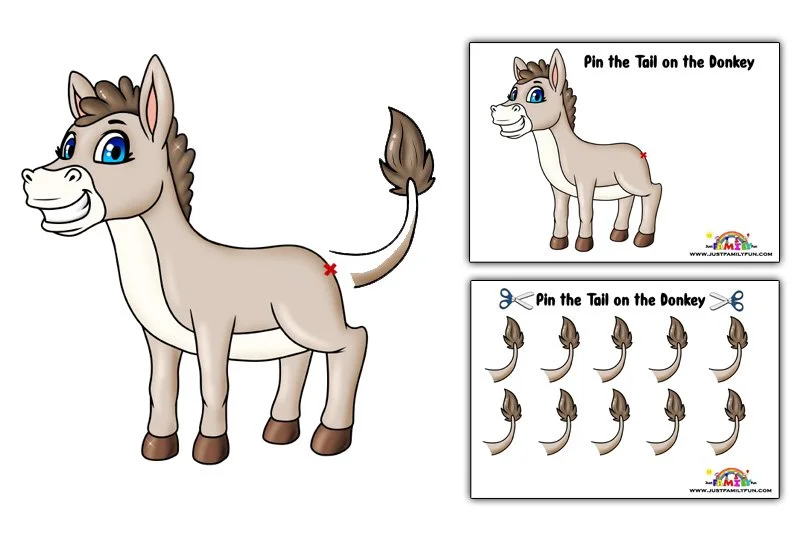
For the lump I felt on the underside of my right breast, I told her I needed to lie down to tag it better. So, I was shown a room with the ultrasound equipment, a room I’d be in minutes later, and placed two stickers on the sites, hoping my version of pin the tail on the breast donkey was accurate enough.
I returned to the mammogram room and waited to get flattened and stretched into the standard mammogram poses. I was squished by the cold plates and leaned into the machine, grabbing its handle, to get the underarm and node images necessary.
And then I had a fun little conversation with the technician. Why not? I’m here in this gown.
I asked her about the magic age to get mammograms. Was it forty or even forty-five?
That last number sprang up because of my years of conflicting information in and out of the doctors’ offices. I had read and had been told on numerous occasions, that, because of my dense breasts, I didn’t need to get a mammogram every year, because the machines would likely detect the Fibrocystic tissue as tumors, even though they’d be benign.
Not surprisingly, the technician responded with the standard recommendation: yearly mammograms, starting at age forty.
And then she added a little flourish. “You want to adhere to that schedule. I’ve had women who waited too long for their mammograms and unfortunately, by the time they see me, they had to lose both of their breasts.”
Yay, I had my answers- and a fun bit more.
So, moving on to still more fun, the immediate ultrasound. I walked back into the room I left minutes earlier. And there, waiting for me, was (Hubby). He was sitting in a chair, tucked from view, next to the long privacy curtain drawn as a middle barrier between the “action” and the door. Still in my gown, the technician working the ultrasound informed me I could get up on the table, “the doctor will be in shortly.”
Voilà! She appeared, shaking “nice to meet you” greeting hands with me. And then came the usual warm gel, followed by the ultrasound probe gliding across my breast area. There wasn’t much chit-chat here. The vibe I picked up on was that quiet was what was needed now.
Shhhh! Don’t disturb. As Elmer Fudd might say, “We’re huntin’ tumors!”
So, up and down, side to side, my right breast was canvased. Eventually, the doctor asked me questions about how I came to discover the lump. I told her the boring details: I was used to my Fibrocystic lumpiness and one day earlier this month, I felt a lump which felt “different.” Hence, we’re all now gathered in this room talking about it.
“Good job finding it while doing your self-exam!”’
(I could feel the doctor reaching for any positive spin).
“Thanks.”
And we’re temporarily quiet again. I just had to pipe up, “Yeah, I’ve heard that as long as they’re movable, that’s a better sign. What I felt seemed to be a little movable, but it did feel different…”
(You can hear my bargaining plea, begging to please be told everything is okay).
And then, there was awkward silence, followed by the doctor swiping the probe into my armpit, “Let’s check the nodes.” Nothing seemed to show up, the doctor appeared relieved. I was not. And poor (Hubby) in the chair.
In my earlier conversation with the mammogram technician, I had mentioned previous records, and had given the contact information for the clinic to obtain them. Compare and contrast was the mission. Those records were faxed over and comparing and contrasting had taken place. The images, in fact, had changed. And not in a good way.
After getting myself toweled off from the gel and changed, I was not surprised at what followed as we sat in the waiting room, just outside of the breast nurse navigator’s door.
Once ushered in, Joy handed me an official letter from the doctor, using the term,
“suspicious area.” She informed us we needed to schedule a biopsy.
UH. OH.
As we set up the appointment for July 7th, I took a “Biopsy Aftercare” pamphlet and I asked her, “So, if something turns up here, then what’s next?”
“Surgery,” she responded.
UH. OH.
Tick, tick, BOOM?
Copyright © 2025 by Sheryle Cruse
Cynthia Hull (IF You Know? Book Excerpt)
Again, is there more of Proverbs 25:2 at work?
“It is the glory of (YAH) God to conceal a thing: but the honor of kings is to search out a matter.”
The mystery? What’s hidden?
“High yellow... is a term used to describe persons classified as black... despite having primarily white European ancestry. It is a color reference to the golden skin tone of some mixed-race people... ‘High’ is usually considered a reference to a social class system in which skin color (and associated ancestries) is a major factor, placing those of lighter skin (with more European ancestry) at the top and those of darker skin at the bottom. High yellows, while still considered part of the African-American ethnic group, were thought to gain privileges because of their skin and ancestry. ‘Yellow’ is in reference to the usually very pale yellow undertone to the skin color of members of this group, often due to mixture with Europeans...”
https://en.wikipedia.org/wiki/High_yellow
Further curious in my research on “High Yellow,” I came across the 1965 film of the same name. I watched it on YouTube.
“Cindy” (played by Cynthia Hull), a light-skinned black teen, gets a job as a maid for the dysfunctional family of a Hollywood producer.

Themes of “passing” and aspiration are dominant throughout the story.
The characters reflect that in their interaction with one another:
Judy: “You could pass for white.”
Cindy: “I intend to.”
Judy: “You’re gonna pass, ain’t you, Cindy?”
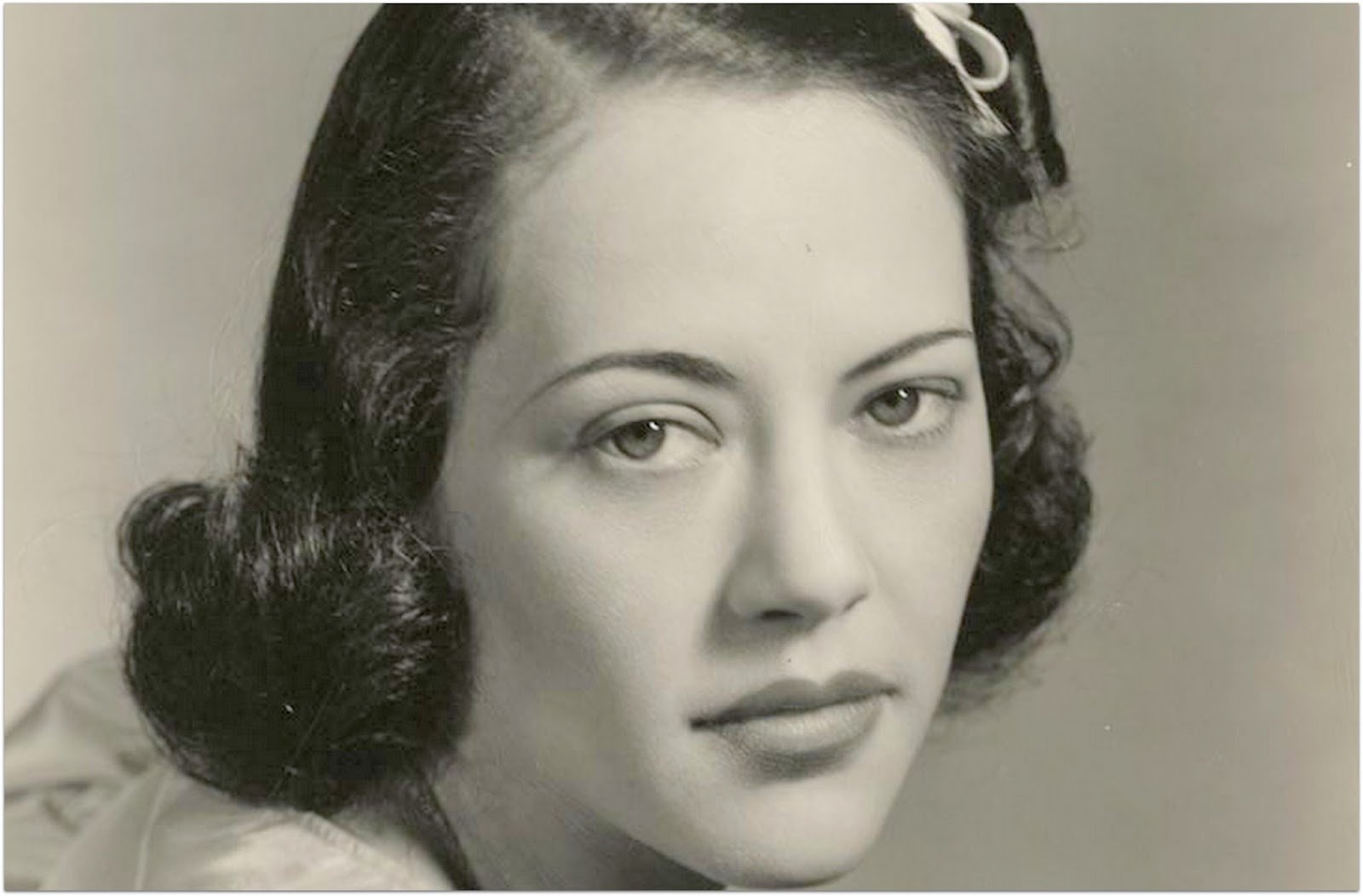
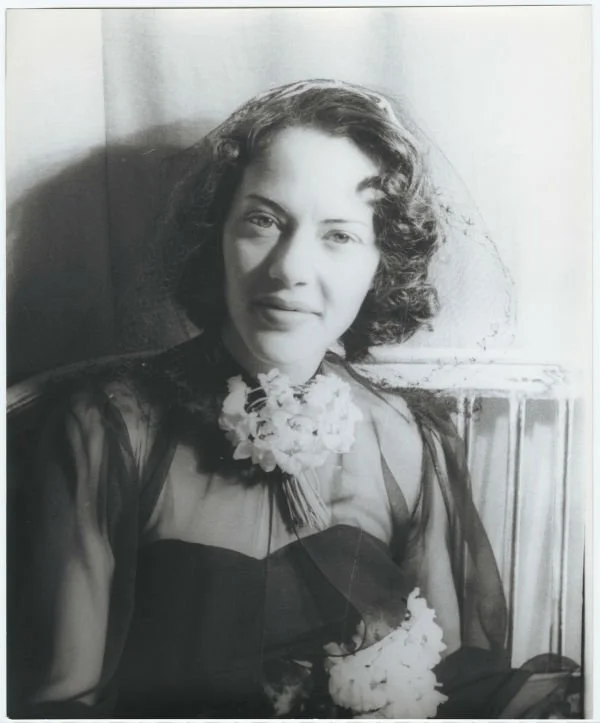
As I searched for information about the film’s lead actress, Cynthia Hull, I was dumbfounded by her appearance and how she was “cast” in episodic television shows like “Hawaii Five-O.”
Because the film, “High Yellow” was shot in black and white, there was a nebulous “grey scale” which made everything more obscure.
It’s difficult to know what I was seeing.
But, in the selection of different photographs of Hull, including those television stills, a few color images showed up.
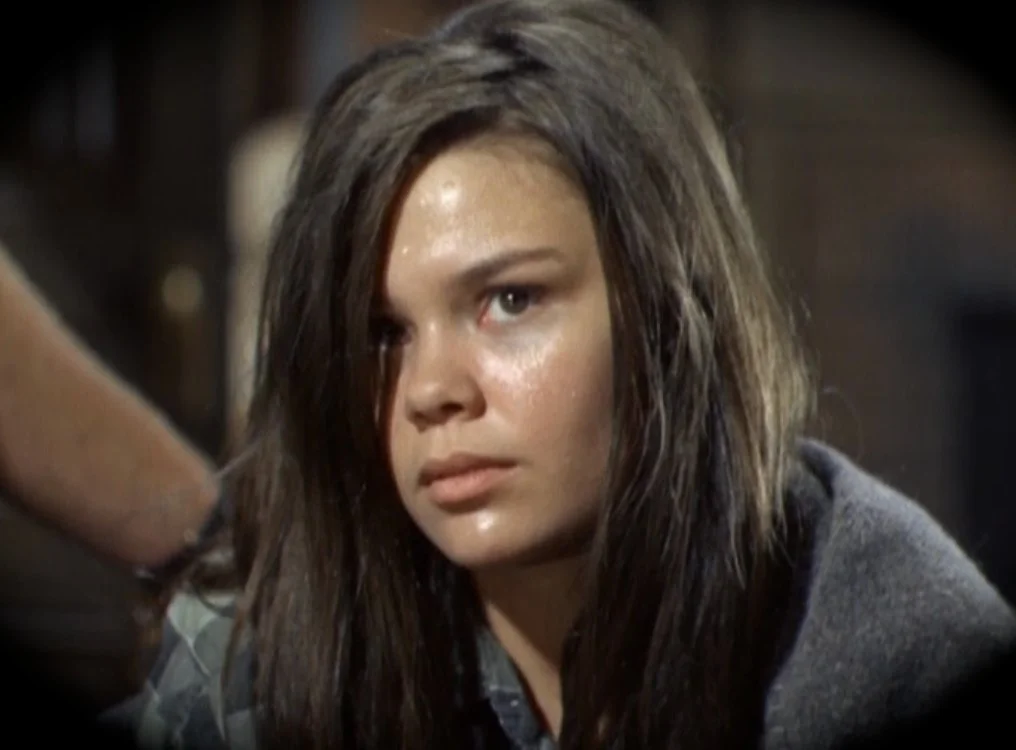
And I was again confronted with the similarity she had to me. She had that “olive” skin tone, like mine. She had dark brown hair, like mine. She had brown eyes, like mine. She was regarded as “exotic.” Like me?
So, after watching “High Yellow,” I became even more fascinated with this appearance concept. Other “code words” to describe this skin tone included, “Light-skinned,” “One-drop rule,” “Mixed-race” or “Passing.”
If You Know?: Cruse, Sheryle: 9798272042019: Amazon.com: Books
Copyright © 2025 by Sheryle Cruse
This is me thinking about Thanksgiving
I cracked up when I saw this:

“When you sit to dine with a ruler, note well what is before you,
and put a knife to your throat if you are given to gluttony.
Do not crave his delicacies, for that food is deceptive.”
Proverbs 23:1-3
We’re in the sea of overindulgence holidays.
We’re polishing off the Halloween candy; now we’re headed into the choppy waters of Thanksgiving. And then there’s more fun: Christmas and Hanukkah, followed by the reinvention promise of New Year’s.
My raft is overturned.
Admit it, these holidays are raging seas for our appetites.
We often struggle not to drown in our appetites of choice.
And we believe the lie of the satisfied appetite.
Being this long in the game with my own issues, I’m learning that, when it comes to our tricky carnal natures, there’s no such thing.
When it comes to matter of the appetite, the name of the game is more, more, more! And then some more piled on top of that! There! That’ll fix everything! That’ll make everything all better!
So, we consume whatever, however and in whatever amounts we desire. But it’s all deceptive; the appetite we struggle with seems to act as a spiritual barometer. It registers as our chosen God substitute. And, because it is only a substitute, a counterfeit attempt, at best, it never fulfills us. So, what’s the answer we choose if we’re not careful? Gimme more!
Still, we’re never fulfilled, but our souls (our minds, wills and emotions) are still starving!
“Hungry and thirsty, their soul fainted in them.”
Psalms 107:5
You know that aftermath feeling from a family get together or a holiday party? You know that feeling of trying to summon up the will and courage to clean the trashed house, medicating that industrial size headache (and stomach ache) and squinting at the credit card bills? Well, imagine that’s the reality of your souls when substitute after substitute still seem to fail to create peace, comfort and relief. And why is it like this? Because, for all of our planning, shopping, feasting, drinking, attempting to be merry, numb or obliterated, we fail to keep the main thing the main thing: our fulfillment is connected to Elohim.
Period.
“When you sit to dine with a ruler, note well what is before you,
and put a knife to your throat if you are given to gluttony.
Do not crave his delicacies, for that food is deceptive.”
Proverbs 23:1-3
Proverbs 23:1-3, indeed, may sound extreme and grizzly when we deal with our appetites. It’s by no means, an endorsement to slit our throats. More accurately, it follows the modern day advice you may have heard around the way: “check yourself before you wreck yourself.”
Whatever appetites we are challenged by, this holiday season and beyond, let’s get real with The Most High about them- and go to Him with them! He has promised to satisfy and fill us.
“For he satisfieth the longing soul, and filleth the hungry soul with goodness.”
Psalms 107:9
We have tried everything else. There is, after all, no hangover with Him.
Copyright © 2025 by Sheryle Cruse
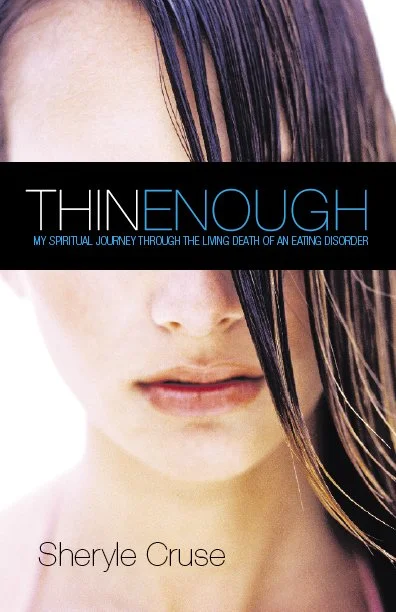
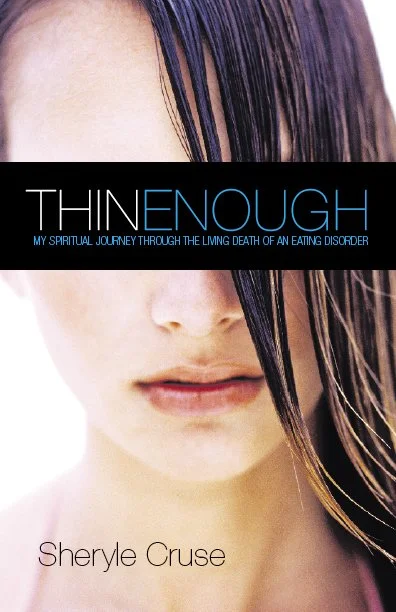
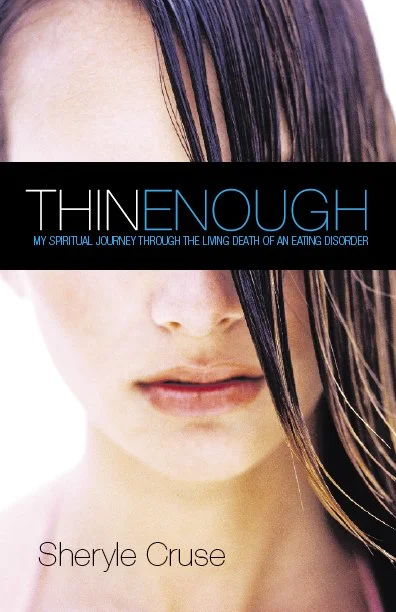
Eating Disorder Origins…(Thin Enough Book Excerpt)
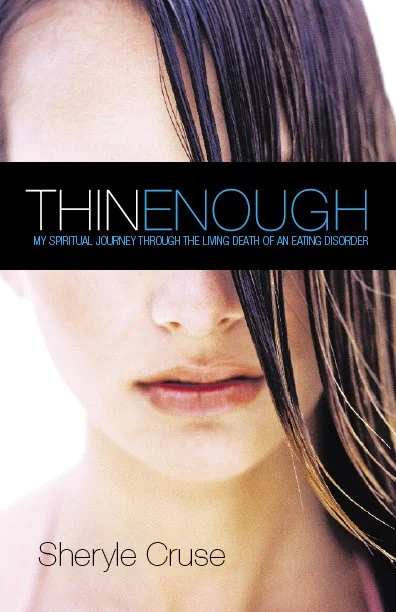
…Eventually food turned on me. I thought I was happy with my best friend, but I still felt that I was “wrong.”
I was becoming so very aware of exactly how unacceptable I was. It was frequently pointed out to me. Diets were first. Then came the insults, the jokes, the strategies…
“Fatty, Fatty, two by four, can’t get through her own front door!”
“She doesn’t have to be on our team, does she?”
The old saying is true: “Kids can be cruel.” Getting picked last for games, snickering, name-calling, and the shunning were all part of my daily routine.
I once heard about a study of young children. They were asked a question: “If you could choose either an overweight person to be your friend or a person who’s missing an arm or a leg, which would you choose?” The kids in the study all chose the missing limbed candidate. Fat, according to the kids then, was unacceptable to be around and befriend.
I came home from school each day and eased my pain with a stack of Oreo cookies, peanut butter and pickle sandwiches, potato chips and milk. I could feel better with my “true friends.”
Insults and jokes from adults were different though. Weren’t they supposed to know better? Comments like, “You’re looking a little pudgy lately,” and “Be careful, honey, you don’t want to get much fatter now” came from my family and neighbors. During a popular cereal’s “can’t pinch an inch on me” campaign, they could and did pinch an inch on me. All I wanted was a hug.
I hated one comment most of all. It mainly came from family. In a patronizing, sickly sweet voice, someone would say to me, “You have such a pretty face, if you’d just lose some weight…” There! So my body was what was wrong with me after all! It hurt even more because this comment dangled the hope of beauty, and yet placed the blame on me, a little girl, for not achieving it. It was my fault.
Dressing joined dieting as a new strategy to “fix me.” I never really paid much attention to clothes until it was pointed out at seven years old that I needed to “cover up.” I remember my first attempts at dressing in a “slimming” way. I’d wear tight clothes, in dark colors, (slimming you know), and suck in my stomach. I’d wriggle into tight jeans and try to keep fat rolls from spilling over the waistband. It was both an athletic feat and an “interesting” look. I couldn’t breathe very well, but I was successfully “held in.” I was also successfully acquiring kidney and bladder infections, due to the restrictive clothes’ pressure on my organs. It took my doctor two months to treat these infections. Eventually, I tried another strategy—camouflage. Basically, I wore a tent, anything loose that wouldn’t reveal my shape—a big, fat apple.
I became increasingly aware of what my father was and wasn’t to me. He was distant, unresponsive, angry, disappointed, and ashamed of me. He wasn’t close, involved, happy with me, or proud. I believed that it was entirely my fault because I was an ugly, bad, fat little girl. I needed to be ignored, fixed, and punished. I didn’t know that my Heavenly Father felt differently about me. By age ten, I knew only self-imposed hatred, blame, and shame, not my Abba Father’s love.
I desperately wanted my dad to notice me. I learned very quickly that one surefire way to do that was by winning awards. When I won something, I wasn’t completely worthless or useless. I was productive; I was “earning my keep.” I set impossible standards for myself. Try as I might with award after award, I’d eventually disappoint everyone, including myself, proving that I wasn’t worth anything after all.
My perfect attendance record in school is an excellent example. For three years in a row, I did not missed one day of school, knowing that I would win a perfect attendance certificate, tangible proof on paper that I was worthwhile. It became a standard I had to maintain because my dad seemed pleased in my performance. Of course, he never said that he was proud of me, but he did lay off the criticisms briefly. So for the next few years, I went to school with colds, sore throats and influenza. I remember going to school once with a temperature of over 101, sitting at my desk, on the verge of throwing up, yet only thinking of that certificate.
When I reached junior high, I became so sick once I had to stay home. I felt defeated and anxious. My dad, who had never really been sick with so much as a cold, was unsympathetic to my condition. With each passing day I stayed home from school, the tension mounted. Three days at home, according to my dad, was enough. He became upset at my mom for being “such a terrible mother.” After three days home, he had enough. He decided he would take me into school to make sure I got there.
On the way to school, he was fuming and I was scared to death, but my fourteen-year-old mind wanted to know something. We’d never had any father/daughter talks about anything, much less about the existence of a loving relationship, but I got up the nerve to ask him, “Do you still love me?” His answer? “If you do this again, I won’t.”
His answer proved it. It was my fault. I had to prove myself in order to be loved. I wasn’t the cute, good little daughter he should have had. If I could just look right and act right, he’d love me. All I have to do, I decided, is be perfect. That’s all.
“…then shall you feed, on her sides you shall be carried, and be dandled on her knees. As one whom his mother comforts, so I will comfort you…”
—Isaiah 66:12-13
Nothing worked. I never did achieve perfection. I never got the attention and love wanted. The scales, numbers, pounds, and inches continued to increase. However, I put on more than weight. As my size increased, so did my shame, defeat, and failure…I was, after all, just a fat girl…
…To Help You Work Through Your Thoughts
Name three things (that exclude your size, appearance or weight) that are precious and loveable about you. (Isaiah 43:4)
How does food make you feel? What are your emotions when you eat?
Complete these statements concerning what and how you eat and feel.
When I feel stressed I eat (list foods)
And I feel (list emotions)
After eating I feel (list emotions)
What is one harmful thing you learned from being on a diet as a child? How can you let God heal that for you now?
Name three things about yourself that, according to Psalm 139:14 makes you “fearfully and wonderfully made?”
Make a list of what you consider to be “good or safe foods” and what you consider to be “bad or dangerous foods.” Explain why you see them that way.
Why have you gone on a diet? What’s been your motive for dieting/losing weight? Read Proverbs 16:2. How do you think God sees your plan? What can you do to include God in a healthy plan now?
Matthew 6:25 states that life is more important than food. List what is more important than food to you…
Copyright © 2025 by Sheryle Cruse
The Stand- Up Game
When I was five years old, I was on a local children’s television show, “Kids’ Stuff.” I remember being outfitted in my red and white pantsuit, with my two ponytails swinging, excited. I regularly watched the program at home and couldn’t wait to be in on the action.
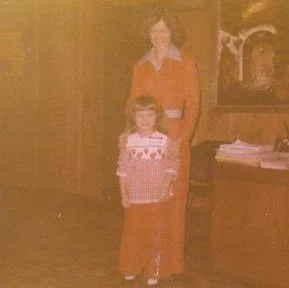
As the cameras rolled, the tall, pretty host- let’s call her Miss Jane- started a game for the hyper bunch of us tykes. It was called, “The Stand- Up Game.” There was a large circle of different colored smaller circles on the floor. Each kid was to sit on that circle, quietly and patiently (yeah, sure), only standing when our colored circle was yelled out in song. I believe I was on the red circle (probably because it matched my outfit).
Miss Jane sang…
“Green stand up. Blue stand up. Orange stand up. Yellow and purple stand up…”
Simple enough.
Only, little red me stood up, sat back down and stood up again, on EVERY color.
Miss Jane hadn’t even gotten to red yet.
I was so excited, I guess, just to be on the color wheel, I was all, “stand, up, sit down, Kids’ Stuff, Kids’ Stuff, Kids’ Stuff!”
Years later, I still have the sing-song-y lyrics in my head. And I see how, I was primed to exhaust myself in a few unproductive patterns.
I may no longer be outfitted in my red and white pantsuit. I may no longer be sitting on my red circle. But I was standing up for every ridiculous thing, attending to the never-ending different circumstances, while attempting to manage (hah) life.
And it prompted another song from years ago, the band, Everclear’s “Everything To Everyone.”
Behold, some of its lyrics:
“You do what you do
You say what you say
You try to be everything to everyone
You know all the right people
You play all the right games
You always try to be
Everything to everyone
Yeah you do it again
You always do it again”
Song dysfunction, but for grownups!
I started to see just how rampant my people pleaser/codependent ways were running amuck in my life. However, now, in the past eight years, since my cancer diagnosis, I’ve had to face just exactly what that means as I’ve chosen to engage in the not-so-fun-and-games behaviors.
If Miss Jane’s game was my template, indeed, I was standing up for everything. And it could kill me.
“For do I now persuade men, or (The Most High) God? or do I seek to please men? for if I yet pleased men, I should not be the servant of (Yahshua Ha-Mashiach) Christ.
Galatians 1:10
Not Everyone is Going to Like You:
Let’s go straight to the heart of the dysfunction. This is Lesson 101, to the recovering people pleaser. And, it can feel like the most shrill, painful siren, blaring in our ears.
“No! Don’t tell me that! I can make someone love me. Really! I’ll just keep working at it!”
An-n-n-n-d… “green stand up, yellow stand up, purple stand up…”
I had to admit that my attempts to be liked by everyone just weren’t happening. I would tire myself out, thinking of ways to get on someone’s “good side.” But what I failed to see or accept is that their entire being, complete with any potential, “good side” was disinterested and walking away from me.
I think we can sometimes get caught up in the mistaken belief that we have to be friends with everyone and, if we’re not, it’s a moral failure on our part.
It’s not.
“Then Peter and the other apostles answered and said, We ought to obey (The Most High) God rather than men.”
Acts 5:29
Some people belong together in life. And some don’t.
Changing, morphing, and manipulating ourselves into a certain package, one we’re convinced will make us irresistible to that “special someone,” just depletes us, annoys them, and possibly, in extreme cases, incurs a restraining order.
Nope, don’t want that.
And, all the while, we miss out on something key: we need to like ourselves, sans any other person’s approval.
“…‘You shall love your neighbor as yourself.’ There is no other commandment greater than these.”
Mark 12:31
That, one can argue, may be the graduate school of our people pleasing natures, but learning this for ourselves is far less painful than learning the constant rejection of people who don’t want you and I and are not supposed to be in our lives, anyway.
Still, many of us struggle with this and are on academic probation, hence, the next learning lab…
Not Everyone’s Need is Your Need:
“For do I now persuade men, or (The Most High) God? or do I seek to please men?...”
Galatians 1:10
People pleasers want to fix things; we want to make others happy. This can be a recipe for disaster and disease as we often expend our entire beings trying to heal, solve and make things better. Furthermore, others can exploit our giving natures and sincere hearts.
Too often, I chose to be a rescue person to someone who’s life was always on fire. I wanted to help put the fire out. So, I spent hours listening to people on the phone. I gave out cash so their rent would be paid; they could have groceries. Helping someone out is not bad, in and of itself, here. Life happens. Needs do arise.
However, I encountered a strange phenomenon in my sincere fire quenching. I quickly became the “go-to” person. I was not the last resort contacted in these too frequent emergencies; I was the first call, instead.
Maybe, I could have risen above it with my feelings.
But my response, instead, was I felt used. On top of being sleep deprived, adrenalin-charged and sometimes, even, financially strapped myself, I could not escape the feeling- the reality- that, once someone got their need met, emergency or otherwise, I never heard from them. No uneventful phone call just to ask how I was doing. Nope.
I was just there to meet a need. They wanted nothing else from me but that.
And that it not a good feeling.
But I was the one choosing to participate in the behavior. I could have said no.
“Simply let your 'Yes' be 'Yes,' and your 'No,' 'No'; anything beyond this comes from the evil one.”
Matthew 5:37
I could have redirected them to other resources.
But I didn’t.
I thought I was the only help they’d encounter. Do or die.
Scripture, perhaps, offers us a caution here, found in Matthew 26:11:
“The poor you will always have with you...”
Now, this is not a free pass to be callous, to never help someone in need.
Rather, it’s pointing out an unfortunate reality: there will always be need in the world.
One may argue, the need exceeds the help. And each human being, like it or not, is finite. We only have so much capacity.
Therefore, it’s unrealistic- and even counterproductive- to go about trying to “save the world.” When our bodies and psyches give out (and they eventually will in the attempt), not only have we harmed ourselves in the endeavor, we may have also hurt the very individual we were trying to assist in the first place.
We are to be selective in how we go about helping.
Not every need has our name on it.
It’s not selfish to admit that. It is realistic.
I learned I cannot stand up to every problem and fix it; my Kid’s Stuff “Stand Up” game, with me standing at the beckon of every color, will not perfectly solve everything. It will, only tire me out.
I learned this the hard way. As I sincerely tried to be a firefighter and caregiver, I neglected myself. And, perhaps, my cancer diagnosis was the attention-getting device that put a stop to that neglect.
So, I’ve since learned to sit some needs out.
Pick Your Fights:
“(Elohim) The LORD will fight for you; you need only to be still.”
Exodus 14:14
And this leads me to my next lesson; I must choose my battles. I’ve have had to learn it the hard way also.
Again, going back to Miss Jane and the Stand-Up game, the call was out for a certain colored circle. Selective. If green was called, then orange, yellow and blue had better just sit tight and wait.
This principle applies with any grownup battle, argument, fight or cause. I needed to ask myself, “Is this really my fight here?”
“Like one who takes a dog by the ears, So is one who passes by and meddles with strife not belonging to him.”
Proverbs 26:17
Spiting ego, spiting emotion, spiting even, my desire to get involved in the whole mess, should I?
Would doing so help…or hinder?
My Kids’ Stuff experience should have warned me that I learned and practiced some behaviors that were not in my best interest as an adult. Again, I was standing up for everything, yet, getting nothing accomplished, except wearing myself out.
I made the fight in question even worse, because all I was doing was, in fact, meddling. Not helpful.
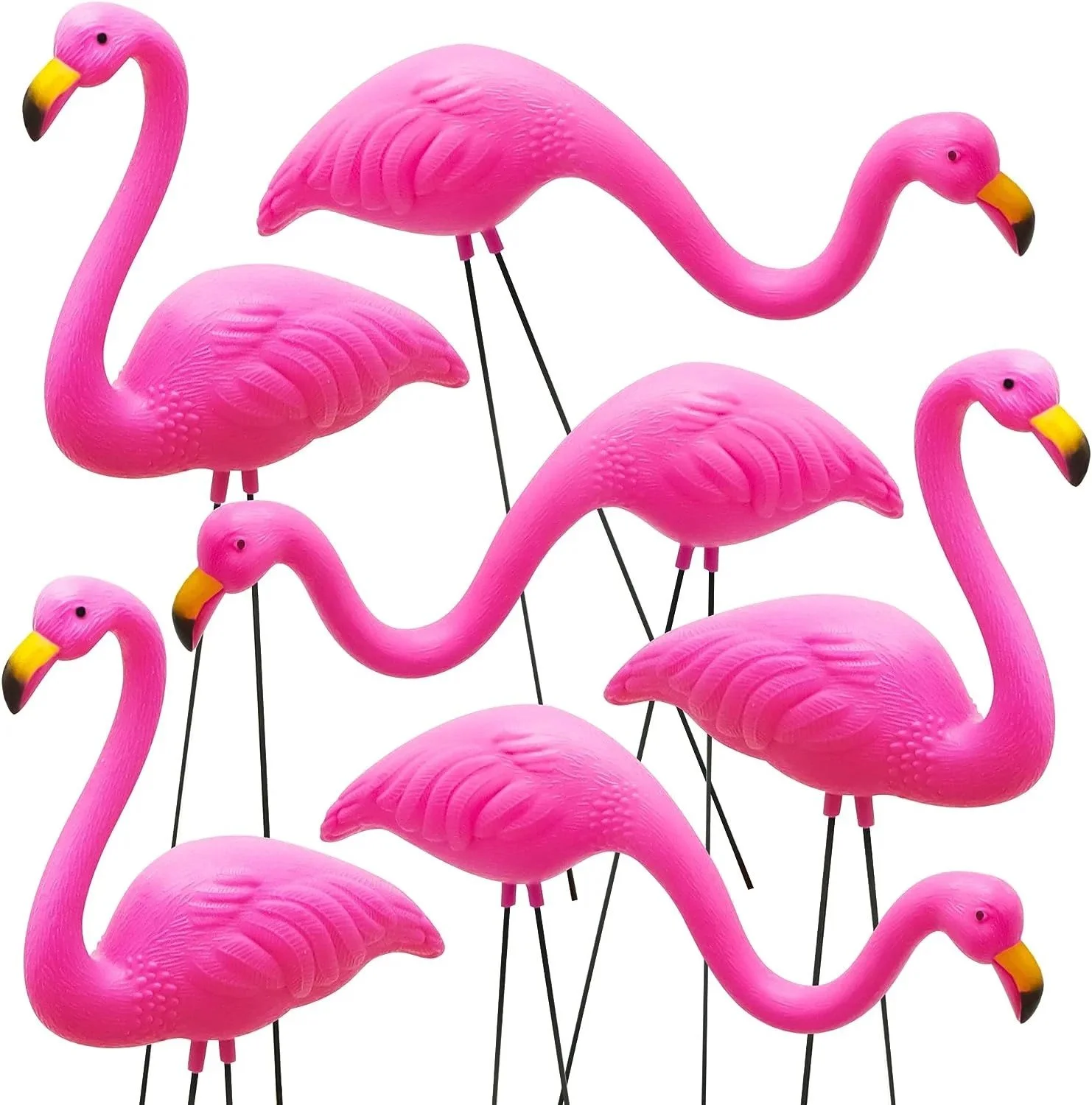
I remember one incident in which a family member asked me to do battle for her concerning a lawn ornament, taken from her yard. I was asked to contact the people in question and retrieve that lawn ornament. I got involved; I called and wrote a letter. Not surprisingly, there was no response.
Meanwhile, the person who asked me to be their lawn ornament henchman quietly sat back and did absolutely nothing. Not one word, phone call or letter. No effort, whatsoever. I was the only one doing the heavy lifting.
And there was, perhaps, my first mistaken belief. I viewed what I was doing was assisting. I believed this other party would do her share of the ornament retrieval as well.
No, in her mind, my help meant that I would do everything.
Years later, this incident seems ridiculous. It made me feel like I was engaged in a tug of war over some tacky pink flamingos.
That kind of thing.
But again, it revealed to me how I was getting involved with things that weren’t any of my business. If there was a dispute between certain people, then, that’s between them. Being an additional party only muddies the waters and makes things worse.
I should have sat this fight out.
Cancer, again, brought to my mind how I am to choose my battles wisely. I have finite energy, strength and, maybe even, time left. Do I really want to spend it meddling in affairs that are unhealthy for me? Even with a sincere heart to make things better, I need to do an ego check.
Perhaps my help won’t help.
Perhaps, it will only have the opposite effect. The ego loves to hear that, doesn’t it?
“Get over yourself.”
This should be the retort to the tempting Stand-Up game we play in life.
Why, exactly, should we stand up?
Is our colored circle being called? Is it?
Or do we want it to be called instead?
There’s a difference.
We need to know that difference and sit several things out.
Copyright © 2025 by Sheryle Cruse
Yes Be Yes, No Be No
We’re in the middle of cold and flu season; sickness abounds.
And it’s at this time of year, I think about healing. It’s one thing to be flu-ridden, queasy, achy, possessing a high fever and wish to be well.
However, it’s another thing if we struggle with addictions and compulsions; they are also referred to as “disease.” With that situation, we’re often conflicted at best and resistant and unhealthy at worst. What is our response to the question, “Do you want to get well?”
Hey, even Yahshua asked the question.
“When (Yahshua) Jesus saw him lying there and learned that he had been in this condition for a long time, he asked him, ‘Do you want to get well?’"
John 5:6
Let’s further check out this healing scenario at the Pool on the Sabbath in the Book of John…
1 After this there was a feast of the Jews, and (Yahshua) Jesus went up to Jerusalem. 2 Now there is in Jerusalem by the Sheep Gate a pool, in Aramaic called Bethesda, which has five roofed colonnades. 3 In these lay a multitude of invalids--blind, lame, and paralyzed.5 One man was there who had been an invalid for thirty-eight years. 6 When (Yahshua) Jesus saw him lying there and knew that he had already been there a long time, he said to him, "Do you want to be healed?"7 The sick man answered him, "Sir, I have no one to put me into the pool when the water is stirred up, and while I am going another steps down before me." 8 (Yahshua) Jesus said to him, "Get up, take up your bed, and walk."9And at once the man was healed, and he took up his bed and walked. Now that day was the Sabbath.”
Did you catch how healing was a participation sport, not a passive situation? And it all starts with how we answer the question, “Do you want to get well?”
From there, we need to participate in our healing. That can mean a wide range of activity: going to meetings, getting involved in therapy and treatment plans, getting honest with ourselves, The Most High, and others and replacing self-destructive choices with healthier options. These are just a few examples. But are we willing to do them? Are we willing to do the work? What is our honest answer?
“Simply let your 'Yes' be 'Yes,' and your 'No,' 'No'; anything beyond this comes from the evil one.”
Matthew 5:37
It’s not about getting better all by ourselves. That approach can lead to disastrous consequences. We need help. We need Elohim. We need to do something which is not our typical, addictive, unhealthy response. After all…
“There is a way which seemeth right unto a man, but the end thereof are the ways of death.”
Proverbs 14:12
It is crucial we are completely honest with ourselves and our lives. Our attitude toward recovery and change can be part of our healing toolkit or it can serve as a gigantic obstacle to our improved health and lives. Our decision plays a big role in the results we experience.
Regardless, we need to be honest with our answer to getting well, be it yes or no. Ambivalence, denial, and any refusal to embrace our truth does not help us.
“A double minded man is unstable in all his ways.”
James 1:8
No, it’s not easy; it’s often filled with pain. But the cliché is true: the best things in life are difficult and worthy fighting for.
So, where are you when it comes to your own healing? What do you say to a Yahshua Who wants to heal you? What are you willing to change?
Your answer makes all the difference.
Copyright © 2025 by Sheryle Cruse
Warner Sallman (“IF You Know?” Book Excerpt…)
The Identity of Our Savior, for me, was introduced through culture and entertainment.
Image.
Warner Sallman.
I think that my first memory of “Jesus” was when I was probably around five years old. To use Christian vernacular, was this when I “accepted the Lord into my heart?”
Well, probably. At least, I accepted the artist, Warner Sallman’s decorative plate version of a painted Jesus into my heart.
“Christ Knocking at the Door.”

I’m sure you’re familiar with the artwork. It is ubiquitous.
Originally created in 1942, it’s still featured on prints and Bibles. (Years ago, I had a special Warner Sallman illustrated Bible, featuring his other paintings within it).
And, of course, the artwork is on decorative plates.
My mother’s own plate was a hazy bedtime memory for me. “Christ Knocking at the Door” hung on one of my walls.
I remember looking at it, as I had a conversation with my mother, about “accepting Jesus into my heart.”
But not just that. She also shared with me the fun facts about “the age of accountability.”
Was she letting me know that I better behave myself, be accountable, already?
Was this a tactic to get me to be a “good girl?”
Or was she sincerely and soberly “leading me to the Lord?”
I was at that significant age of accountability.
From that point on, I associated Warner Sallman’s depiction of Our Messiah, with the daunting prospect of spiritual personal responsibility. It hit me hard, being five. Pressure.
I doubt I understood the detailed mechanics of Salvation, the Work of The Cross, atonement, what Him “dying for our sins” really entailed.
“Just accept Jesus into your heart, Honey.”
“Jesus loves you.”
(And you are old enough to sin, so you need Him, or else).
I accepted and believed in “Jesus” as that innocent, trusting child.
I was still in a spiritually hostile, abusive warzone. There was no Christian atmosphere of church going and Bible reading.
It felt more like, “Here, accept Jesus into your heart. You did that? Good! Now we can move on. Stay out of trouble. Don’t be a problem.”
Not exactly the Gospel Message of one’s dreams.
If You Know?: Cruse, Sheryle: 9798272042019: Amazon.com: Books
Copyright © 2025 by Sheryle Cruse
The Freezer in the Bedroom
As a kid, once upon a time, my childhood bedroom was upstairs, in our nearly one- hundred- year- old, poorly insulated house. Summers were tropical rainforests, complete with Minnesota mosquitoes, keeping me awake. Winters were Arctic, requiring multiple comforters at night. Long story short: it became next to impossible for me to sleep up there, in my baby blue- painted, but unhabitable, childhood bedroom.
Eventually, I slept in the living room, on the pull-out couch.
Fortunately, around the age of eleven, my family finally decided to replace the house’s deteriorating porch with the new addition promise of a “family room” and…drum roll please… a newer childhood bedroom for me.
Granted, it was not painted baby blue; wood paneling was its motif. And, it was a much smaller square room, as opposed to the vast pizza oven/deep freeze as my first upstairs bedroom.
Compromise, okay. I’d deal with it.
“I know how to be abased, and I know how to abound. Everywhere and in all things I have learned both to be full and to be hungry, both to abound and to suffer need.”
Philippians 4:12
At least I got my own room, better insulated, a place I could really sleep in and await my joyous adolescent years (can you hear my sarcasm?).
So, after a three-month summer vacation, spent tearing off the old, replacing it with the new, finally, I had my small square bedroom. I was giddy. I walked into the empty space, imagining where I’d place my bed, dresser, and vanity.
But before I could get any of my stuff in, furniture or stuffed animals, my family shoved a gigantic meat freezer along one entire wall of my bedroom.
That’s right, I said meat freezer, one of those humungous, topaz-colored models that looked like a full-on coffin.
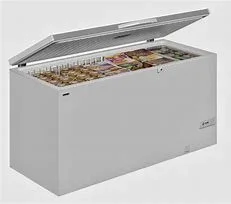
I think you could probably stick a full-grown man in that sucker, without needing to do any dismembering.
Handy.
And my family just assumed (you know what they say about assume) that I would have no issue with this arrangement. I didn’t have room for some of my bedroom furniture, but hey, I should be grateful to just get a bedroom, right?
I said that to my eleven-year-old self, trying to convince her this freezer was not encroaching on privacy or development in any way. No biggie. I still had my little haven where I could write, read, draw, listen to music, and enter adolescence.
Let’s get the show on the road!
Only, the show was frequently interrupted by a family member entering my room to extract some frozen meat from my room.
Oh, Rib-eye tonight, huh?
Meanwhile, I turned twelve. Then thirteen.
Years of lunches and dinners brought about by people barging into my room, opening the freezer coffin lid, chilling the room for about ten minutes after it was closed, and feeling like my privacy was invaded. My boundaries of separateness as a budding person were treated as nonexistent. After all, I should be grateful to have a room.
This eight-foot freezer is no problem; it’s not an issue.
But, as a feisty thirteen-year-old, I started voicing (whining) my displeasure, attempting to reason with certain family members, trying to negotiate a relocation for this meat freezer. I was growing up, getting bigger, needing more space and privacy.
Eventually, my negotiating (whining) won out. It was finally decided that this large monster would be moved to the garage, where, in my opinion, it should have resided the entire time. We also had a basement with plenty of space to inhabit the freezer.
Really, why did it have to land in my small bedroom, in the first place?
Answer? Because it was convenient.
And here, I learned a lesson about weak and disrespected boundaries of what is and is not allowed and enforced.
It was simply more convenient to place the freezer in my bedroom. No one needed to go downstairs, in the dingy basement to get the wrapped meat. No one needed to go outside to the garage.
Just easy- peasy. Get it from Sheryle’s room. She doesn’t mind. It’s no big deal.
And besides, the freezer was once kept on the old porch. It’s the way things have always been done. Why change?
Recognizing any of the dysfunctional patterns, trampled boundaries, or harmful assumptions within your own life?
Why am I harping about this freezer, years later? Why can’t I get over it, as many people would say?
Because sometimes a cigar is not just a cigar. Sometimes a freezer is not just a freezer.
This large behemoth was a testament to how there was a resistance to change, to respecting boundaries, and to respecting privacy, as harsh as it sounds.
“Let all things be done decently and in order.”
1 Corinthians 14:40
My family did not see me as a separate individual who needed time, space, and privacy to grow. Convenience and attachment to the familiar status quo were more important than acknowledging that me, as a child, had a right to develop and discover myself without encroachment.
To me, subjectively, that freezer encroached on my time, space, and privacy. No one else saw it as an issue, because it was not an issue to them.
Silly, blown out of proportion, perhaps?
Well, hang on.
Because, again, the object, any potential object, is not just a neutral object. It is a representation to you, to me. And, even if it is that representation to only you or me, it’s still, nonetheless, valid.
It often, however, taps into the greater messages surrounding autonomy, self-esteem, boundaries, people pleasing, and any number of mistaken thoughts and beliefs.
“For do I now persuade men, or God? Or do I seek to please men? For if I still pleased men, I would not be a bondservant of Christ.”
Galatians 1:10
What is that for you?
What is your freezer?
Like I said, I negotiated the freezer’s removal from my small bedroom.
By age fourteen, my room was freezer-free. However, the issues, the messages, and the refusal to allow me to be me were still in place.
And here I slammed head-on into an ugly reality many of us confront when it comes to our family dynamics: there can exist both an inability and an unwillingness for some individuals to view us with the respect, dignity, and healthy treatment we inherently deserve. We need to face that and deal with how things are.
And then we need to make a choice. How will you and I treat ourselves, freezer or no freezer, metaphorically speaking?
“Let all things be done decently and in order.”
1 Corinthians 14:40
We can often get talked out the validity of our experiences, dismissed as being too sensitive, taking things too seriously, blah, blah, blah. You’ve heard the criticisms in your own life, right?
If it’s a problem, an issue, a wound for you, that’s legitimate. If you feel a violation, that is valid and needs addressing.
If individuals refuse to acknowledge and validate what is bothering you, then you, with the help of The Most High, need to come to terms with it.
“But I am poor and needy; Yet (Elohim) the LORD thinks upon me. You are my help and my deliverer; Do not delay, O my (YAH) God.”
Psalm 40:17
You are worth being seen, heard, loved, and valued. Don’t let anything convince you otherwise.
So, yes, I’ve been learning all about what are my personal feelings and boundaries. I am learning about my individual value.
I have value… in Him.
“I will praise You, for I am fearfully and wonderfully made…”
Psalm 139:14
“I have chosen you and have not cast you away.”
Isaiah 41:9
All this from a freezer in a bedroom?

Yes, all this from a freezer in a bedroom.
Copyright © 2025 by Sheryle Cruse
And NOW, MRI Stands For “Me Really Irritated:” (Excerpt from “Cancerventures: Tales of a Diagnosed Woman”)
“Yea, though I walk through the valley of the shadow of death, I will fear no evil: for thou art with me; thy rod and thy staff they comfort me.”
Psalm 23:4)
(Excerpt from “Cancerventures: Tales of a Diagnosed Woman” by Sheryle Cruse)
And NOW, MRI Stands For “Me Really Irritated:”
“(Hubby) and I waited a couple more hours for the MRI.
We moved to the imaging area of the hospital and made small talk. I bought a small bottle of orange juice to take with me in case I was lightheaded with the IV and my stressed-out nature. I felt a little better, having one scary appointment down, with the genetic testing consultation. Now, all I had left was the one involving the dreaded IV.
Finally, a male technician called my name. Here we go.
We walked down the hallway to a changing room area. I immediately let him know about my tricky vein situation and enquired about butterfly IVs. My heart sank at his answer.
“Well, we don’t use them. They tend to have too fine a needle; we’re afraid that they’ll splinter off.”
Fabulous.
“Well, what about a vein detector? I’ve heard you use them here in the hospital.” “Vein detectors? We don’t have them here. Don’t worry, we do this all the time.”
(Yeah, I’ve heard that before. You haven’t met my veins).
I changed into two blue gowns. One opened in the front, untied and the other covered me, with its ties in the back. I waited until they were ready to prick me.
The technician came for me, and we walked to an IV station. I sat in the recliner- looking chair, set my orange juice next to me, ever-ready for potential wooziness and fainting.
He got the IV materials together, tied the rubber tubing around my arm and pressed in its crook, trying to find a ripe vein. He swabbed a spot on my right arm with alcohol and called me, “Dear.” Okay. He was a man in his twenties, someone I could have once babysat, but okay, Dear. He tried to make small talk.
“What kind of music do you want played in the machine?”
(They give you earphones and attempt to drown out the loud noises by offering a selection of music styles. Personally, for me, it didn’t work. It just sounded like a loud machine with music piped in. More noise added to the noise).
I joked, “Polka.” He laughed. “I don’t care, anything…”
“Christmas music?” He playfully chimed in.
And, all the while, he’s trying to get the perfect “stick.” He missed.
“Oh-h-h-h. I know. I’m sorry, Dear…”
So, second attempt: he tried the top of my right hand. He missed. I heard his nervous laughter.
I felt vindicated.
“Don’t worry, we do this all the time” echoed in my mind.
By now, he was more nervous. Two failed sticks and the machine needed its stuck patient already.
Just then, a nurse passed by, and I swear, he pounced on her, quickly handing me off.
“Hey, could you get an IV in her, please?” He fled. I never saw him again.
So, she got a quick primer from me about my notorious veins, grabbing both of my outstretched arms, doing a quick scan. She assessed the top of my left arm had potential.
“Feel a little poke…”
And presto! We made contact. It didn’t hurt much more than a needle stick. Of course, I looked away. But, finally, the IV was in.
We moved to the large MRI room and my first thought, looking at the machine, was the science fiction classic, “2001: A Space Odyssey.”
“Open the pod bay doors, please, HAL.”
The nurse told me to climb onto the table area and place my tatas into the two breast shaped holes. I was face down, with my hands resting above my head. One hand was closer to a “panic button.”
No, it was just a communication button, but if I did have a claustrophobic moment, I could let the nurse know asap. I was given my headphones and I waited for the 1990s alternative rock music to start playing.
I was rolled into the machine’s tunnel, already whirring and noisy. I could barely hear the music. “Can you hear me? Are you comfortable?” asked the nurse.
“Yes. I’m okay.”
“If you need anything, just press the button. I’m right here.”
My MRI commenced, lasting for the next forty-five minutes. Just whirring noise, with me face down in the tunnel trying to hear songs from Nirvana and Oasis.
Once done, she helped me up and oh, so carefully, removed the IV. That hurt more coming out than it did going in. I took a swig of orange juice. She escorted me back to the changing room area. I asked how many shots she got of my breasts.
“Oh, thousands.”
I let that sink in. Thousands.
Once changed, I walked back to the waiting room. I found Russell seated. His eyes immediately went to my taped arms- all three sites. He shook his head and smirked.
Pin cushion.
We left the hospital, and Russell bought me a pink seal named “Pierre” at a local store.
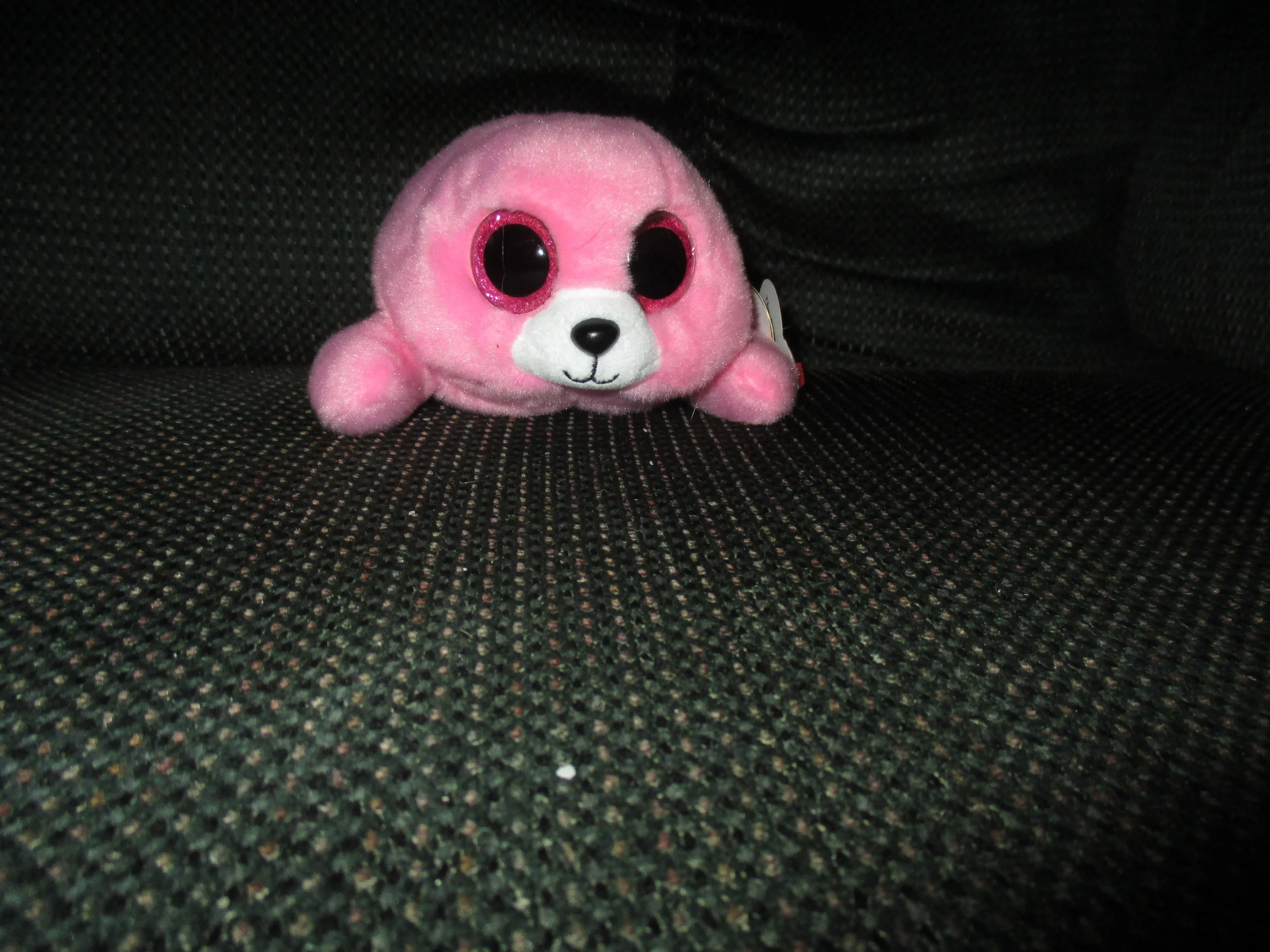
The cute face caught my attention earlier. And, of course, when you think of Breast cancer, you think of a pink seal named after a French guy…
Copyright © 2025 by Sheryle Cruse
Just Eat Something!
We are gearing up for the holiday season, and with it, holiday food situations.
As an eating disorder sufferer in recovery for years now, experiencing both Anorexia and Bulimia, I understand the minefield of food issues.
It’s not just food for food’s sake; rather, it has more to do with what it represents.
In a holiday-themed episode of the popular television series, “Mad Men,” we witness an exchange involving mother and daughter.
A family member at the table asks the daughter character, “Don’t you like your food?” The daughter responded with a no.
And that prompted an uncomfortable force-feeding session.
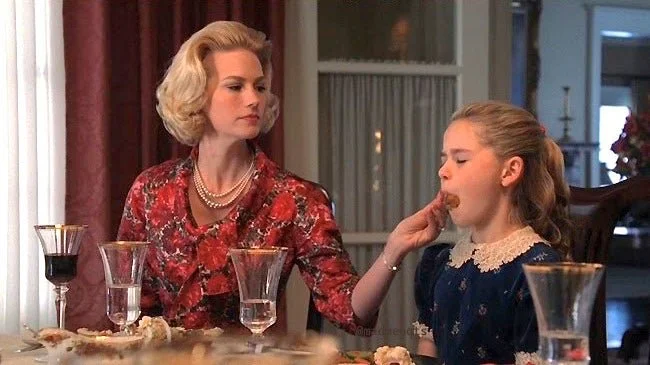

Mother is shoving cranberries into daughter’s mouth- against daughter’s wishes.
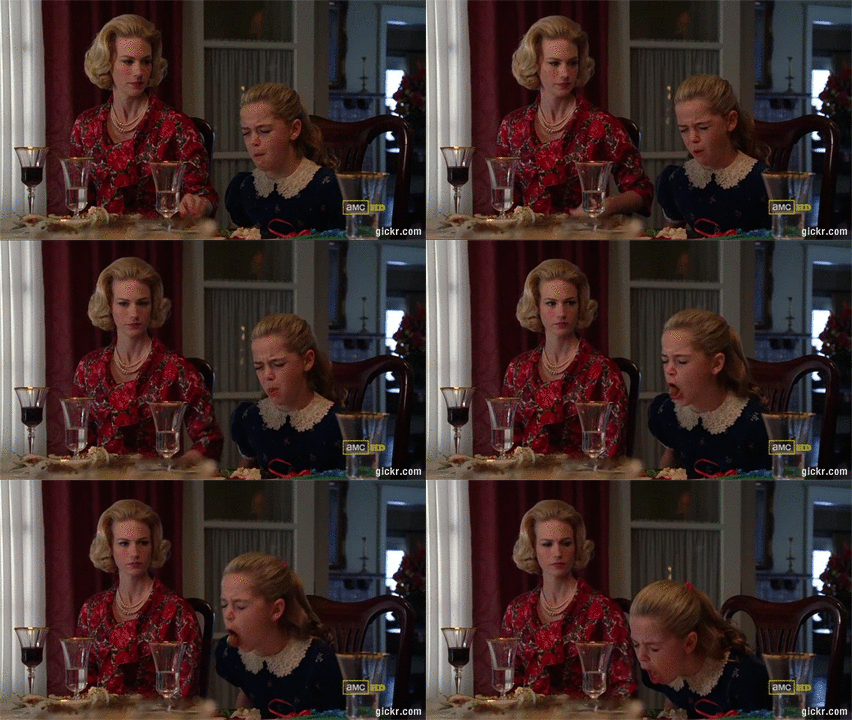
Pleasant.
And even though none of the characters exhibited eating disorders like Anorexia or Bulimia in the storyline, it got me to thinking about how, once again, it is not the food itself, but rather what the food represents that makes things more tangled.
Observing this mother-daughter force feeding scene, to me, it represented keeping the status quo of appearances.
And it reminded me how family members often assumed the solution to my anorexia was “Just eat something!”
“But food does not commend us to (The Most High) God…”
1 Corinthians 8:8
I had numerous battles with my family members, especially when they repeatedly tried to ply me with cakes, cookies and pies. Sometimes I was defiant. I exerted my starvation rebellion. But, on other occasions, ravenous or obsessed, I indulged. And I remember seeing the look of relief and satisfaction on their faces. It was as if they were saying, “There, problem solved.”
But the problem was far from solved.
Just within my own family dynamics alone, there were unhealthy addiction and dysfunctions going on. Food was the coping mechanism used to escape and endure those things. Food was not just food. And it was insane to think that it could simply and instantly solve any of these deeper pre-existing problems.
Yet, that seems to be part of the expectation attached to the hope-laden statement, “Just eat something.”
Desperation clings to those words, promising the instant happily ever after, the healed family, the restored peace, the lasting relief. Don’t face the truth, let alone, deal with it.
“He who covers his sins will not prosper, But whoever confesses and forsakes them will have mercy.”
Proverbs 28:13
“Just eat something.”
What does food represent? It’s an important question to answer.
But, just as important of a question, if not more so, is “What does the disordered eating represent?”
Are you paralyzed by fear, denial or anger? What don’t you want to see and deal with?
Resist the easy answer that “eating something” is, indeed, the answer to eating disorders. It goes much deeper.
“…‘I am the way, the truth, and the life. No one comes to the Father except through Me.’”
John 14:6
Perhaps the phrase should be “just face something,” rather than “just eat something.”
Healing and the truth are intertwined. This applies to not just the individual, but the entire family as well.
Eating disorders are life-threatening and widespread. They can touch all genders, cultures, and socioeconomic backgrounds.
And this holiday season amplifies the numerous and complicated issues of both eating disorder sufferers, and surrounding loved ones, alike.
We have a Healer in Yahshua and Our Heavenly Father.
“I and My Father are One.”
John 10:30
However, we still are challenged with our human- and our holiday experiences.
For that, there are some helpful tips to get through this season, flawed, struggling, individuals that we are.
“Holidays and special occasions are often very stressful periods for individuals with food and weight problems. The emphasis on spending time with family and on celebrating with food can be very difficult. Based on past experience, and an understanding of yourself and of the people close to you, you may be able to avoid, or cope constructively with, uncomfortable situations. For example:
Predict high stress times and places; decide which events you will and won't attend, and plan to have some time to yourself to restore yourself and take care of your own needs.
Predict which people might make you most uncomfortable and plan appropriate ways of excusing yourself from their company.
If at all possible, allow yourself to enjoy a moderate amount of ‘special occasion foods.’
Predict what people might say that would lead you to feel uncomfortable. Plan and practice responses. Ask people not to comment on your body, appearance, or eating habits.
Predict negative thoughts that you might have during the holidays, and practice thinking differently.
Carry with you a list of phone numbers of friends and crisis lines, and a list of self-soothing activities.