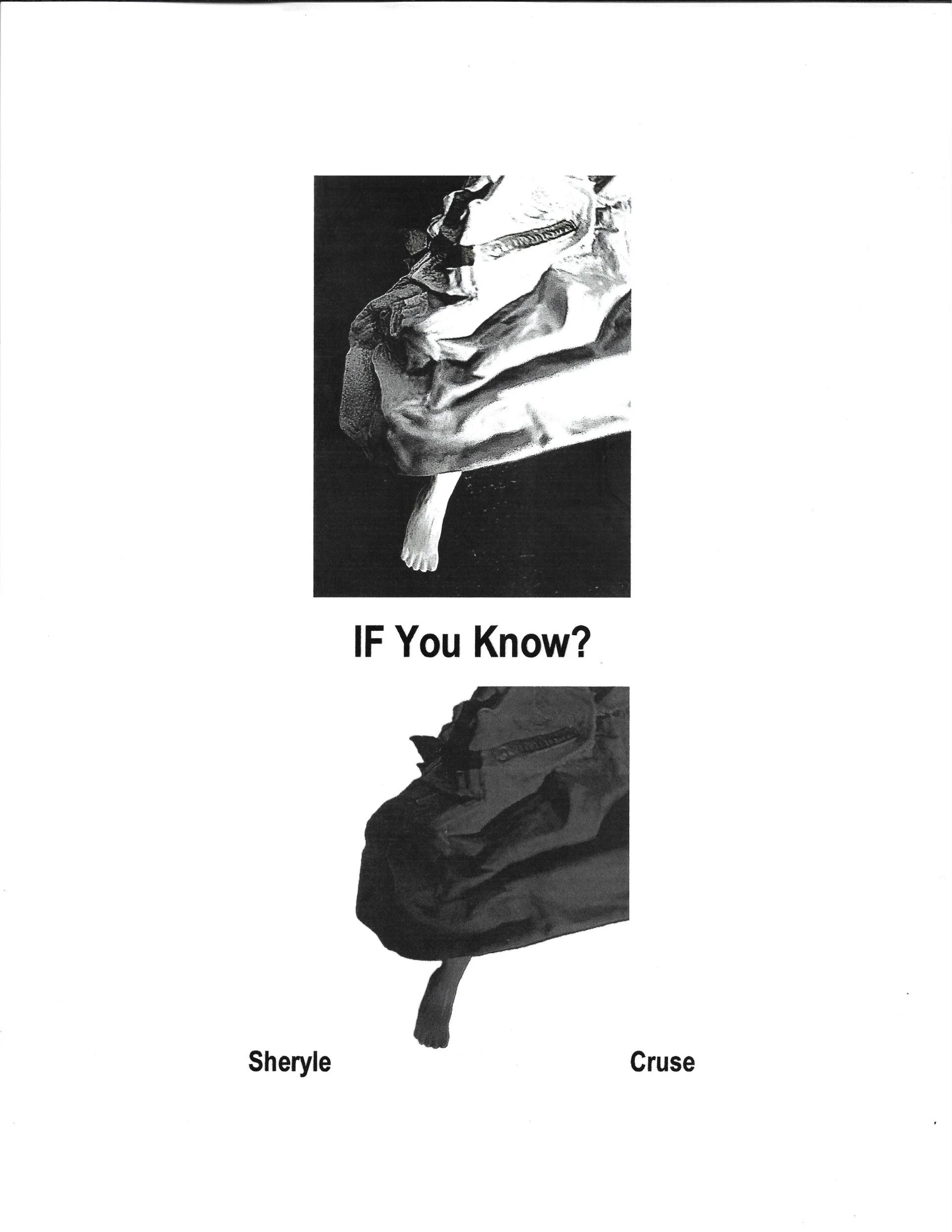
Sheryle Cruse Sheryle Cruse

Warner Sallman (“IF You Know?” Book Excerpt…)


The Identity of Our Savior, for me, was introduced through culture and entertainment.

Image.

Warner Sallman.

I think that my first memory of “Jesus” was when I was probably around five years old. To use Christian vernacular, was this when I “accepted the Lord into my heart?”

Well, probably. At least, I accepted the artist, Warner Sallman’s decorative plate version of a painted Jesus into my heart.

“Christ Knocking at the Door.”


I’m sure you’re familiar with the artwork. It is ubiquitous.

Originally created in 1942, it’s still featured on prints and Bibles. (Years ago, I had a special Warner Sallman illustrated Bible, featuring his other paintings within it).

And, of course, the artwork is on decorative plates.

My mother’s own plate was a hazy bedtime memory for me. “Christ Knocking at the Door” hung on one of my walls.

I remember looking at it, as I had a conversation with my mother, about “accepting Jesus into my heart.”

But not just that. She also shared with me the fun facts about “the age of accountability.”

Was she letting me know that I better behave myself, be accountable, already?

Was this a tactic to get me to be a “good girl?”

Or was she sincerely and soberly “leading me to the Lord?”

I was at that significant age of accountability.

From that point on, I associated Warner Sallman’s depiction of Our Messiah, with the daunting prospect of spiritual personal responsibility. It hit me hard, being five. Pressure.

I doubt I understood the detailed mechanics of Salvation, the Work of The Cross, atonement, what Him “dying for our sins” really entailed.

“Just accept Jesus into your heart, Honey.”

“Jesus loves you.”

(And you are old enough to sin, so you need Him, or else).

I accepted and believed in “Jesus” as that innocent, trusting child.

I was still in a spiritually hostile, abusive warzone. There was no Christian atmosphere of church going and Bible reading.

It felt more like, “Here, accept Jesus into your heart. You did that? Good! Now we can move on. Stay out of trouble. Don’t be a problem.”

Not exactly the Gospel Message of one’s dreams.

Read More
Sheryle Cruse Sheryle Cruse

The Freezer in the Bedroom


As a kid, once upon a time, my childhood bedroom was upstairs, in our nearly one- hundred- year- old, poorly insulated house. Summers were tropical rainforests, complete with Minnesota mosquitoes, keeping me awake. Winters were Arctic, requiring multiple comforters at night. Long story short: it became next to impossible for me to sleep up there, in my baby blue- painted, but unhabitable, childhood bedroom.

Eventually, I slept in the living room, on the pull-out couch.

Fortunately, around the age of eleven, my family finally decided to replace the house’s deteriorating porch with the new addition promise of a “family room” and…drum roll please… a newer childhood bedroom for me.

Granted, it was not painted baby blue; wood paneling was its motif. And, it was a much smaller square room, as opposed to the vast pizza oven/deep freeze as my first upstairs bedroom.

Compromise, okay. I’d deal with it.

“I know how to be abased, and I know how to abound. Everywhere and in all things I have learned both to be full and to be hungry, both to abound and to suffer need.”

Philippians 4:12

At least I got my own room, better insulated, a place I could really sleep in and await my joyous adolescent years (can you hear my sarcasm?).

So, after a three-month summer vacation, spent tearing off the old, replacing it with the new, finally, I had my small square bedroom. I was giddy. I walked into the empty space, imagining where I’d place my bed, dresser, and vanity.

But before I could get any of my stuff in, furniture or stuffed animals, my family shoved a gigantic meat freezer along one entire wall of my bedroom.

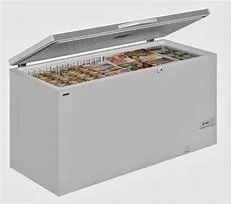
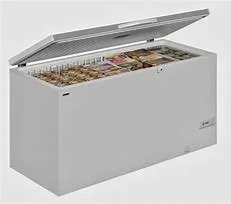
That’s right, I said meat freezer, one of those humungous, topaz-colored models that looked like a full-on coffin.

I think you could probably stick a full-grown man in that sucker, without needing to do any dismembering.

Handy.

And my family just assumed (you know what they say about assume) that I would have no issue with this arrangement. I didn’t have room for some of my bedroom furniture, but hey, I should be grateful to just get a bedroom, right?

I said that to my eleven-year-old self, trying to convince her this freezer was not encroaching on privacy or development in any way. No biggie. I still had my little haven where I could write, read, draw, listen to music, and enter adolescence.

Let’s get the show on the road!

Only, the show was frequently interrupted by a family member entering my room to extract some frozen meat from my room.

Oh, Rib-eye tonight, huh?

Meanwhile, I turned twelve. Then thirteen.

Years of lunches and dinners brought about by people barging into my room, opening the freezer coffin lid, chilling the room for about ten minutes after it was closed, and feeling like my privacy was invaded. My boundaries of separateness as a budding person were treated as nonexistent. After all, I should be grateful to have a room.

This eight-foot freezer is no problem; it’s not an issue.

But, as a feisty thirteen-year-old, I started voicing (whining) my displeasure, attempting to reason with certain family members, trying to negotiate a relocation for this meat freezer. I was growing up, getting bigger, needing more space and privacy.

Eventually, my negotiating (whining) won out. It was finally decided that this large monster would be moved to the garage, where, in my opinion, it should have resided the entire time. We also had a basement with plenty of space to inhabit the freezer.

Really, why did it have to land in my small bedroom, in the first place?

Answer? Because it was convenient.

And here, I learned a lesson about weak and disrespected boundaries of what is and is not allowed and enforced.

It was simply more convenient to place the freezer in my bedroom. No one needed to go downstairs, in the dingy basement to get the wrapped meat. No one needed to go outside to the garage.

Just easy- peasy. Get it from Sheryle’s room. She doesn’t mind. It’s no big deal.

And besides, the freezer was once kept on the old porch. It’s the way things have always been done. Why change?

Recognizing any of the dysfunctional patterns, trampled boundaries, or harmful assumptions within your own life?

Why am I harping about this freezer, years later? Why can’t I get over it, as many people would say?

Because sometimes a cigar is not just a cigar. Sometimes a freezer is not just a freezer.

This large behemoth was a testament to how there was a resistance to change, to respecting boundaries, and to respecting privacy, as harsh as it sounds.

“Let all things be done decently and in order.”

1 Corinthians 14:40

My family did not see me as a separate individual who needed time, space, and privacy to grow. Convenience and attachment to the familiar status quo were more important than acknowledging that me, as a child, had a right to develop and discover myself without encroachment.

To me, subjectively, that freezer encroached on my time, space, and privacy. No one else saw it as an issue, because it was not an issue to them.

Silly, blown out of proportion, perhaps?

Well, hang on.

Because, again, the object, any potential object, is not just a neutral object. It is a representation to you, to me. And, even if it is that representation to only you or me, it’s still, nonetheless, valid.

It often, however, taps into the greater messages surrounding autonomy, self-esteem, boundaries, people pleasing, and any number of mistaken thoughts and beliefs.

“For do I now persuade men, or God? Or do I seek to please men? For if I still pleased men, I would not be a bondservant of Christ.”

Galatians 1:10

What is that for you?

What is your freezer?

Like I said, I negotiated the freezer’s removal from my small bedroom.

By age fourteen, my room was freezer-free. However, the issues, the messages, and the refusal to allow me to be me were still in place.

And here I slammed head-on into an ugly reality many of us confront when it comes to our family dynamics: there can exist both an inability and an unwillingness for some individuals to view us with the respect, dignity, and healthy treatment we inherently deserve. We need to face that and deal with how things are.

And then we need to make a choice. How will you and I treat ourselves, freezer or no freezer, metaphorically speaking?

“Let all things be done decently and in order.”

1 Corinthians 14:40

We can often get talked out the validity of our experiences, dismissed as being too sensitive, taking things too seriously, blah, blah, blah. You’ve heard the criticisms in your own life, right?

If it’s a problem, an issue, a wound for you, that’s legitimate. If you feel a violation, that is valid and needs addressing.

If individuals refuse to acknowledge and validate what is bothering you, then you, with the help of The Most High, need to come to terms with it.

“But I am poor and needy; Yet  (Elohim) the LORD thinks upon me. You are my help and my deliverer; Do not delay, O my (YAH) God.”

Psalm 40:17

You are worth being seen, heard, loved, and valued. Don’t let anything convince you otherwise.

So, yes, I’ve been learning all about what are my personal feelings and boundaries. I am learning about my individual value.

I have value… in Him.

“I will praise You, for I am fearfully and wonderfully made…”

Psalm 139:14

“I have chosen you and have not cast you away.”

Isaiah 41:9

All this from a freezer in a bedroom?

Yes, all this from a freezer in a bedroom.

Copyright © 2025 by Sheryle Cruse

Read More
Sheryle Cruse Sheryle Cruse

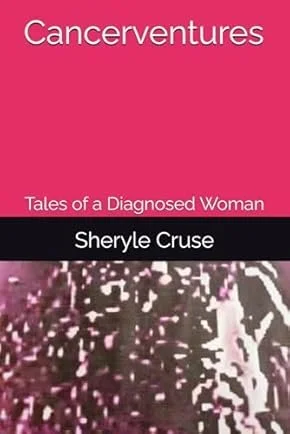
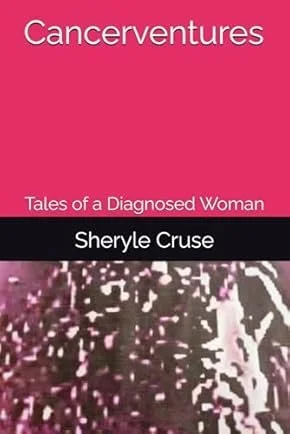
And NOW, MRI Stands For “Me Really Irritated:” (Excerpt from “Cancerventures: Tales of a Diagnosed Woman”)

“Yea, though I walk through the valley of the shadow of death, I will fear no evil: for thou art with me; thy rod and thy staff they comfort me.”

Psalm 23:4)

(Excerpt from “Cancerventures: Tales of a Diagnosed Woman” by Sheryle Cruse)

And NOW, MRI Stands For “Me Really Irritated:”  

“(Hubby) and I waited a couple more hours for the MRI. 

We moved to the imaging area of the hospital and made small talk. I bought a small bottle of orange juice to take with me in case I was lightheaded with the IV and my stressed-out nature. I felt a little better, having one scary appointment down, with the genetic testing consultation. Now, all I had left was the one involving the dreaded IV.  

Finally, a male technician called my name. Here we go.  

We walked down the hallway to a changing room area. I immediately let him know about my tricky vein situation and enquired about butterfly IVs. My heart sank at his answer. 

“Well, we don’t use them. They tend to have too fine a needle; we’re afraid that they’ll splinter off.” 

Fabulous. 

“Well, what about a vein detector? I’ve heard you use them here in the hospital.”  “Vein detectors? We don’t have them here. Don’t worry, we do this all the time.”

(Yeah, I’ve heard that before. You haven’t met my veins). 

I changed into two blue gowns. One opened in the front, untied and the other covered me, with its ties in the back. I waited until they were ready to prick me. 

The technician came for me, and we walked to an IV station. I sat in the recliner- looking chair, set my orange juice next to me, ever-ready for potential wooziness and fainting. 

He got the IV materials together, tied the rubber tubing around my arm and pressed in its crook, trying to find a ripe vein. He swabbed a spot on my right arm with alcohol and called me, “Dear.” Okay. He was a man in his twenties, someone I could have once babysat, but okay, Dear. He tried to make small talk.   

“What kind of music do you want played in the machine?” 

(They give you earphones and attempt to drown out the loud noises by offering a selection of music styles. Personally, for me, it didn’t work. It just sounded like a loud machine with music piped in. More noise added to the noise).

I joked, “Polka.” He laughed. “I don’t care, anything…”

“Christmas music?” He playfully chimed in. 

And, all the while, he’s trying to get the perfect “stick.” He missed. 

“Oh-h-h-h. I know.  I’m sorry, Dear…” 

So, second attempt: he tried the top of my right hand. He missed. I heard his nervous laughter. 

I felt vindicated. 

“Don’t worry, we do this all the time” echoed in my mind. 

By now, he was more nervous. Two failed sticks and the machine needed its stuck patient already.  

Just then, a nurse passed by, and I swear, he pounced on her, quickly handing me off. 

“Hey, could you get an IV in her, please?” He fled. I never saw him again. 

So, she got a quick primer from me about my notorious veins, grabbing both of my outstretched arms, doing a quick scan. She assessed the top of my left arm had potential.  

“Feel a little poke…” 

And presto! We made contact. It didn’t hurt much more than a needle stick. Of course, I looked away. But, finally, the IV was in. 

We moved to the large MRI room and my first thought, looking at the machine, was the science fiction classic, “2001: A Space Odyssey.”

“Open the pod bay doors, please, HAL.”  


The nurse told me to climb onto the table area and place my tatas into the two breast shaped holes. I was face down, with my hands resting above my head. One hand was closer to a “panic button.”  

No, it was just a communication button, but if I did have a claustrophobic moment, I could let the nurse know asap. I was given my headphones and I waited for the 1990s alternative rock music to start playing. 

I was rolled into the machine’s tunnel, already whirring and noisy. I could barely hear the music. “Can you hear me? Are you comfortable?” asked the nurse. 

“Yes. I’m okay.” 

“If you need anything, just press the button. I’m right here.” 

My MRI commenced, lasting for the next forty-five minutes. Just whirring noise, with me face down in the tunnel trying to hear songs from Nirvana and Oasis. 

Once done, she helped me up and oh, so carefully, removed the IV. That hurt more coming out than it did going in. I took a swig of orange juice. She escorted me back to the changing room area. I asked how many shots she got of my breasts. 

“Oh, thousands.”  

I let that sink in. Thousands. 

Once changed, I walked back to the waiting room. I found Russell seated. His eyes immediately went to my taped arms- all three sites. He shook his head and smirked.  

Pin cushion. 

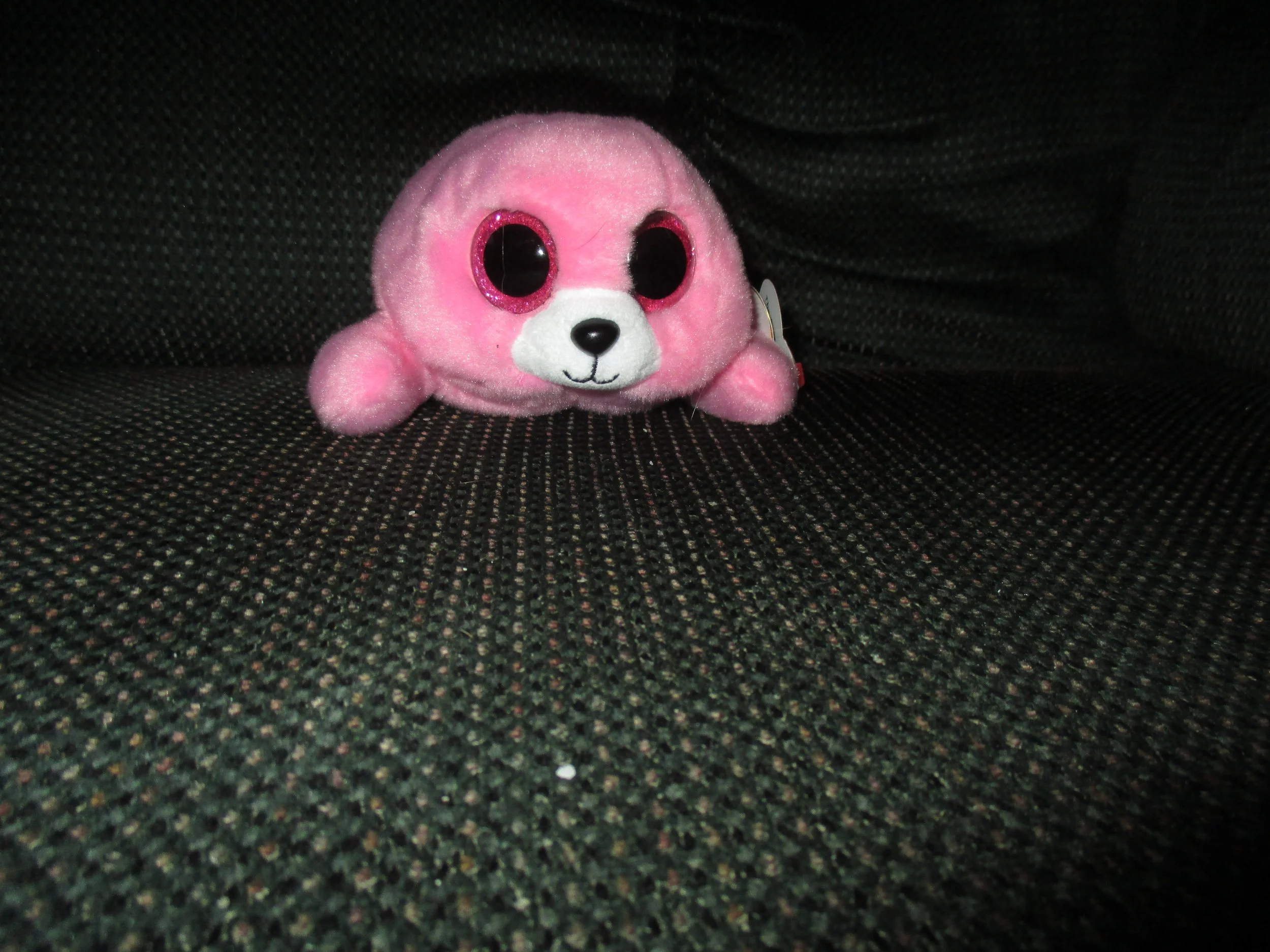
We left the hospital, and Russell bought me a pink seal named “Pierre” at a local store.

The cute face caught my attention earlier. And, of course, when you think of Breast cancer, you think of a pink seal named after a French guy…  

Copyright © 2025 by Sheryle Cruse


Read More
Sheryle Cruse Sheryle Cruse

Just Eat Something!


We are gearing up for the holiday season, and with it, holiday food situations.

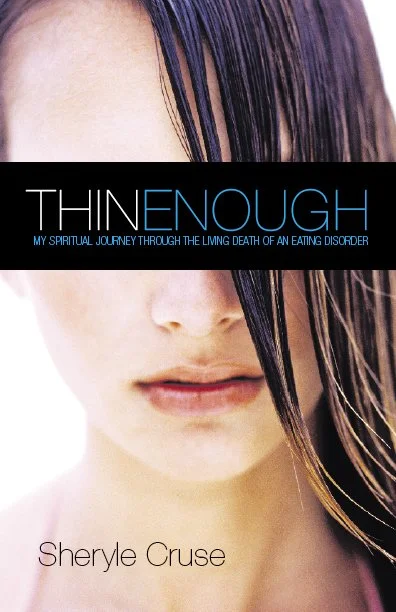
As an eating disorder sufferer in recovery for years now, experiencing both Anorexia and Bulimia, I understand the minefield of food issues.

It’s not just food for food’s sake; rather, it has more to do with what it represents.

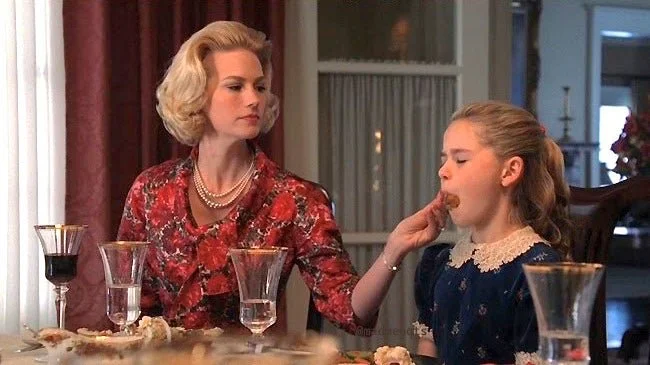
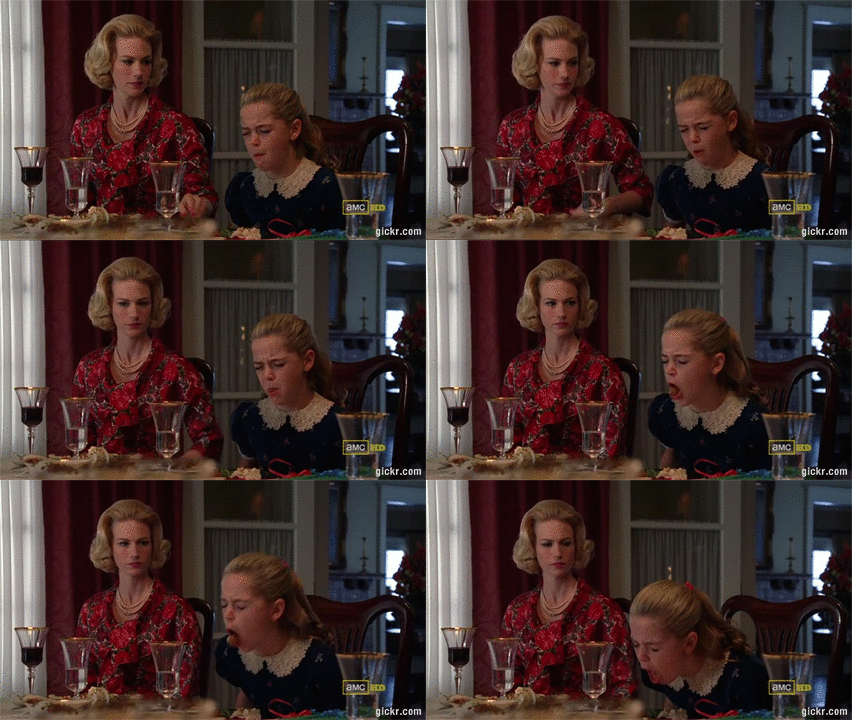
In a holiday-themed episode of the popular television series, “Mad Men,” we witness an exchange involving mother and daughter.

A family member at the table asks the daughter character, “Don’t you like your food?” The daughter responded with a no.

And that prompted an uncomfortable force-feeding session.

Mother is shoving cranberries into daughter’s mouth- against daughter’s wishes.

Pleasant.

And even though none of the characters exhibited eating disorders like Anorexia or Bulimia in the storyline, it got me to thinking about how, once again, it is not the food itself, but rather what the food represents that makes things more tangled.

Observing this mother-daughter force feeding scene, to me, it represented keeping the status quo of appearances.

And it reminded me how family members often assumed the solution to my anorexia was “Just eat something!”

“But food does not commend us to (The Most High) God…”

1 Corinthians 8:8


 I had numerous battles with my family members, especially when they repeatedly tried to ply me with cakes, cookies and pies. Sometimes I was defiant. I exerted my starvation rebellion. But, on other occasions, ravenous or obsessed, I indulged. And I remember seeing the look of relief and satisfaction on their faces. It was as if they were saying, “There, problem solved.”

But the problem was far from solved.

Just within my own family dynamics alone, there were unhealthy addiction and dysfunctions going on. Food was the coping mechanism used to escape and endure those things. Food was not just food. And it was insane to think that it could simply and instantly solve any of these deeper pre-existing problems.

Yet, that seems to be part of the expectation attached to the hope-laden statement, “Just eat something.”

Desperation clings to those words, promising the instant happily ever after, the healed family, the restored peace, the lasting relief. Don’t face the truth, let alone, deal with it.

“He who covers his sins will not prosper, But whoever confesses and forsakes them will have mercy.”

Proverbs 28:13

“Just eat something.”

What does food represent? It’s an important question to answer.

But, just as important of a question, if not more so, is “What does the disordered eating represent?”

Are you paralyzed by fear, denial or anger? What don’t you want to see and deal with?

Resist the easy answer that “eating something” is, indeed, the answer to eating disorders. It goes much deeper.

“…‘I am the way, the truth, and the life. No one comes to the Father except through Me.’”

John 14:6

Perhaps the phrase should be “just face something,” rather than “just eat something.”

Healing and the truth are intertwined. This applies to not just the individual, but the entire family as well.

Eating disorders are life-threatening and widespread. They can touch all genders, cultures, and socioeconomic backgrounds.

And this holiday season amplifies the numerous and complicated issues of both eating disorder sufferers, and surrounding loved ones, alike.

We have a Healer in Yahshua and Our Heavenly Father.

“I and My Father are One.”

John 10:30

However, we still are challenged with our human- and our holiday experiences.

For that, there are some helpful tips to get through this season, flawed, struggling, individuals that we are.

“Holidays and special occasions are often very stressful periods for individuals with food and weight problems. The emphasis on spending time with family and on celebrating with food can be very difficult. Based on past experience, and an understanding of yourself and of the people close to you, you may be able to avoid, or cope constructively with, uncomfortable situations. For example:

  • Predict high stress times and places; decide which events you will and won't attend, and plan to have some time to yourself to restore yourself and take care of your own needs.

  • Predict which people might make you most uncomfortable and plan appropriate ways of excusing yourself from their company.

  • If at all possible, allow yourself to enjoy a moderate amount of ‘special occasion foods.’

  • Predict what people might say that would lead you to feel uncomfortable. Plan and practice responses. Ask people not to comment on your body, appearance, or eating habits.

  • Predict negative thoughts that you might have during the holidays, and practice thinking differently.

  • Carry with you a list of phone numbers of friends and crisis lines, and a list of self-soothing activities.

It may be helpful to realize that the ‘picture-book’ holiday sense is not a reality for many people. Some cannot afford it, there are many single people who are not close to their families or do not have a family, and there are many families that do not fit into the dominant cultural model of ‘family.’ Do not blame yourself for family or friendship conflicts. People are not different during the holidays than any other time of the year. Remember that you are responsible only for your own actions and for taking care of yourself.”

NEDIC Bulletin: Vol. 7, “Coping With the Holidays,” National Eating Disorder Information Centre (NEDIC)

Used with permission.

No condemnation here.

Take this season to bask in His Joy, Peace, and Healing. Be thankful for His many Blessings.

Be gentle and forgiving, especially of yourself. Ask The Most High for His Help, as you face eating.

Do not “force feed” disorder.

It’s not “Just eat something.”

It’s “Turn to Him.”

May you be safe, happy, and healthy, in not just what and how you eat, but in how you live!

“…I have come that they may have life, and that they may have it more abundantly.”

John 10:10

Copyright © 2025 by Sheryle Cruse

Read More
Sheryle Cruse Sheryle Cruse

Toying with Goodbye


“When I was a child, I spoke as a child, I understood as a child, I thought as a child: but when I became a man, I put away childish things.”

1 Corinthians 13:11

Au revoir. Goodbye.

Only it’s not that simple, is it?

It’s grief, riddled with loss, heartache, heartbreak, and decisions that cannot be undone.

Things that have been precious, meaningful to me.

It feels like I am caught in a whirlwind of seemingly never-ending goodbyes.

Not the first person gasping in the whirlwind, not the last.

Toys.

As a grown woman, surviving abuse and cancer, shouldn’t I be able to let go of these things much more easily?

I confronted nostalgia and painful feelings, not because I wanted this confrontation, but because I had to experience it. And it started with first thing’s first: my first doll. A rubber, chubby blonde baby that I only kept because I thought I should keep her.

Should. There it is again.

Unrealistic expectations and the fight against saying goodbye.

This first doll was ugly. I never played with her. But she was attached to the family story of how she was bought in the hospital gift shop where my mother purchased my first pink teddy bear. First. Meaningful. Connection.

The family’s account involved how I almost died as that infant. Things were if-y. Better get me baptized. Better buy the first toys before I die.

There it is. Goodbye.

I recently got rid of the doll, but the goodbyes don’t go away.

Things of the past. Things I was struggling to let go of.

For once they are gone, they’re gone. No going back to having them. No going back to being in my life, in the same way?

Life, now for me amplifies the reality of change, loss, and goodbye.

Since the Pandemic, many of us have needed to put away childish things, for mere survival.

Life has changed. Death, change, and loss are here in more immediate ways.

Life demands we look at our lives, put way some things, mature, face the reality of a fragile existence. It’s personal, unique, and universal. And no one escapes it.

Playtime, indeed, has changed.

“The new normal” is more than just an expression. It is life.

Change is a part of life.

“To everything there is a season, A time for every purpose under heaven.”

Ecclesiastes 3:1

How is it showing up for you?

Regardless of the circumstances, turn to Him.

“For I, (Elohim)… will hold your right hand, Saying to you, ‘Fear not, I will help you.’”

Isaiah 41:13

Let’s do that now and pray.

ABBA Father-

We come to You, in The Name of Your Son, Our Savior, Yahshua.

We accept that He died for sins.

We ask for Your Help to change.

Help us to say goodbye.

It’s sad and scary.

You have promised to help us.

Thank You for that.

We turn to You now.

Do what we cannot do for ourselves; we need You.

We receive it, in Yahshua’s Name.

Amen.

Copyright © 2025 by Sheryle Cruse

Read More
Sheryle Cruse Sheryle Cruse

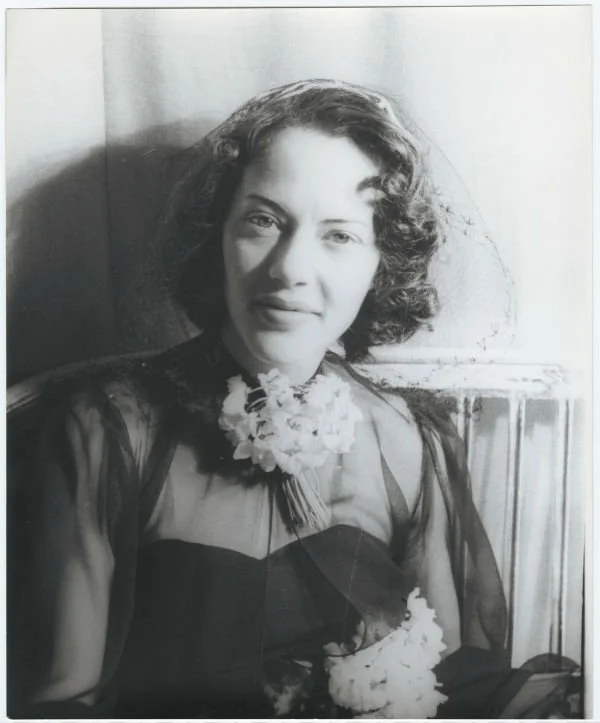
Fredi Washington (IF You Know? Book Excerpt)

“It is the glory of (YAH) God to conceal a thing: but the honor of kings is to search out a matter.”

Proverbs 25:2

This scripture has been impactful in my life, leading me to ask many questions about my experiences.

Fredi Washington was an unexpected person, drawing focus to my family.

I started seeing things in a new way.

Fredi Washington (IF You Know? Book Excerpt)…

I could substitute my aunt’s physicality for Washington in the role of Peola onscreen and it would be believable.

Was there a reason for that?

Was my aunt “light-skinned” or “mixed?”

As my husband and I watched “Imitation of Life,” when Fredi Washington first appeared on camera, I asked him, “Do you think the actress looks white?”

He responded, “Yes.”

This was before I knew her backstory.

Immediately after I asked the question, my husband grabbed his laptop, searched for her bio and confirmed, “Yes, here it is. She was light-skinned.”

And then he read me her life story.

To my husband, to the average stranger, and to myself, viewing my aunt’s appearance, asking that same question, “Do you think she looks white?” again, perhaps, overwhelmingly so, the answer would be a definitive “Yes.”

And there, in my opinion, lies so much of the crux of the issue.

Beyond features and skin colors, to me, the appearance issue is all about how one “presents.”

Presentation, indeed, is supercharged with power and possibility.

If a person “presents” one way, in a particular setting, and a different way, in another, perception, therefore, dictates what happens, either to the individual’s advantage...or disadvantage.

Again, so many conversations with Raqel flooded my mind.

She’d tell me about the “radar” that black people, herself included, possessed when it came to identifying someone who was “passing.”

She told me about encounters with anxious women who clearly were passing, and wanted their secrets kept.

She could have revealed those secrets but chose not to.

She knew- and these women knew she knew.

Their silent exchange happened in seconds.

Raqel recognized she needed to preserve that secret and allow their passing to go undisturbed.

Read More
Sheryle Cruse Sheryle Cruse

The Blue Poodle


“…Each possession you possess,
Helps your spirits to soar,
That's what's soothing about excess,
Never settle for something less,
Something's better than nothing, yes!
But nothing's better than more, more, more…”

“More,” Madonna, The Dick Tracy Soundtrack

Possessions: what do they mean to us?

One of my earliest memories was being with my mother in this gigantic gymnasium, filled with kids. There were all kinds of games and colorful balloons, contrasting this, otherwise, austere, white space.

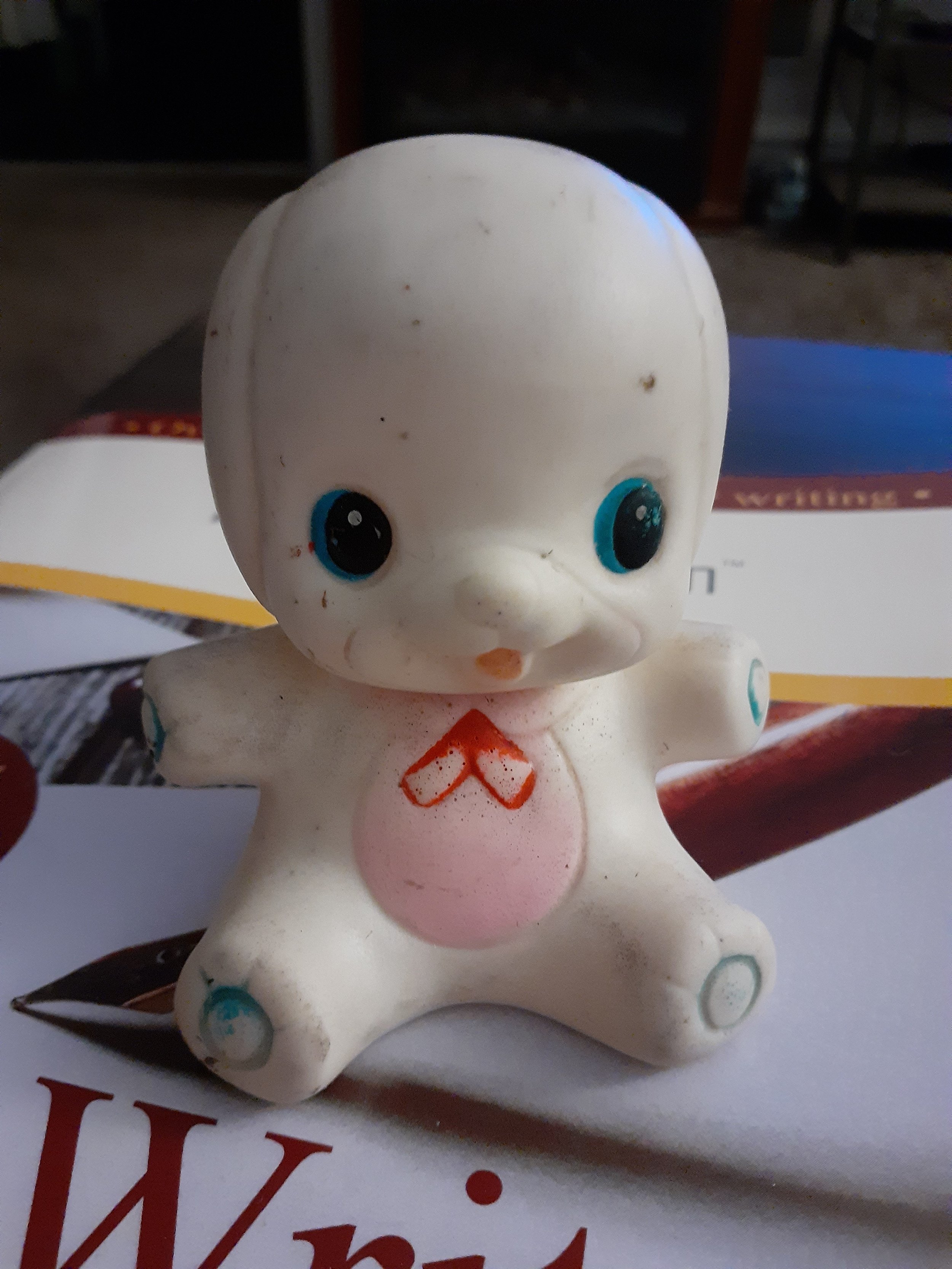
I have no memory of interacting with those kids or playing those games. Instead, what I remember was getting a small plastic toy from a gumball machine, this blue poodle, pictured here.

This poodle has revealed the connection- the dysfunctional connection- I’ve had with possessions.

“For where your treasure is, there your heart will be also.”

Matthew 6:21

Perhaps, you’ve heard this phrase…

“Love people; use things.”

Sure, no problem with mixing those two up, right?

The fancy term for this behavior, collectively, is “Object Fetishism,” subscribing more value to objects than they hold.

Think you’re so enlightened, to be beyond the grasp of a material object’s hold on you?

How do you relate to your possessions, like your car, your, house, your I-Phone?

Ooh, now we have struck a nerve, huh?

For me, I was presented with an unflattering reality concerning possessions; I related more to stuff than to human beings.

Love:

“A new commandment I give to you, that you love one another; as I have loved you, that you also love one another.”

John 13:34

Starting with the basics, I loved my stuff.

Perhaps you’re familiar with the premise of “Love Languages.” It’s a concept that each person has a dominant “love style,” a way of expressing the sentiment, like words of affirmation and acts of service.

Not surprising, “gift-giving” is the love style that fits me.

I wish I could say it had its origins in accessing the “it’s better to give than to receive” scripture I was raised on.

“…‘It is more blessed to give than to receive.’ ”

Acts 20:35

Nope.

It had more to do with effective ways of keeping me quiet. As the tiniest of tots, I had become addicted to pacifiers. Once, on a family trip, away from home, my mother forgot mine. And, of course, I responded with understanding and reasonable acceptance.

Just kidding. I raged with unholy tot-ness, making the family trip miserable.

So, I suppose, concerning my mother, it was lesson learned. And mercenary tactics were implemented to ensure, in the future, I was “pacified.”

Therefore, to keep me quiet and well-behaved in grocery store shopping carts, or any public forum, my mother gave me some rubber toy to hold onto. I was preoccupied with it, especially if it had a cute face.

And true love was born. I was happy and entertained- and quiet- with my new true love. Mom could get stuff done; I didn’t rage and cause a scene.

Win-win, right?

Eh…

However unintentional, I wrongly “imprinted” onto those cute rubber toys. I related to them as real sources of love, a/k/a, nurturance.

As I grew, the object of my affection simply changed form. Rubber toys became dolls that became figurines. Unaddressed issues, addictions, dysfunctional behaviors and abusive dynamics certainly didn’t do much to alter my relationship with – and my dependency on- an inanimate object. If anything, it further convinced me, this was the only way I was going to get nurtured.

Since I have always gravitated toward faces, how much stronger was this bond? A sweet loving face, whether it be a toy, a doll, a stuffed animal or a reassuring figurine, conveyed a nurturing caretaker to me. The sweet expression and/or smile of that face was never taken away or replaced with a hostile scowl.

Nope, just unconditional- unchangeable- inanimate love.

What about you?

Do you receive love from your possessions?

Do the luxury and “status symbol” items, like cars, expensive shoes and the latest gadgets nurture you?

“Do not love the world or the things in the world. If anyone loves the world, the love of the Father is not in him.”

1 John 2:15

That’s ouch-y. Sobering.

Is The Father in us, as we like-love our stuff?

I’m a smidge convicted. How about you?

(Abba, have Mercy; extend Your Forgiveness).

It doesn’t necessarily have to be these “big ticket” items that accomplish this love affair with the things of the world.

What about a favorite toy? A stuffed animal? A, seemingly, ordinary necklace? Are you deriving love from those less flamboyant items?

The “thing” is immaterial; it’s about the love feeling you believe it generates.

What IS that? Why is that?

It can be a sense of being seen, heard and valued. It could mean protection. Perhaps, some of us came from abusive homes and we designated a certain teddy bear to be our bodyguard. We may have done this when we were five, yet, here we are, at thirty-five, forty-five, fifty-five and on, and still, we look for that protecting, nurturance from that object.

It is still transmitting “love,” especially when, perhaps, in human form, love was scarce, more painful and more difficult to come by.

Comfort and Companionship:

Not far removed from the quest for love, is our need for these two essentials.

We want to be soothed, and we don’t want to be alone.

I was an only child. Often, I was lonely.

Only children already have quite a bad rap as spoiled, selfish, and yes excessively needy, a/k/a, lonely. This loneliness cliché is often the major argument used, pressuring people to have more than one kid.

“You don’t want them to be lonely, now, do you?”

Yes, there are those of us who are only children, but we’re human beings first. And no human being is immune from loneliness.

Indeed, it is an excellent teacher in self-soothing. And right here, many of us go off the rails. Imperfect humans seeking to self-soothe. What could possibly go wrong?

I had kids I played with, but I spent most of my time by myself, trying to entertain myself. And, again, the pacifying method was employed as I was given a lot of toys to keep me occupied.

Pinky was such a toy. A three-inch doll, she was all pink: pink dress, pink hair, pink skin. Hence the name.

I know, original.

I took Pinky with me everywhere. And I lost Pinky everywhere, because she was, well, three inches tall and I was five years old.

And epic trauma and search efforts ensued. She went missing in couch cushions, behind the humidifier, in the car, and even outside.

Yes, that outdoor harrowing search and rescue mission found her in a pile of freshly mowed lawn. The lawn mower, mercifully, did not decapitate her when it spit her out. It did, however, give her an unflattering Terminator Cyborg haircut and a scar above her left eye.

But my relationship with Pinky continued until one day, it didn’t.

I don’t know how or where I lost her, but it was devastating, nonetheless.

If I no longer had my companion, what shall become of me?

Do I turn to other loving people to comfort me?

Eh, not so much.

I had imprinted on objects, not humans, as love sources. I obsessed with getting a replacement, instead of working through my issues. And, because it kept me preoccupied and quiet, family encouraged it.

With this subtle message, as I grew, I learned things were the pleasurable answer, not people.

Let’s face it, when you line up a possession next to breathing human being, often, it’s the human that will disappoint, betray you or cause you pain. Not the object.

What’s your “Pinky?” What possession would bring utter devastation to your world if you lost it? Why have you chosen it to be your companion? What relational need is it fulfilling?

It IS fulfilling something.

Identity:

“Behold, I have inscribed you on the palms of My hands; Your walls are continually before Me.”

Isaiah 49:16

Possessions can promise us identity; they’re aspirational.

They can reflect what era we are in and where we desire to go. Here is really where the “status symbol” comes into play.

Most of go through stages as we mature. I had my Garfield stage, my purple stage, my theater mask stage. You can imagine the amount of stuff I have acquired as I moved through each of things. Each represented what caught my attention, and how I could derive a sense of self from it.

Garfield inspired me to start my very own Garfield fan club at the age of eleven. My organization skills probably started budding there, as I created worksheets and word finds (yes, really) for my three club members at our weekly meetings. My purple stage came quite naturally, as I was a teenage girl and, I think, somewhere, in the Cosmos, it is written each female will, at one time or another, be obsessed with all things purple. The comedy and tragedy theater masks were next on my list as I became more involved in acting as a high school student. I had masks on everything, including hair barrettes. As a theater major in college, they even crept into my final Senior project, a performance art piece which incorporated the masks on the face of one of my characters.

What were your eras?

What were the markers of individuation, of personality, of dreams and goals? We can attach power to those totems. We can believe that, by simply possessing representations of them, we will somehow will those things into being in our lives.

I did.

There’s nothing wrong with dreaming, having goals and aspirations, but we need to ask ourselves: do I have this goal or dream or does this thing have me?

“For where your treasure is, there your heart will be also.”

Matthew 6:21

And what do we do if/when that era, that hobby, that obsession has passed?

What do we keep; what do we let go of?

That needs to be a part of the identity process as well. I have had to get rid of a lot of Garfield memorabilia, for instance. I mean, really, does the person I am now need a miniature stapler with the orange cat’s likeness on it? I think I can release that already.

We learn who we once were and can move through it, beyond it, becoming another incarnation of ourselves. That, ideally, is what you and I should be up to as we view the possessions of our various eras. We can- and we need to- let things go. We won’t lose the essence of our identities, only the stuff that helped to get us there.

Meaning:

Ah, yes, the meaning of life.

Cancer should have brought it, crystal clear, to me. Now my priorities are perfectly aligned; now I have wisdom. Now I know what truly matters. I have the answers; I’ve figured it all out.

(I can hear you laughing at my declarations, by the way).

When I was first diagnosed with Breast cancer, over two years ago, I decided to make Kewpie dolls my official cancer-coping mascot. I derived the meaning of irreverence, strength, the whimsical imp characters coming to my aid, all by collecting some of these small doll representations.

Can you just stop and imagine how many Kewpies I racked up?

Yeah.

They’re small in stature, the tallest being about three inches. They mostly decorate my office. And yes, they’re cute. Yes, they remind me of my Breast cancer experiences.

But that notorious side eye on that mischievous face is no longer serving the purpose it once did when I was first diagnosed.

Not surprisingly, I need more, and I’m not talking about more Kewpies.

No, I need the more substantial stuff of life. And here is where cliché triumphs Kewpie.

I need...Yahshua.

“You search the Scriptures, for in them you think you have eternal life; and these are they which testify of Me. But you are not willing to come to Me that you may have life.”

John 5:39-40

As my health, life and body have all changed over the years, I have become aware of what remains and what is.

I am more aware of life.

“The thief does not come except to steal, and to kill, and to destroy. I have come that they may have life, and that they may have it more abundantly.”

John 10:10

It’s easier to focus on what’s missing and what if.

That’s where need and greed get confused, as a pang to somehow, fill this unfillable big black hole of insecurity, woundedness, and pain seems to be overpowering to us mere mortals. We can become possessed.

We think in terms of “bigger, better deal,” “What’s next” and, of course, “More.”

Satiety?

Forget it! Just gimme gimme!

But do we come to Him?

It’s an interrogating question. I’m asking it of myself.

After all…

“As it is written: ‘There is none righteous, no, not one; There is none who understands; There is none who seeks after (The Most High) God. They have all turned aside; They have together become unprofitable; There is none who does good, no, not one.’”

Romans 3:10-12

Pep talk.

Cancer has thrown its life-altering wrench into those old patterns of thinking that promised me personal meaning.

But now, I have all too much limbo in my reality. Recurrence, things being out of my control, a death that, despite my efforts, I may not be ready for. Yeah, Kewpies cannot give meaning to that.

What has been working, as it is an ongoing, daily endeavor, is the gratitude in embracing what I do have and what is… even if it’s just for today, in this moment.

Things like…

I am still alive. I can breathe.

I have my limbs and they work.

I can think and create.

I have the love from my Kewpie-enduring husband and my Joan Jett of a cat, Glory.

But, most importantly?

I have His Unfailing Love.

 “Your unfailing love, O (Elohim) Lord, is as vast as the heavens; your faithfulness reaches beyond the clouds.”

Psalm 36:5 

Stopping, praying and consciously thinking about these things has given meaning to me, beyond a three-dimensional object.

Yes, I have stuff; I have possessions. And yes, some of them mean special things to me.

But there is more. There’s a letting go that is transpiring where I once would have defended to the death (or would have at least given a black eye or two), at the thought of letting go of my possessions.

Again, cancer.

And the phrase, “You never see a U-Haul attached to hearse.”

I am more mindful about what I allow in my life. That is meaning, not stuff.

What about you?

When you think of your possessions, are they more in the “what I don’t have” group, chasing the “bigger, better deal?”

There’s nothing we need to buy.

There IS Someone to know and love.

“We love Him because He first loved us.”
1 John 4:19

ABBA Father-

I come to You, in The Name of Your Son, Our Savior, Yahshua.

I need You. Help me to know and love You.

I have loved the things of this world.

Forgive me of this, and all my sins.

Your Word says that, by doing that, You, as Father, are not in me.

I don’t want that to be the case.

Live and love in and through me; help me to love and know You, “in Spirit and in Truth” (John 4:24).

Thank You.

I receive it, by faith, now.

In The Name of Yahshua,

Amen.

Copyright © 2025 by Sheryle Cruse

Read More
Sheryle Cruse Sheryle Cruse

Do Even Disobedient Tears Count?

“... ‘I have heard thy prayer, I have seen thy tears: behold, I will heal thee...”

2 Kings 20:5

Can I just be real with you right now?

I feel like I am on the verge of ruining everything.

“Who can understand his errors? cleanse thou me from secret faults.

Keep back thy servant also from presumptuous sins; let them not have dominion over me: then shall I be upright, and I shall be innocent from the great transgression.”

Psalm 19:12-13

I feel like I cannot hear, let alone, obey The Most High right now.

I feel that I do not have the right, willing spirit within me.

“Create in me a clean heart?”

“Create in me a pure heart, O God, and renew a steadfast spirit within me.

Do not cast me from your presence or take your Holy Spirit from me.

Restore to me the joy of your salvation and grant me a willing spirit, to sustain me.”

Psalm 51:10-12

Struggling with that right now.

I, more than likely, only have tears of disobedience right now.

It feels hopeless and desolate.

“Waters flowed over mine head; then I said, I am cut off.”

Lamentations 3:54

“Well, then, just turn, just repent?”

I am unclear what that looks like right now.

Real talk here. Real. Not feel-good faith.

I’m unclear what my spirit is supposed to resemble right now.

“Thou knowest my downsitting and mine uprising, thou understandest my thought afar off.”

Psalm 139:2

I feel ruined right now.

I am left wondering, right now…

Do Even Disobedient Tears Count?

“Thou tellest my wanderings: put thou my tears into thy bottle: are they not in thy book?”

 Psalms 56:8

I am not sure about my sheep status…

“Why do you call me, ‘(Elohim, Elohim) Lord, Lord,’ and do not do what I say?”

Luke 6:46

That stings. And I am in a stinging moment now.

“My sheep hear my voice, and I know them, and they follow me.” 

 John 10:27

I don’t feel like I am one of the fold right now. It’s not hard to feel or accomplish that, is it?

“All we like sheep have gone astray; We have turned, everyone, to his own way; And (Elohim) the LORD has laid on Him the iniquity of us all.”
Isaiah 53:6

I use this humorous gif a lot when I write…

Too autobiographical for me now.

Yeah.

“Whatever happens, conduct yourselves in a manner worthy of the gospel of (Yahshua Ha-Mashiach) Christ.” 

Philippians 1:27

I don’t know if I’m doing that right now. Or if THIS is more like it.

“They claim to know God, but by their actions they deny him. They are detestable, disobedient and unfit for doing anything good.”

Titus 1:16

Not so sheep gif funny.

So, do my (disobedient) tears count?

I am not sure.

Faith pep talk again, at a negative fifty-four.

I don’t understand…

“By faith Abraham, when called to go to a place he would later receive as his inheritance, obeyed and went, even though he did not know where he was going.” 

Hebrews 11:8

“Even though he did not know where he was going.”

Yeah. That’s me. But is it in the name of obedience or disobedience?

I cannot tell right now.

I should be able to tell. Especially in a faith context.

It doesn’t correspond to “Faith speak,” does it?

But here I am.

“(Elohim) Lord, I believe. Help Thou My unbelief.”

Mark 9:24

Years ago, that scripture lit up for me. It eventually led me to Jairus’ Daughter (Mark 5:35-43), which changed my life.

I didn’t know where I was going then. I don’t know now.

“But I gave them this command: Obey me, and I will be your (YAH) God and you will be my people. Walk in obedience to all I command you, that it may go well with you. But they did not listen or pay attention; instead, they followed the stubborn inclinations of their evil hearts.”

Jeremiah 7:23-24

Is that me? Is that what I have on my hands here?

Following my own stubborn inclination of my evil heart?

(Abba, please have mercy on me).

So, do my (disobedient) tears count?

I’m hoping, in the name of my pathetic mustard seed faith (Matthew 17:20), ye-e-e-s?

Glass Darkly…

“For now we see only a reflection as in a mirror; then we shall see face to face. Now I know in part; then I shall know fully, even as I am fully known.”

1 Corinthians 13:12

Yep, that’s me.

Pain…

That’s ALSO me right now.

Self-inflicted pain-shot wound?

Or is it pain from beyond my control?

Or is it BOTH?

Unclear.

Nevertheless, I am burdened.

And scripture states that it’s not from Him…

“In fact, this is love for (The Most High) God: to keep his commands. And his commands are not burdensome.” 

1 John 5:3

I don’t know right now.

More painful besides? I don’t feel that I am “remaining in His love.”

“If you keep my commands, you will remain in my love, just as I have kept my Father’s commands and remain in his love.” 

John 15:10

So, do my (disobedient) tears count?

I feel shaky and unsteady, the more I grapple with this.

Leading me to torturous additional question marks…

Second Guessing?

“If you love me, keep my commands.”

 John 14:15

I have been repeatedly hounded by that one BIG tiny word: “If.”

For someone raised by conditional love and abuse, only knowing performative ways of being, inundated by gaslighting as a manipulative tactic, “if” is not just a word. It’s my inherent vocabulary.

Second- third- fourth- guessing.

Because I was always made to be wrong.

Because I was never allowed to be “right.”

Therefore, this scripture is an accurate profile sketch of my tested faith walk…

“But let him ask in faith, with no doubting, for he who doubts is like a wave of the sea driven and tossed by the wind. For let not that man suppose that he will receive anything from the Lord; he is a double-minded man, unstable in all his ways.”

James 1:6-8

Tossed to and fro? Double- minded man?

Unstable?

“Do not merely listen to the word and so deceive yourselves. Do what it says.” 

James 1:22

Again, can I be real with you?

These scriptures, experientially, trip me up…

“So that you may live a life worthy of (Elohim) the Lord and please Him in every way: bearing fruit in every good work, growing in the knowledge of God.” 

Colossians 1:10

“For we are (YAH’S) God’s handiwork, created in (Yahshua Ha-Mashiach) Christ Jesus to do good works, which (YAH) God prepared in advance for us to do.” 

 Ephesians 2:10

Again, it’s the second-third-fourth guessing, going all the way back from childhood. I still wrestle WITH it.

And Matthew 7:21 doesn’t comfort and soothe me much in the area…

“Not everyone who says to me, ‘(Elohim, Elohim) Lord, Lord,’ will enter the kingdom of heaven, but only the one who does the will of My Father who is in heaven.” 

So, do my (disobedient) tears count?

Still mortal, still haunted, still woefully imperfect and issue-laden, I find myself… coping.

In this coping, I try, performance-based me that I am, to… sacrifice.

To “do something.”

Ah, yes… deeds.

And, while that may be noble, productive, and “a good thing” to do, on the surface, The Old Testament schools me ON it…

“But Samuel replied: ‘Does (Elohim) the Lord delight in burnt offerings and sacrifices as much as in obeying (ELohim) the Lord? To obey is better than sacrifice, and to heed is better than the fat of rams.'”

1 Samuel 15:22

Wind officially out of my second-third-fourth-double-minded- sails.

"For rebellion is as the sin of divination, and presumption is as iniquity and idolatry. Because you have rejected the word of (Elohim) the Lord, He has rejected you from being king." 

1 Samuel 15:23

Insult to my sailing injury. And teeing up perfectly, for my old standby: fear of Him.

But the “wrong” kind of fear?

His Wrath?

“Because of these, the wrath of God is coming on those who are disobedient.”

Colossians 3:6

Terror. Violence. Punishment.

These were the experiences that embedded themselves into me, from childhood on. “The worst-case scenario.”

Danger.

"And we are ready to punish all disobedience, whenever your obedience is complete." 

2 Corinthians 10:6

I still have the trauma response to feeling endangered.

Only now, it’s more internalized. It is not the obvious raging, punishing, scary parent towering over the helpless child version of me.

It is the internal harsh taskmaster, believing that the sky will always be falling.

As a card-carrying member of adulthood and “real life” for some time now, I have been presented with enough evidence to see just how awful things can go.

“Under Pressure” lyrics, from Queen and David Bowie…

“That’s the terror of knowing what this world is about. Watch some good friends, screaming, ‘Let me out’…”

Nothing new under the sun about this revelation here. Faith and non-faith people, alike, know this life and world are harsh.

So, do my (disobedient) tears count?

Because, as partial… explanation, I have erected such high stakes for the worst to happen, destruction, wrath, and everything getting ruined, I am not above flailing around in desperation.

And desperation, unfortunately, can be a hop, skip, and jump to disobedience.


“And to whom did (YAH) God swear that they would never enter His rest if not to those who disobeyed? So we see that they were not able to enter, because of their unbelief.”

Hebrews 3:18-19

However, because I am both human, and desperately flailing, now, even if I appear to be “civilized,” I’m unclear and unsteady about my current standing.

I am not at ease.

Consolation Prize?

I’m upset. I’m anxious. I’m riddled with fear, doubt, heartbreak, and confusion.

I need to be consoled substantially, Yes, I need consolation.

This would probably be a great entry point for Mercy, right?

“Your Mercies…”

“Through (Elohim’s) the LORD’s mercies we are not consumed, Because His compassions fail not. They are new every morning; Great is Your faithfulness.”

Lamentations 3:22-23

There is no minimization here. Of the hot mess that I am. Of His Mercies,

Both… in full effect.

It’s the reality check, even yes, with disobedience.

Again…

“All we like sheep have gone astray; We have turned, everyone, to his own way; And (Elohim) the LORD has laid on Him the iniquity of us all.”
Isaiah 53:6

 But we are not done, Fellow Wooly One…

“Throne of Grace…”

“For we do not have a High Priest who cannot sympathize with our weaknesses, but was in all points tempted as we are, yet without sin. Let us therefore come boldly to the throne of grace, that we may obtain mercy and find grace to help in time of need.”

Hebrews 4:15-16

He gets it. He gets temptation. He gets the temptation to disobey.

Disobedience IS temptation.

Don’t get it twisted.

Divine Empathy.

Am I feeling a little better? Are you?

We are still not done.

“In All Things…”

“And we know that in all things (The Most High) God works for the good of those who love Him, who have been called according to His purpose.”

 Romans 8:28

This is a famous scripture for a reason.

Romans 8:28 is all about when we sin and disobey, and the original blessing-filled blueprint, known as His Will and Plan for our lives, gets… botched?

Maybe, even, ruined?

At least, that is our feeling concerning how askew our lives can go.

So, do my (disobedient) tears count?

I’m feeling in the middle of some askew, or, at least, potential, askew.

At least a few dumb and/or disobedient things kicking around in me right now.

Remember how I started my rant here.

Have you noticed that I have not specifically mentioned my entertained thoughts of disobedience? You do not know what hair-brained scheme or situation I’m dealing with.

That’s intentional.

Some of it, yes, is about my privacy. Dumb things are still dumb things.

And they are embarrassing.

And I still am a bit, uh… vain?

But it is also vague and “generalized” so that you can insert your own self into the disobedience portrait.

Call it a cop-out, if you want.

But we are all crying out.

What are YOUR tears of disobedience? What do THEY look like?

Sending out an S.O. S.

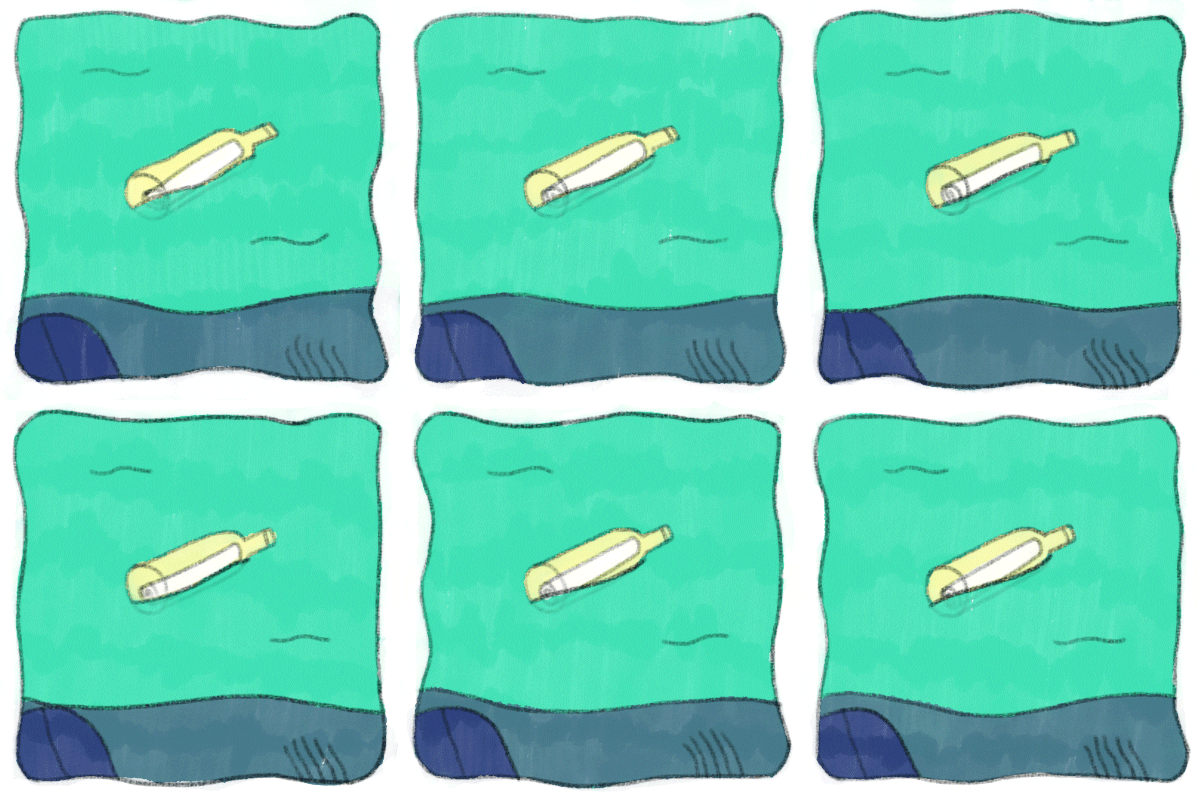
We are all bobbing bottles in the water, with messages inside.

Sometimes, urgent, desperate messages, soaked in different kinds of tears, including, yes, disobedient ones.

“I hope that someone gets my,

I hope that someone gets my,

I hope that someone gets my,

Message in a bottle, yeah,

Message in a bottle, yeah…”

Lyrics, “Message in a Bottle,” The Police

All 1980s pop music aside, He knows that we are bobbing… and crying out to Him.

“... ‘I have heard thy prayer, I have seen thy tears: behold, I will heal thee...”

2 Kings 20:5

We may not know, nor intend to do just that, but all cries in our spirits, minds, and hearts are cries to Him.

He hears us; He responds.

It’s not a free pass to sin, to disobey.

Yet, through His Love for us, through His Provision to send His Son, Yahshua, to pay FOR every disobedient sin and tear (John 3:16), He has the answer to the question:


Do my (disobedient) tears count?

They do.


Things are not tied up in a neat bow. For you. For me. Disobedience- temptation-sin- tears- need Intervention- His. We cannot do this on our own.

Let’s pray.

ABBA FATHER-

I cry and come to You, in The Name of Your Son, Our Savior, Yahshua.

I confess that I am not doing well with faith in You right now.

Forgive me.

“They that sow in tears shall reap in joy.”

Psalms 126:5

Do my disobedient tears count?

You see me crying. You know my pain better than I do.

Please help me.

Forgive my disobedience and sin.

Forgive my inability and unwillingness to see and follow You clearly.

I confess I am struggling and I desperately need Your Help.

Thank You for rescuing me and for cleansing me.

I receive it all, even by, perhaps, weak faith, now.

In Yahshua’s Name, I pray.

AMEN.

Copyright © 2025 by Sheryle Cruse


Read More
Sheryle Cruse Sheryle Cruse

Stupid and Clever


“But (The Most High) chose the foolish things of the world to shame the wise; (YAH) God chose the weak things of the world to shame the strong.”

1 Corinthians 1:27

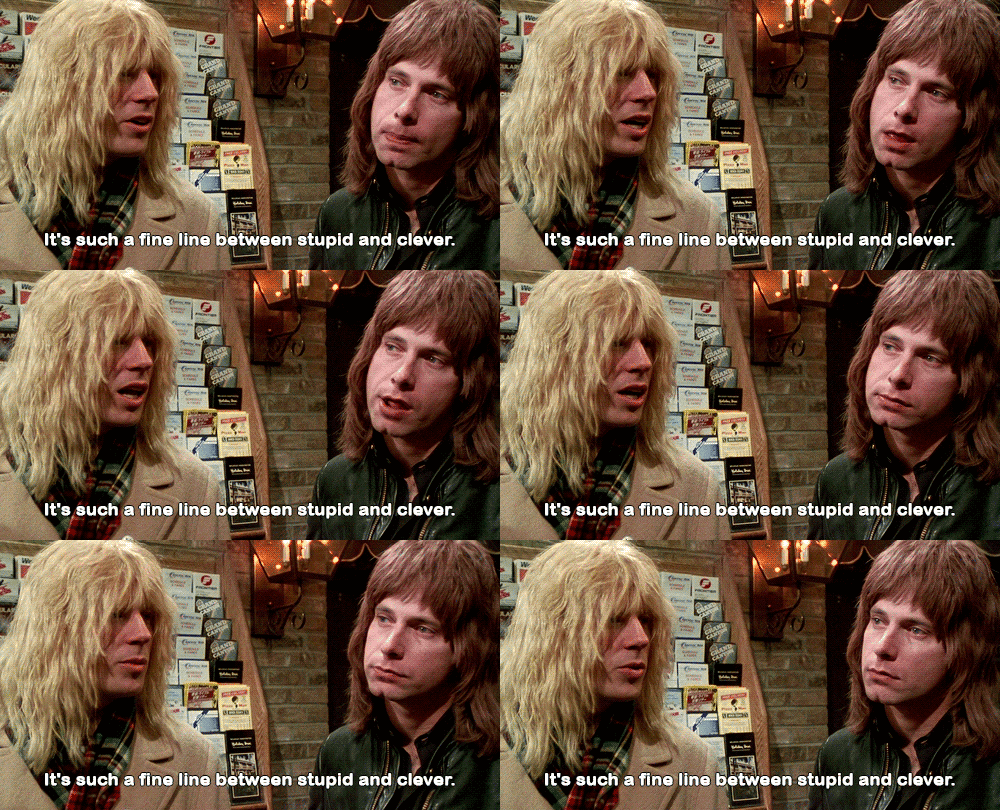
This gif from “This is Spinal Tap” says a lot, huh?

The line: stupid and clever.

Where are we, on any given day, WITH this line?

Foolish? Wise? Weak? Strong?

“The Confounder,” schooling the elite, the experts?

Or “The Confound-ee,” having an embarrassing, teachable moment?

We usually experience a mixed bag within this thing called life experience.

A cautionary reminder, then…

“So, if you think you are standing firm, be careful that you don’t fall!”

1 Corinthians 10:12

Walking the line: stupid and clever.

We are all walking in one of those two ways.

Let’s all say this together…

Stay humble.

Copyright © 2025 by Sheryle Cruse


Read More
Sheryle Cruse Sheryle Cruse

The E is Silent


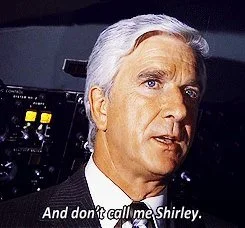
Airplane! (1980) | Don't Call Me Shirley! | Leslie Nielsen, Robert Hays, Lorna Patterson - YouTube

“And He said to them, ‘It is not for you to know times or seasons which the Father has put in His own authority.’”

Acts 1:7

Why did this happen to me?

Why did I get cancer?

What’s really the story behind that “e” at the end of my name?

I have been intrigued by questions, starting with my name’s spelling. It’s “Sheryl,” but with an added “silent e” at the end of it. Because of that letter, I have been called “Shirley” my entire life.

In classrooms. Shirley.

Over the phone. Shirley.

At appointments. Shirley.

Whenever there’s an opportunity for someone to see my name in print. Shirley.

According to my mother, the “e” was added after she made her decision to not name me after the famous child star, Shirley Temple.

She chose, instead, to go with her other personal favorite, “Sheryl.”

But Mom also liked Judy Garland.

Why wasn’t I named after her, with an “e” tacked onto that name?

Judye.

No, I guess that wouldn’t work. Then I’d be called Ju-die.

People would probably get creeped out by the Grim Reaper kind of death association.

Or, maybe, people would mistakenly call me “Juddy,” thinking it was pronounced like “Buddy.”

(Sigh).

Anyway, again, going back to Mom’s love affair with Shirley Temple. It was all about connection to her, even if that was only achieved by approximate letters spelling my name. So…

S-h-e-r-y-l- “silent e.”

“…I have called you by your name; You are Mine.”

Isaiah 43:1

Seven’s my lucky number, huh?

Eh…

Still, why didn’t she just name me “Shirley,” and forgo all of the exacting letters, in the first place? Why did “Sheryl” with a “silent e” win out? I’ll never know for sure.

That one annoying letter. Who knew it’d spurn my future questions?

Why did I have an abused childhood?

Why did I fall prey to disordered eating and body image?

Why did I get Breast cancer?

The short, irritating answer to each question? I don’t know.

I have addressed and I am working through numerous issues, looking at backstories, explanations, unmet needs, all beyond my control. I endeavor to get healthier in body, mind and spirit. I’ve sought deeper wells of my faith, praying. I’ve strained to see purpose. And, I’ve logically accepted time and chance happen to us all.

I’ve covered the human cliché responses.

“For now we see only a reflection as in a mirror; then we shall see face to face. Now I know in part; then I shall know fully, even as I am fully known.”

1 Corinthians 13:12


Still, there’s way too much silence, in response to my questions. At least, there is, in my opinion, anyway.

And, before I launched into a toddler temper tantrum on a grocery store floor, I remembered a statement I heard, years ago…

 “When the student is taking the test, the teacher is silent.”

Really? That’s what this is? Education and character development?

I hear your groans chiming in with mine.

This is only a test?

But it doesn’t feel that simple. After all, we’re talking about an individual’s human life experience. Certainly, that cannot be reduced to a test of character. Isn’t a person’s life worth more than merely that?

Again, I don’t know, because there is silence in the atmosphere. No satisfying explanation that soothes and gives closure.

Nada. Zip. Zero. Zilch.

So, you and I are only left to ourselves, to writhe, to get educated via pain, discomfort and uncertainty?

Yep, it kinda looks that way.

Why, why, why?

Usually, as I’m ranting my why’s, I get a mental picture of a tapestry. On one side, there is this exquisite pattern. On the other, there is a mess of knots and zigzagging thread. Both sides are real; both exist. You cannot have one without the other.

Does it answer every question, struggle and dilemma?

Nope.

It’s a silent tapestry, hanging out with my silent “e.” They’re probably good friends on social media.

 (Stomping my feet) I WANT ANSWERS! I WANT ANSWERS!!!

But instead?

Confusion, angst, anger, and a bunch of other non-peaceful responses are my party guests.

What am I supposed to do with that?

Shaky answer: I don’t know, maybe just be?

It’s beyond the “silent e,” beyond the abuse, beyond cancer, beyond pain. But it’s there, even if I don’t quite know where “there” is just yet.

I am still a seeker. I ask, seek, knock. This is how I go about my life, such as it is.

And I believe there’s something to that.

The writer, Anatole Broyard, in his book on illness, encourages the reader to “find your own style,” especially when it involves a diagnosis.

And, well, we’re all diagnosed with… something.

“My times are in Your hand; Deliver me from the hand of my enemies, And from those who persecute me.

Psalm 31:15

So, okay, that’s it. I guess I continue to “be,” even if it’s this current messiness. This is my style… with a VERY loud “E” attached to the end of it.

“Declaring the end from the beginning, And from ancient times things that are not yet done, Saying, ‘My counsel shall stand, And I will do all My pleasure.’”

Isaiah 46:10

Copyright © 2025 by Sheryle Cruse


Read More
Sheryle Cruse Sheryle Cruse

Prayer from “IF You Know?” Chapter One…

ABBA FATHER-

I come to You, in The Name of Your Son, Our Savior, Yahshua.

I stand in the gap with anyone reading these words, that You would be in complete command of them, and what they mean for my brother and sister.

You know what You have called Your Word to accomplish (Isaiah 55:11).

You know that we are finite beings, and have failed You: in heart, in motives, in understanding, in struggles, in identity, in wisdom, in ability.

Forgive us for not seeking You, seeking to know Who You are.

Help Us, ABBA, to see, to seek, and to Know You, “in Spirit and in Truth.” (John 4:24).

Let there be no discord, division, confusion, or harm, brought by the questions, concepts, and the scriptures we explore (we are to search daily Your scriptures, according to Acts 17:11).

Establish only Your True Identity, Clarity, Confirmation, Revelation, Love, Peace, Joy, Forgiveness, and Freedom.

We endeavor to know more about ourselves and our mysteries.

But we yearn to know Who YOU are to each of us.

Establish that now.

Purify, lead, guide, heal, help, protect, save, and empower us in this discovery process.

Only help us to draw us closer to You.

Draw closer to each of us, with each unanswered question in our hearts and spirits.

May this process we engage in truly glorify You.

We thank You for all You are doing.

We declare it finished and sealed.

In the Name of Your Son, Yahshua,

Amen.

“Teach me thy way… I will walk in Thy Truth: unite my heart to fear Thy Name.”

Psalm 86:11


(Excerpt from “IF You Know?”)

Copyright © 2025 by Sheryle Cruse

Read More
Sheryle Cruse Sheryle Cruse

“I Don’t Know Kitten”

“For now we see through a glass, darkly; but then face to face: now I know in part; but then shall I know even as also I am known.”

1 Corinthians 13:12

I love this Youtube short.

The sweet kitten repeatedly is asked all kinds of emotion/feelings-based questions. And quickly had a toddler-style tantrum response. A lot like us, especially if we don’t know what to do in our lives.

Check the link out.

We don’t know what’s getting to us. But HE does.

Copyright © 2025 by Sheryle Cruse 

Read More
Sheryle Cruse Sheryle Cruse

Commemorate…

Copyright © 2025 by Sheryle Cruse


Read More
Sheryle Cruse Sheryle Cruse

Johnny on The Spot


“Who Himself bore our sins in His own body on the tree, that we, having died to sins, might live for righteousness—by whose stripes you were healed.”

1 Peter 2:24


I’ve been thinking a lot about Spots lately.

They are in the lexicon of our culture.

Spot-on, spot remover, spot treatment, destination spot…

In Scripture, there is the famous…

“That he might present it to himself a glorious church, not having spot, or wrinkle, or any such thing; but that it should be holy and without blemish.”

Ephesians 5:27

“But with the precious blood of (Yahshua Ha-Mashiach) Christ, a Lamb without blemish or spot.”

1 Peter 1:19

Spots all over the place.

Especially of the diagnosed kind.

Years ago, when I had my breast cancer diagnosis, I remember the official biopsy results letter using language like, “the test spotted something.”

Spot.

Spotted something…


“See Spot run!”

No, not the charming “Dick and Jane” book series we read as children.

This was a somber “spot.”


“See Spot Run!?”


More like, “see my terrified cancer thoughts run away with my imagination.”


You know the scary cancer thoughts, especially if you have ever come close to membership, or, indeed, are a member of the prestigious “Diagnosed Club.”

A spot on an x-ray…

It changes life forever.

One white blurry, smudgy “spot” on an x-ray film.

Maybe we don’t feel any pain. But it’s hanging out, growing, occupying space.

Seeing that mass makes it real. Having that diagnosis declared makes it real. Devastating.


And usually, the last thing on our minds, right then, is “I’m healed. I’m gonna get healed.”’

For me, at least, that was the last thought on my mind.

The first?

“I’m going to die,” followed by, “My life is over,” and “There’s no hope.”

“…‘For I am the LORD who heals you.’”

Exodus 15:26

Survivorship.

A word that can be encountered by us diagnosed. It has a built-in connotation and hope that we were healed. We are, perhaps, “in remission.”

No more scary, life-threatening disease. No more death thoughts.

And it would be too simplistic and patronizing of me to say that it’s as easy as that, feeling-wise, and experience-wise.

There are some dark thoughts as we deal with what was one a diagnosis.

Am I going to die?

Am I going to live?

Will it come back?

What IF it comes back?

Healing can feel quite out of reach. Healing can feel impermanent.

But Yahshua…

“But He was pierced for our transgressions, He was crushed for our iniquities; the punishment that brought us peace was upon Him, and by His stripes we are healed.”

Isaiah 53:5

He is the ORIGINAL “JOHNNY ON THE SPOT.”

He paid the Price, for us, in our entirety, including every spot of sin, disease, and pain.

He heals.

“Heal me, O LORD, and I shall be healed; Save me, and I shall be saved, For You are my praise.”

Jeremiah 17:14

Accept Him now. He is Your Savior; you belong to Him.

“Yahshua, I come to You, asking to be My Savior. Be in complete control of my life, from this point on. Be real to me. Show up, not just as my Healer, but as Someone Who loves me with a love that only You give. And that I have been seeking my entire life. Thank You.”

Amen.


ABBA FATHER-

We come to You, in The Name of Your Son, Our Savior, accepting Him to be in control of our lives.

You know what Diagnosis we face.

You know what looks like death.

You know what is scaring us and threatening us.

Whether it’s a first-time diagnosis, uncertain limbo, or recurrence, we, by faith, trust You are Our Healer.

Manifest that in tangible ways for us now.

Help us to live out the future and the hope You promise to us (Jeremiah 29:11).

Whatever “the spot” may be, touch it, cleanse it, heal it, and replace it with Who You are.

Be Our Healer, in every way.

Forgive us for doubting You; help us to believe and trust You.

Thank You.

We receive it, In Yahshua’s Name.

Amen

Copyright © 2025 by Sheryle Cruse


Read More
Sheryle Cruse Sheryle Cruse

Robert E. Lee (IF You Know? Book Excerpt)

History Class?

As I entered college, I took the required history courses. And there was only one professor to teach these courses: “Mr. Lee.”

I name him that here, because the first day of my freshmen history class, as he strode into the room, I remember thinking, “He looks exactly like General Robert E. Lee,” as in the Civil War Robert E. Lee.

That one.

And then he spoke...with a Southern accent.

Keep in mind, this is a small Midwest college.

Mr. Lee was incongruous. Dressed in blue jeans, cowboy boots, and western styled shirts with embroidered red roses on them, his wavy grey hair and beard did cast an impressive resemblance for General Lee, at least, in my mind.

And his accent punctuated his appearance; he was “not from around here.”

And maybe I could have left it at that and simply appreciated this fish out of water with the Southern drawl, were it not for one phrase he repeatedly uttered as he taught his students.

He referred to “The Civil War” as “the war for Southern independence.”

A-ha.

I was curious about his insistence on using that phrase.
As he was the only college history professor on staff, any history class I took, be it American or World History. This usage of “the war for Southern Independence” was built into his instruction.

It was uncomfortable as he peppered this phrase into his teachings. I thought...

 Is he a racist?

Is he not facing the South’s loss in the war?

Does he take the Confederate’s position?

Is he trying to make that period of history less about the devastation of slavery and more about the South’s right to decide for themselves how to run their affairs?

Was he trying to convert us “Yankees” to sympathize with his perspective?

After all, he had a classroom full of “white” students.

Surely, we would see his point, right?

And it’s this unsettling “point” which still disturbs me concerning both my small town and its neighboring communities. There seems to be this limited perspective on history, on the status quo, and on the current world we live in. This perspective appears to insist things are simple, straightforward, and “white.”

But we all know that prejudice runs more insidious than that.

And the very notion that “this place” is “all white,” ergo, we don’t have to deal with anything other than white, promotes its own convenient, subtle, and even “Midwest nice” form of racism.

We don’t deal with matters of skin color and diversity here because we don’t have to.

Oh, really?

Just a white town, then?

“For there is nothing covered, that shall not be revealed; neither hid, that shall not be known.”

Luke 12:2

If You Know?: Cruse, Sheryle: 9798272042019: Amazon.com: Books

 Copyright © 2025 by Sheryle Cruse

Read More
Sheryle Cruse Sheryle Cruse

The Abstract Arise


“…‘I say to you, arise.’”

Mark 5:41

I once came across a painting by the artist Hyett Moore, entitled “Jairus’ Daughter.”

Because of the personal impact this scriptural passage on my own recovery, I am, therefore, drawn to any artistic portrayal of it (Mark 5:35-43):

What is, perhaps, the most striking depiction of Moore’s work is its abstract effect.

It reminds me of a rain-streaked window pane. This art differs from most expressions of the scripture; most, quite frankly, depict a white Messiah and a white little girl.

It’s the European, Hollywood interpretation of the individuals.

And, in my opinion, it adds a stumbling block to recovery that need not be there.

It places limits of what “healing” is supposed to look like.

The word, “arise” means “to emerge; become apparent; stand up; get up.”

Recovery is present within that powerful word.

But are our preconceived notions and prejudices standing in the way? They were for me.

And again, it was connected to Jairus’ daughter.

Blue-Eyed Robert Powell:

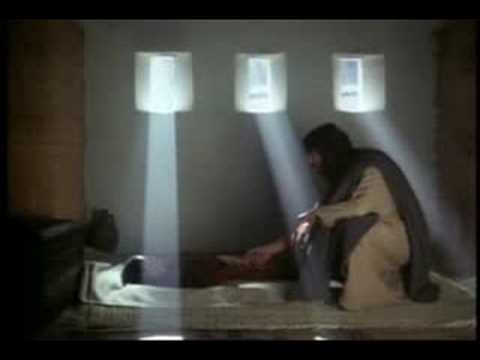
As a child, what really did it for me was the NBC television miniseries, “Jesus of Nazareth.”

Here was where I fell in love with the Savior. Or rather, Robert Powell, the actor portraying the Savior.

For, as I watched that 1970’s miniseries, I believed Mr. Powell.

What mesmerized me the most were his blue eyes which never seemed to blink.

I don’t know if that was a conscious choice on the actor’s part, but the effect was captivating.

In addition, the miniseries cast an actress playing Jairus’ daughter who was a few years older than me; so, I related to her.

There was no cynicism or doubt in that film scene. The scripture came alive in my heart and on my television; Divinity was looking at me without blinking.

But, here was where I first limited its healing effect.

As that child, I bought the dazzling fairytale of the scripture, never understanding how, not only was it inaccurate, it was also confining.

For Mr. Powell, the miniseries, and the account of Jairus’ daughter, itself, could not create a pain-free existence for my life. Expecting that was to be unrealistic.

I grew up.

And, as an adolescent and young adult, I gathered questions and doubts. I fell into disordered eating and image issues and became convinced I was only damned and hopeless.

The dazzling fairytale did me no good whatsoever.

Jairus’ daughter seemed nowhere to be found.

That was, however, until post- college; I then fused Jairus’ daughter with my eating disorder struggles. And, it dared to reintroduce healing again to me.

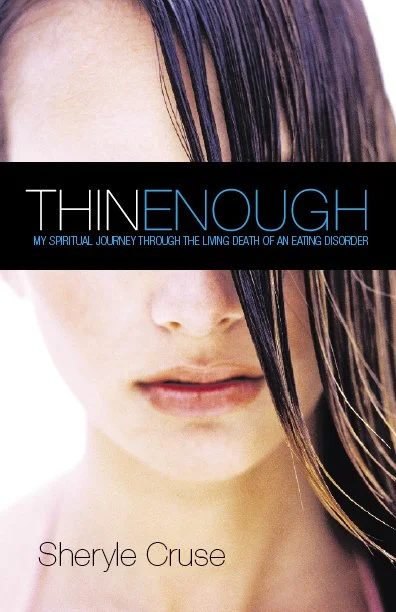
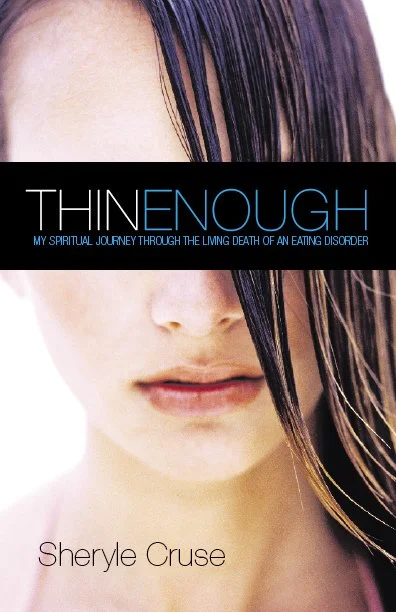
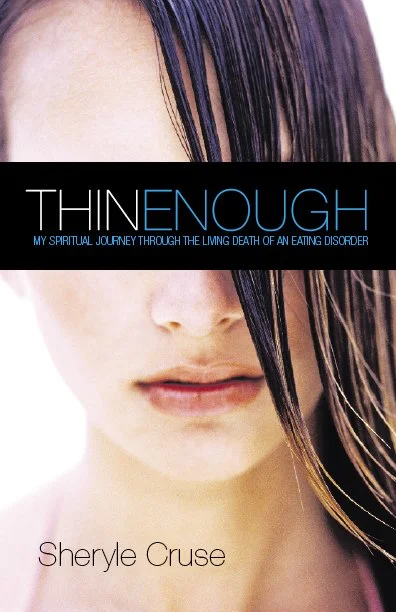
When I finally submitted my will (as much as control freak me could) to embrace, not hide, my eating disorder truth, everything opened up. My writing flourished. Even though it would be years before my book, “Thin Enough” solidified, my life was altered after this latest bout with Jairus’ daughter.

Mark 5:35-43 changed me.

“…‘Behold, I make all things new.’…”

Revelation 21:5

Jairus’ Daughter: An Ongoing Story...

But, The Most High also understood life would bring its many different changes in my faith development.

“Search me... and know my heart: try me, and know my thoughts: And see if there be any wicked way in me, and lead me in the way everlasting.”

Psalms 139:23-24

And, like the uncomfortable physical growth spurts, there would, likewise, be some awkward stages concerning The Divine, image associations, and my imperfect recovery process.

And, no, back when I was intoxicated by this spiritual experience and all of its heady promises of renewal, I hadn’t counted on that.

I hadn’t counted on the constant NEED to challenge my beliefs, my perception of faith, my definition of recovery, and just, what exactly, I believed both the figure of the Savior and the dying girl alike, were supposed to represent for me?

The “arise” now transcends eating disorder recovery for me. It speaks to the deeper healing of my faith.

“Behold... is there anything too hard for me?”

Jeremiah 32:27

Again, the word, “arise” means “to emerge; become apparent; stand up; get up.”

Healing cannot be pigeon-holed.

We “emerge, become apparent, stand and get up” in our attitudes, stages of life, and the faith actions we take, step by step.

But it still doesn’t change that our faith and recovery walks often feel abstract, at best.

“For now we see through a glass, darkly; but then face to face: now I know in part; but then shall I know even as also I am known.”

1 Corinthians 13:12

Unique personal rising is usually not clear, much like Hyett Moore’s painting.

We may feel like the rain-steaked window.

Jairus’ daughter means different things to me now than it did years ago.

Now, it challenges me to look at nothing at face value: recovery, healing, faith, and default settings of what first comes to my mind on any subject.

It’s challenging and painful. Yes, it is.

Nevertheless, if we return to the rain-streaked Hyett Moore painting, we see that, despite its smudgy image, unclear, open to interpretation, it is still the image of healing.

That image of healing depicts each of us.

The challenge is to locate, for us, just what our own “abstract arise” looks like and rise to that reality.

Copyright © 2025 by Sheryle Cruse

Read More
Sheryle Cruse Sheryle Cruse

Translation: Codependency?

“For do I now persuade men, or (The Most High) God? Or do I seek to please men? For if I yet pleased men, I should not be the servant of (Yahshua Ha-Mashiach) Christ.
Galatians 1:10

Cancer has gotten my attention on many things.

But one thing I hadn’t quite counted on confronting was codependency.

And, oddly enough, or appropriately enough, I faced mine as I was placed in a position in which I needed to be taken care of in an intense way. There’s nothing like a threat of death, major surgery, and life-altering changes to one’s physical body to really get someone to face their own limitations and unflattering codependent nature.

One can argue we are all codependent, to varying degrees. It’s not just about enabling a drug addict or an alcoholic, say, giving them money, a place to crash, or bailing them out of jail. Codependency is often more subtle than that.

Trusty-dusty Wikipedia gives us its definition…

“Codependency is a behavioral condition in a relationship where one person enables another person's addiction, poor mental health, immaturity, irresponsibility, or under-achievement. Among the core characteristics of codependency is an excessive reliance on other people for approval and a sense of identity. Definitions of codependency vary, but it is generally defined as a subclinical, situational, and/or episodic behavioral condition similar to that of dependent personality disorder. The term is less individually diagnostic and more descriptive of a relationship dynamic...”

Uh-huh.

Human beings are nothing, if not codependent.

After all, we’re social creatures, interdependent on working and living together. Each of us has strengths and weaknesses. The “many hands make light work” principle is often trotted out, encouraging unity and getting things done, etcetera…

On and on, creating nothing but codependent behavior for miles!

Yes, we need to be helpful, of service… within reason.

With BALANCE!

“Let all things be done decently and in order.”

1 Corinthians 14:40

And here is where you and I can get tripped up, as our poor self-image, need for purpose, and our extreme approval- seeking demand we overextend ourselves, repeatedly.

It would be ideal if we would and could recognize this, each time we fling ourselves into self-destructive, unrealistic “save the world” patterns.

But often, we are too much in the middle of our self-imposed tornadoes to witness them spinning us out of control.

And then, like Dorothy, from “The Wizard of Oz,” we say to our crisis-stricken lives, “Toto, I don’t think we’re in Kansas anymore!”

Cancer has strongly nudged, if not, forced me to examine how I was showing up for others in a codependent fashion.

Maybe you’ll see some of yourself here.

Again, as human beings, it’s hard not to fall into at least a little codependency.

Largely, I believe, that’s because it has a lot to do with unrealistic expectations, both others’ and our own.

Boundaries can be blurry, if they even exist at all, when we traipse into a relationship dynamic with another person.

Codependency can be sneaky and subtle. It is often revealed through what others say to us. Here are just a few of my greatest hits. Enjoy.

“You’re so thoughtful!”

I have heard these words uttered repeatedly throughout my life. It usually follows on the heels of me doing some gift-giving. I love to give gifts; it’s a big way I express love.

However, I’ve needed to adjust my gift-giving, post cancer. I soon discovered, although it was never voiced, certain people expected the gifts to keep rolling in after my diagnosis, while I was in the hospital, getting my surgery, and as my energy levels were zapped.

Still, that notorious expectation…

People wanted things “back to normal” from me. Yes, they paid lip service, acknowledging my health crisis, saying things like “You take care of yourself.”

Yet, actions do speak louder than words, don’t they?

Eventually, their patience wore thin. I was taking too long to recover.

I wasn’t “back to normal.” I was different.

And soon, there was the pressure for the gift pipeline to resume. Resentment, and sarcasm were executed as I tried to “explain” why I just was not getting with the program.

And soon, unrealistic expectation reared its ugly head within me. Guilt. Arguments like “I should give them money, flowers, gifts like I did before. It’s not that bad. I can do this. They’re counting on me. I can’t let them down.”

I was saying this stuff as doctors strongly cautioned I “take it easy.”

That meant no gift-giving, no excessive thoughtfulness (obsession) with pleasing someone else.

I had to take care of myself. I had to rest. I had to receive gifts and help instead of worrying about dispersing them like Santa at Christmas.

Ho- Ho-Ho. Not as merry, as I battled with expectation.

Translation: Codependency

What should everyone expect in this situation? When does expectation become demand?

Gift-giving/receiving has to do the spirit in which it’s done (the intention from both giver and receiver), the expectation (from both parties), and the sense of self derived from doing so concerning both parties.

 (“Am I loved or worthless, based on the transaction?”)

That last one, especially, just shines a big Klieg light onto the “all-or-nothing” way of thinking. Codependence thrives on that premise.

We’re either Savior or Villain. There’s no room in between.

“You’re very conscientious!”

This statement has also been directed at me.

It’s not in the realm of gift-giving. Rather, it mostly operates in the context of “acts of service.”

I do something for someone. Fairly straightforward, right?

Nope.

Here was usually where I responded to an emergency. The only thing was, it wasn’t a one-time thing. No.

I had to repeatedly rescue the individual. This was a pattern.

Yet I was not being conscientious for conscientious’ sake. I was simply envisioning the worst- case scenario… and it was solely up to me to prevent it.

How’s that for ego?

How’s that for completely unrealistic, unhealthy, and unsafe expectation?

“For He knows our frame; He remembers that we are dust.”

Psalm 103:14

Translation: Codependency

Here’s where I was a participant. In these circumstances, whether they be rife with abuse, manipulation, or dysfunction, I was choosing.

I think that’s what gets lost in the shuffle for so many of us, even within these circumstances. We are constantly choosing, making thousands of decisions each day about how we will respond to, well, life.

Iyanla Vanzant, a well-known life coach, has a great quote: “You can always make another choice.”

Not surprisingly, we codependents are not thrilled about that statement. We’d rather believe “there is no other choice” and “I have to do this.”

No, we don’t.

Scripture is clear…

“I am the vine, you are the branches. He who abides in Me, and I in him, bears much fruit; for without Me you can do nothing.”

John 15:5

It’s not about shaming anyone who has been through abuse and treacherous situations.

When you’re in it, you are in survival mode.

There may not be much luxury to analyze the complexities of the environment as, say, you and I are simply trying to stay alive and sane.

However, if we can grasp onto any notion of power and control that we do have access to, we can tap into that power of “making another choice.”

It’s not easy; it’s not instant. It’s ongoing and imperfect.

And it is possible, however, whenever, wherever you and I can accept it. We can make different- and better- choices.

He is helping us to do that.

“Your ears shall hear a word behind you, saying, This is the way, walk in it, whenever you turn to the right hand, and whenever turn to the left.’”

Isaiah 30:21


“I will instruct you and teach you in the way you should go: I will guide you with My eye.”

Psalm 32:8

 “You have a servant’s heart.”

This one still makes me cringe.

I have heard it spoken to me within a volunteer context, where being people pleasing and accommodating were held in high regard.

And, usually, that means there is some form of worthy cause, implying self-sacrifice and “the greater good.”

In my personal experience, this applies to church. I want to state, church is just one of the many possibilities out there when it comes to being codependent in group settings. I’m not “picking on the church.”

However, yes, indeed, codependency is often encouraged within a church setting.

For me, personally, whether I was doing something for a pastor, “the team” or “for the Lord,” it still called into question what was appropriate… and what was not.

It is a sticky question to entertain.

Just how DO you and I deal with things when it appears The Almighty is counting on us?

But notice, I say “appears,” meaning, is that really what’s going on here? Or is it something else?

Volunteering is a noble, loving, human endeavor. But, if/when you and I add matters of faith to the equation, there can be added pressure and blurred boundaries to the mix.

I received a lot of great insights, camaraderie, and personal discoveries of myself within my church volunteering experiences.

But undeniably, I also received some toxic messages, encouraging harmful codependent behavior, for “the greater good.”

For me, that meant staying long hours, being sleep deprived, stressing myself out because of unrealistic expectations (from both myself, and from church staff), neglecting my husband and my writing, because, after all, “this” (whatever the current task or project of the day was) APPEARED to be that much more important.

“THIS,” after all, included…

Saving lives…

Saving souls…

Feeding the hungry…

And so, I often heard the statement, part approval, part warning…

“You have a servant’s heart.”

If the pastors were pleased with my performance, as long as I made things flow easier, generated more money, removed burdens, was compliant and cheerful, while being self-sacrificing, I was, indeed, that stellar person with the servant’s heart.

Deviate from those mentioned examples, however, and I risk being the exact opposite? A selfish, unloving, uncaring person?

Can you see the agonizing, double-bind trap to it all?

Translation: Codependency:

We all need to do our part. Yes.

However, spoiler alert, misuses of power and codependency can thrive.

And, as we’ve heard of many scandals over the years, church is not immune from those exploitative behaviors.

But, again, this goes beyond the church. Think of any “well-meaning cause.”

“The greater good.”

Think of organizations and groups that have set such high bars of curing humanity’s ills. To make any and all of that happen, even the most well-intentioned group can fall prey to encouraging codependency. There can, without anyone realizing it, emerge the message…

“You need to keep giving and doing at this high level, for the cause, so we can experience the results of it.”

Yet, there is less realization and appreciation to OTHER results which can occur if we try to keep up this impossible pace…

An emotional and mental breakdown…

Depression…

Anxiety…

Addictive behaviors…

Broken marriages and relationships…

Deterioration of one’s physical health…

And, while I was impacted by much of the above listed, what, again, got my attention the most was that last one, via my cancer diagnosis.

Now, to employ church terminology, my “temple,” my “vessel,” was at risk.

Translating Codependency:

I wish I could say that my epiphany was one distinct moment.

It wasn’t, even with my diagnosis.

Rather, it was a subtle awakening, like slowly coming out of anesthesia.

I think that’s what it can be like for most of us codependents. We often don’t know what we’ve experienced until, perhaps, years- even decades- after the fact.

Hindsight, 20/20 stuff.

But, sooner or later, we come to recognize the dysfunction, the pattern.

And, sooner or later, we recognize it’s not working.

Our way of dealing with life must change.

People pleasing and being viewed as “nice” can bombard us with guilt and obligation. But we need to look closer at what those connotations are all about.

And, within the framework of codependency, it’s about others’ needs being more important than our own. Each of us needs to recognize our needs, wants, and desires are JUST as valid as someone else’s. And sometimes, they take priority over that other person’s situation.

It’s the cliché example of the Oxygen mask on an airline flight.

You need to put your own mask on FIRST before you can help anyone else.

Besides, there is Elohim…

“‘Fear not, for I am with you; Be not dismayed, for I am your Most High. I will strengthen you, Yes, I will help you, I will uphold you with My righteous right hand.’”

Isaiah 41:10

That is the translating we codependents need to be doing.

Him. It’s about Him.

“…‘We ought to obey The Most High rather than men.’”
Acts 5:29



Copyright © 2025 by Sheryle Cruse


Read More
Sheryle Cruse Sheryle Cruse

Naturally Twiggy?

I once saw a black and white photograph of the ultra-thin model Twiggy eating what appeared to be a plate of batter- dipped fish and French fries.

And it provoked something. It had to do with the trigger-rife connection involving her thin physique and disordered food/body image concerns.

Twiggy (real name, Lesley Lawson) was world famous for her look, one which showcased a boyish, thin body, short hair and large eyes that were further accentuated by painted- on eyelashes. Named "The Face of 1966" by The Daily Express, she took the 1960’s British Mod Scene and the fashion world by storm.

Yes, Twiggy was a game changer. And, because of her androgynous and thin appearance, she has long been criticized for promoting unhealthy body image messages.

Over the years, she has addressed those critiques when it comes to the topic of eating disorders and her own body:

"I was very skinny, but that was just my natural build. I always ate sensibly – being thin was in my genes.”

Reading that statement, therefore, brought up the concept of beauty variation.

In today’s culture, there’s been an obsession with the thin image. That’s no surprise. But, in more recent years, there’s been a growing movement to promote a variation of body shapes and sizes. Curvy, “plus size,” and “real woman” have been some of the buzz words used to describe and promote a healthier, more inclusive definition of beauty. And that’s wonderful, and, believe me, much needed, especially concerning impressionable youth.

But there is also another, less affirming and healthy message, one which is anti-thin.

I know, this is coming from me, the recovering anorexic and bulimic, who once weighed a low two-digit weight.

But there is a vast difference between the disorder sufferer who goes to great, self-destructive lengths to become emaciated and the individual whose body type is naturally thin.

When I was at the height of anorexia and at my lowest weight, I had to employ extreme, dangerous and obsessive actions to achieve that body. I starved myself and exercised for hours at a time. My thin frame required intense manipulation to make it so.

But there are individuals who naturally have thin frames. Years ago, when I came across the following statistic, the point centered on how emaciated models rarely occur naturally.

“The body type portrayed in advertising as the ideal is possessed naturally by only 5% of the American females.”

The Renfrew Center Foundation for Eating Disorders, “Eating Disorders: A Summary of Issues, Statistics, and Resources”

 And, in general, that’s true. However, what is often overlooked is the actual presence of these naturally thin females. Yes, they are a rarity; nevertheless, there, indeed, are some individuals who are “naturally thin.”

I applaud body acceptance, embracing all sizes and shapes. I believe it’s wrong to confine beauty to only a thin image- and an unhealthy version of thin, at that.

But, if we believe “fat shaming” is wrong, then we also need to acknowledge “thin shaming” is wrong as well.

It’s about challenging the image message. When in doubt, talk about the matter. Have the conversation. Ask the questions. If there is a possibility of disorder, address it. If something seems to be an unhealthy image, talk about why it’s unhealthy.

But never, repeat, never, crucify the person. She- or he- may or be suffering. Or she-or he- may be naturally thin.

Regardless, talk, seek to find the answers and help as needed.

Being thin is not the problem. Self-hating, extreme mindsets and tactics, taken to exalt and create a life-threatening image, however, are.

So, with that in mind, why not accept your form, as it is right now, without conditions, without requirements? Take a page from Scripture…

 “O my dove…let me see your form…for your form is lovely.”

Song of Solomon 2:14

That Truth remains. It naturally occurs for you; it naturally occurs for me.

Copyright © 2025 by Sheryle Cruse

Read More
Sheryle Cruse Sheryle Cruse

Gaslighting’s Laughter


“For (YAH) God is not the author of confusion but of peace, as in all the churches of the saints.”

1 Corinthians 14:33

Gaslighting has become a trendy buzzword lately. It’s used to describe the crazymaking tactics often employed within an abusive dynamic.

Indeed, Wikipedia offers its own definition…

“Gaslighting is a form of psychological manipulation in which a person seeks to sow seeds of doubt in a targeted individual or in members of a targeted group, making them question their own memory, perception, and sanity. Using persistent denial, misdirection, contradiction, and lying, gaslighting involves attempts to destabilize the victim and delegitimize the victim's belief.”

It's about creating a nagging self-doubt, in which we question what we see, hear, believe and feel. Some common phrases?

“You’re crazy. You’ve lost your mind.”

“What’s wrong with you?

“Why are you so sensitive? This is no big deal.”

“You’re imagining things.”

In my personal experience, I encountered those uttered words. But I also ran into another tactic: laughter.

I’m not talking about jovial laughter, good- natured stuff.

Instead, often in tandem with these pointed phrases, I ran into dismissive, mocking laughter, utilized to deflect from real, serious issues and situations.

One family member, uncomfortable with their own angst concerning the abuse existing with our family structure, used laughter as deflection, to minimize how dangerous things were and how much behaviors needed to change.

Once, as an adolescent in pain, responding to the abuse, I bared my soul, sharing how I was experiencing suicidal thoughts. Within seconds of disclosing that revelation, this person started laughing at me, telling me I was silly. Chuckles bubbled up as I was labeled as being a” too-intense” teenager.

I felt betrayed. But even more of a betrayal?

Well, I’m sure you’ve heard how laughter can be contagious. If fact, there are actual laughing groups, sharing a human experience of contagious laughter as stress relief and bonding.

Think of that contagious reality and now visualize me, this upset teen, being laughed at over my suicidal thoughts. Soon, that contagious laughter spread to me.

I was laughing, and it betrayed my very truth. I had betrayed myself because I had succumbed to the dismissive laughter, offered by an individual whose sole agenda was to stop dealing with the seriousness of the discussed subject matter. As I laughed, as I betrayed myself, it was mission accomplished.

The message was further strengthened to both this family member and to me alike: the pain I was experiencing was silly and unimportant. I shouldn’t take my feelings seriously.

For years, I had numerous experiences with me being upset, and then, ultimately, joining in the betraying, contagious laughter.

But this suicidal discussion was the final straw.

I learned, at the tender age of thirteen, I was no longer safe discussing anything important with this person. Moreover, I learned another harmful lesson: people, in general, were unsafe. I could not risk vulnerability, for fear of being laughed at…or worse.

I also learned distrust of my feelings. Was my pain really that bad? That real? That important? After all, it was so easily “laughed off,” even by me?

What could- should- I believe about that?

Laughter, in and of itself, is not evil or wrong. We’ve all had those moments with loved ones, in which we burst out laughing, even at inopportune times, like a funeral. It’s spontaneous. The more you try to suppress the giggles, the more explosive it gets. We have a hard time controlling our laughter. We have all had that.

That, however, is a stark difference to the laughter of gaslighting.

Within that context, there is no spontaneity, no loving, “in the moment” experience of being collectively human, having a human, if not ridiculous and free, moment.

No, gaslighting’s laughter is all about agenda. What is it?

Some purposeful device to try to…

… Stop an uncomfortable conversation…

… Make someone question the validity of their pain and upset…

… Redirect focus to something or someone else…

… “Make” a problem go away.

The laughter of gaslighting is never about resolving an issue; it seeks to negate it, to manipulate it.

So, do you see your experiences here? Have you ever encountered laughter, that may have appeared innocent and jolly, but still, never felt quite right?

Have you felt the laughter was at your expense?

Have you felt it was a diversionary tactic to avoid dealing with an important issue?

Not all laughter is equal. Some of it is sinister.

And yes, some of it IS abuse.

If an episode of laughter makes you feel unheard, unseen, violated or manipulated, it’s probably because it is aimed at doing just that.

Trust your gut.

Laughter is supposed to make us feel better, not worse.

“And be kind to one another, tenderhearted, forgiving one another, even as (YAH) God in (Yahshua Ha-Mashiach) Christ forgave you.”

Ephesians 4:32

Copyright © 2025 by Sheryle Cruse

Read More