Incongruities Prayer (IF You Know? Book Excerpt)
ABBA FATHER,
We come to You, in the Name of Your Son, Yahshua.
You know we are having difficulty seeing You, the True You.
You know what incongruities and unusual circumstances we have come from.
You know the physical features that have us questioning our lives.
We have been lied to, even by our own family.
There may be something that no one talks about. Yet, we hear shame, secrecy, and pain loudly in our lives.
Help us to detangle and heal from all deceit, especially concerning You.
Our identity, yes, needs healing.
But we need Your Healing To help us See YOU clearly.
Forgive us for not seeking and prioritizing You, “in Spirit and in Truth.”
Help us to start doing that, from this point on.
Thank You.
In Yahshua’s Name, we pray.
Amen.
“Teach me thy way… I will walk in Thy Truth: unite my heart to fear Thy Name.”
Psalm 86:11
Copyright © 2025 by Sheryle Cruse
The Case For Attunement.
“Here’s looking at you, Kid.”
“Casablanca”
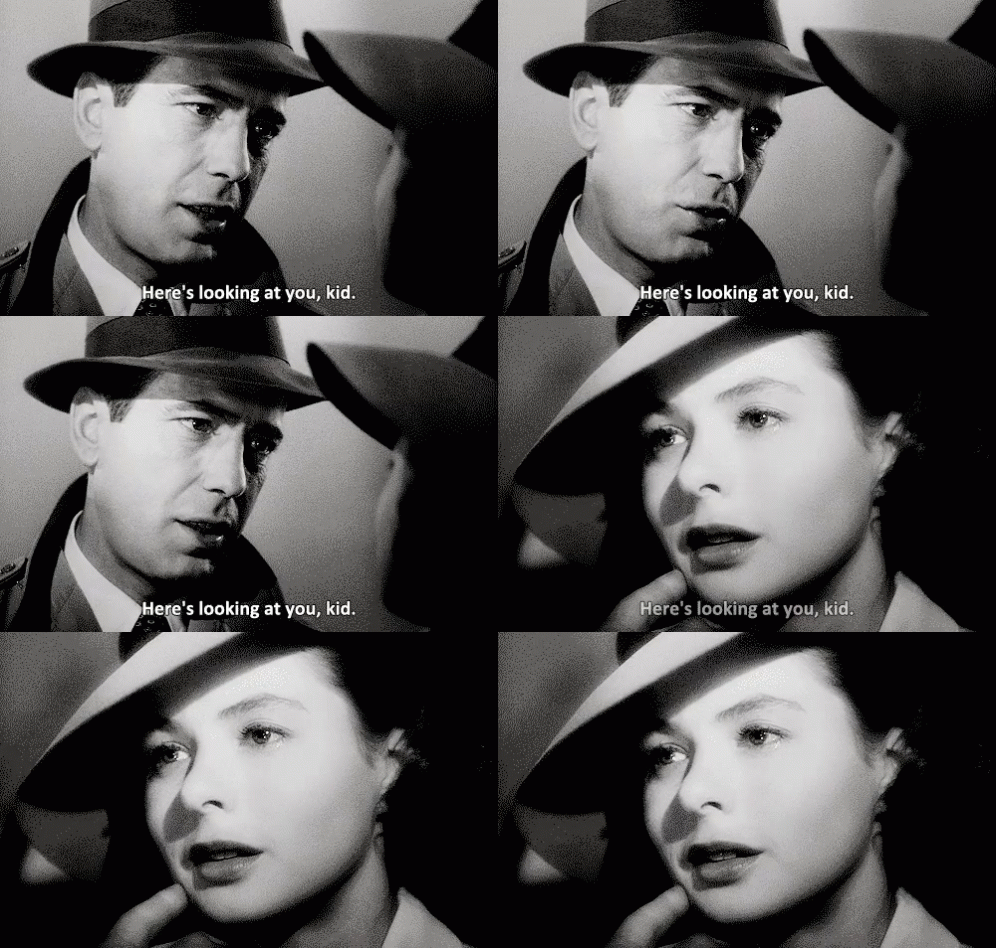
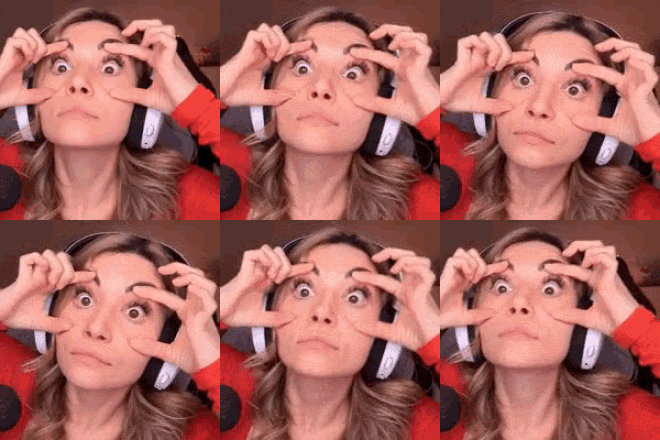
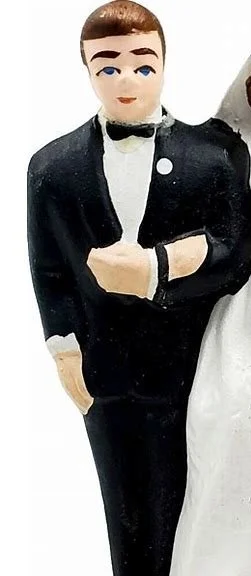
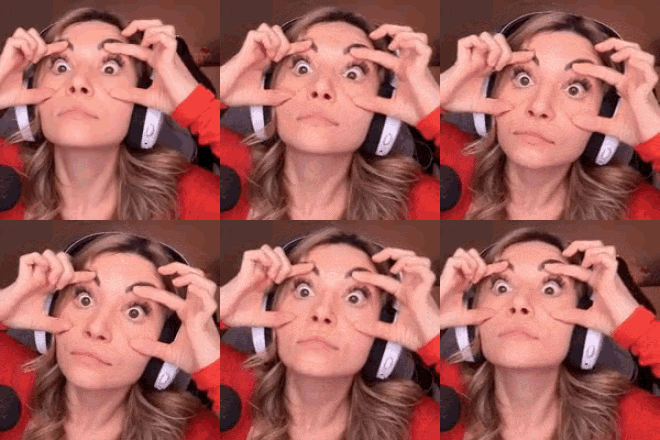
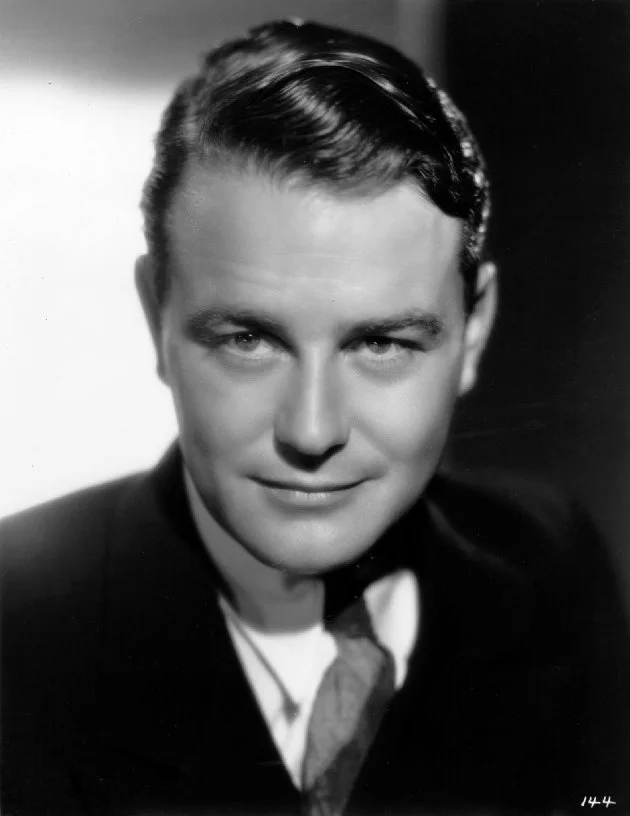
What look is looking back at you and me? And how has that look impacted our lives?
As a child abuse survivor, I know that a look is not just a look. It can signal things beyond love, like hate, rejection, and violence.
And a look can have everything to do with attunement… or the lack thereof.
“(Elohim) The LORD hath appeared of old unto me, saying, ‘Yea, I have loved thee with an everlasting love: therefore with lovingkindness have I drawn thee.’”
Jeremiah 31:3
Attunement… or a world of harsh?
Attunement can be defined as being receptive to or aware of another person. It’s about the present connection, person- to- person. It is recognition and validation.
And it is largely accomplished through facial interaction.
Who is looking at us, and how are they looking at us?
For many of us, this is a distorted reality.
Often, we get these kinds of facial experiences instead.
“I will instruct you and teach you in the way you should go: I will guide you with My eye.”
Psalm 32:8
The Missing Face…
Sometimes, attunement is missing in action. The person’s face is just not there.
“Their” face does not connect with us in the much-needed loving, healthy, and meaningful ways.
“Nature abhors a vacuum.”
Aristotle
Because of the abusive dynamic within my own family of origin, as a child, I often drew primitive faces on the wall next to my crib.
Was I reacting to a face vacuum?
Whose face was MIA?
My dad’s? My mom’s?
The answer to those questions is “yes, both.”
But it’s more complicated than that.
My dad was largely the obvious missing face, even while he resided in the home. He didn’t look at me much.
He was MIA while being there.
There are numerous reasons for the absence of someone’s face. Death, divorce, and abandonment can physically remove someone from us.
But things like a parent’s job, abuse, addiction, and dysfunction also play a role in being “missing.” These people are just not there.
The experience of the missing person’s face still haunts us, nonetheless. They can represent a ghost, a legend, a myth, and a villain to us, because of their absence.
But their facial presence is still sorely missed. We can, therefore, spend our lives trying to seek out their absent faces, either by continuing to seek them directly, or substituting them with another “surrogate’s” face.
But it is still devastating to know the original face will not look at us.
It’s not our fault. It’s beyond anything we did or did not do. They didn’t and don’t have the ability and/or the willingness to attune to us. We deserved their attunement.
Nevertheless, we must accept that their face and their attunement in our lives will not happen.
Sometimes, the distorted face we experience is that of the chaotic, unpredictable kind…
“Since you were precious in my sight… I have loved you…”
Isaiah 43:4
The Distracted Face…
This is often the byproduct of abuse and dysfunction. It comes through instability and inconsistency.
We can’t count on it. Sometimes, there’s a face; sometimes, there isn’t. Despite our needs.
The message?
“I am not safe; I am not important. No one is paying attention to me in a reliable way.”
Now, if we experience this distracted face as a baby or as a child, we don’t have sophisticated language to understand what’s going on. We often just feel fear, rejection, and high stress.
Studies have been done on mothers and their babies, focusing on the impact of a mother’s facial expression with her child. Mothers, especially, are regarded as our first mirror, reflecting the state of our surroundings.
In these mother/child face studies, a smiling, present face, with locking eye contact, promotes the baby’s relaxed sense of well- being. The baby smiles, mirroring its mother’s smile.
However, when the mother is asked to avoid eye contact and connection, refusing to look at her child, the baby starts showing signs of upset and stress. Often, the baby reaches out and cries, desperately wanting to get the mother to look at them again.
If the mother reconnects and smiles, often, a relaxed smile returns to the baby’s face.
Order has been restored. All is well again.
What cues was I picking up, as my mother was the abused wife of my dad’s?
Through abuse, how were my parents distracted in their facial communication?
Oversimplifying my dad, he was more interested in his job than he was in me. I don’t think my dad saw spending time with his child as valid and profitable.
He didn’t invest in me.
He provided, financially, and that was about it.
Things were more straightforward regarding my dad’s missing or distracted face. I wasn’t worth it. His face was better spent elsewhere. So, that’s where he went.
At the most, I got his frustrated, disapproving, or angry face.
But, with my mother, there were more confusing layers to her missing and/or distracted face.
Was it because of post-partum depression that went undiagnosed and NOT dealt with in a caring way?
I believe that, yes, that was part of the answer. There wasn’t much known, nor discussed, at the time. There was little-to-no empathy for the multifaceted challenges that came with that motherhood experience.
And then, you add marital abuse?
Yeah, I was not going to get my mother’s focused, loving, and present face.
Mom’s priority and focus were not about attunement with me. Rather, it was about keeping the peace and keeping my dad’s abuse at bay.
The overarching message here?
“Attention needed to be paid toward averting danger and threat. That was the priority, not attuning to me. “
Emotions were not regulated, nor were they deemed acceptable. Sadness, tears, and any unhappiness were forbidden.
And, certainly, at the top of the forbidden feelings and facial expression list…
Anger.
Therefore, cue more of a repetition of this face…
“This is my commandment, That ye love one another, as I have loved you.”
John 15:12
The Cruel Face…
Anyone can look angry from time to time.
The cruel face, however, is different. It is more sinister, more threatening, and more intentional.
It is the harmful look of abuse. It glares at us through violent, intimidating, and violating facial expressions, ranging from that of a mocking superior smirk, to that of the malicious face of a predator.
It certainly is not the face of love and kindness.
The obvious cruel face was that of my dad’s. He was an emotionally immature, raging abuser.
His face matched that.
I feared my dad, face and all. But I could count on his cruelty, through his obvious, loud raging sessions.
I couldn’t say the same about my mother’s cruel face.
Mom’s threatening face was covert.
Hidden. Subtle. Sneaky. Camouflaged. More unpredictable.
And passive aggressive.
Hence…
The “Spank Spoon...”
“Love is patient…”
1 Corinthians 13:4
Deferred attunement to a kitchen utensil?
Yes, Sirree Bob. It was about keeping my obedience. Not for my benefit, but for the abusive system’s benefit.
When I was a child, if I was acting in a way that was displeasing to her, I would hear the kitchen drawer slide open, to reveal a large wooden spoon. There was an angry inanimate face drawn on it; it was black marker lightning bolt eyebrows, over black slits for eyes, and a mouth of jagged teeth, threatening to bite me. It was scary. I was terrified.
And that was the point.
After all, most four- or five-year-old children would be frightened. The facial expression was clear. It conveyed “you’re in trouble.”
This “Spank Spoon” was her menacing henchman. “The Enforcer” was there to do her dirty work.
Mom would pull this utensil out of the drawer, with much ominous drama. She’d often have a smirk on her face, as the spoon swayed back and forth in her hand.
“You’d better behave or else.”
Furthermore, the utensil also taught me her necessary message: “you will fear me.”
It’s still cruelty. To those who have a similar mindset to that of my mother’s, there can exist, perhaps, this thought:
“The only face I want my child to see is a scary face. They are easier to control that way.”
It was quite an effective tactic during my formative years. Its cruelty included the more complicated, anxious element that was the threat of a threat.
This threat of the threat, however, was never quite carried out.
It was the confusion about never quite knowing for sure where one stood with consequences and punishment. But the threat was present, all the same.
There’s sadism added to the cruel face.
The smirk. The unsafe facial expression of someone who has power over you, and fully intends on abusing it, for their purposes.
The Cruel Face is the look of DELIGHT in someone’s terror. The priority is not attunement, but the adult’s concept of power, control, and domination.
These things, often, can translate into the dysfunctional adult’s warped sense of self.
And yes, we, as children, can pick up on that with our antennas.
We know that we are not loved, valued, and looked after.
We know that there is something more untrustworthy and unsafe at work.
We know that the person is only interested in being all-powerful, often, at our expense.
We know we are collateral damage, sacrificed to that end.
All these Faces are Distorted Faces.
“We love Him, because He first loved us.”
1 John 4:19
They all are opposed to attunement.
Sweet faces looking at us that signal love was what we should have received.
The sweet face attuning to us is without guile, agenda, harm, or evil. The sweet face loves, nurtures, affirms, and protects.
This is what it should be.
Many of us, however, have not experienced this face.
And how many of us have been manipulated by a false “sweet face?”
I see a bunch of hands in the air.
When it comes to the sweet attunement face, often, confusion and agendas are present.
So, what are we to do with that? Sink into despair?
Well, there is another option.
We become our own mirror.
Mirror, Mirror…How to reapply “The Face…”
“As in water face reflects face, So a man’s heart reveals the man.”
Proverbs 27:19
Mirror work.
This often-used therapy technique involves us positively affirming ourselves by looking into a mirror, and communicating, not only loving words, but the matching loving facial expression.
So, we display a smile, a look of sensitivity, acceptance, gentleness, and compassion.
Now is our chance to lovingly look at ourselves this way.
Can we attune to ourselves?
Can our faces be the antidote to the missing, the distracted, and the cruel faces we have encountered?
It can be scary and awkward. Yet, mirror work can apply to each distorted face we encountered.
Regarding “The Missing Face…”
We need to start with the basics.
Look.
We need to look at ourselves. Show up.
A no-brainer?
Well, how many of us spend the least amount of time we can in front of our own reflection?
How many of us have learned we also need to abandon ourselves?
Since no one else is looking at us, why should we?
We don’t like what we think we see looking back at us. “Something” is usually “wrong” with us.
But that “something” is usually taught to us by “someone else.”
We need to look at ourselves. We need our present face.
We need to see ourselves, no matter who else went missing.
Our Mirror for “The Distracted Face…”
Now that we see our faces, we must not look away again.
We need to linger. Don’t rush.
It’s easier said than done.
It’s a hard and painful act to continue to look at ourselves.
To look at ourselves with love, without harm and abuse, to make that decision and that commitment?
We typically don’t know what’s that like.
Instead, we are used to someone in our lives deeming someone or something else as for important than us.
Sometimes, that person might be there. And sometimes, they prioritize another person or thing, like their job or their addiction.
The devastating, rejecting impact of that distracted message often has us deciding that we are not worth our own focused gaze.
So, it can be hard work to stay put in front of the mirror, looking at and affirming ourselves. We can choose to resist the urge to look away, to become distracted with anything else we tend to see as “more important.”
But we can work to see that our own gaze and self-acceptance is, indeed, of the utmost importance.
It doesn’t come quickly, easily, or regularly.
Like most things in life, it takes practice.
The Cruel Face:
And likewise, kindness also takes practice.
Smile. Show kind eyes and compassion, not judgment.
Many of us have only seen angry, abusive, scowling, and mocking faces. Therefore, we internalize those faces, and they unconsciously become our view of ourselves. We can pick at every “flaw.” This applies to our physical traits, but it goes deeper than that. It involves our personality traits. It becomes a free-for-all attack on the essence of who we are.
And of course, our self-harm goes with us wherever we go. It doesn’t just stay in the mirror.
So how do we look at ourselves with kindness, acceptance, and love?
What if we just can’t mirror kindness towards ourselves?
Again, we are back at “do-it-yourself.”
Yes, this is difficult. But finding a separate kind face elsewhere, to mimic in our own faces, can start the process of our self-acceptance in our mirror work.
What does a sweet face look like?
Can we mimic our version of that face?
I found a loving, kind facial expression in an inanimate kitten figurine.
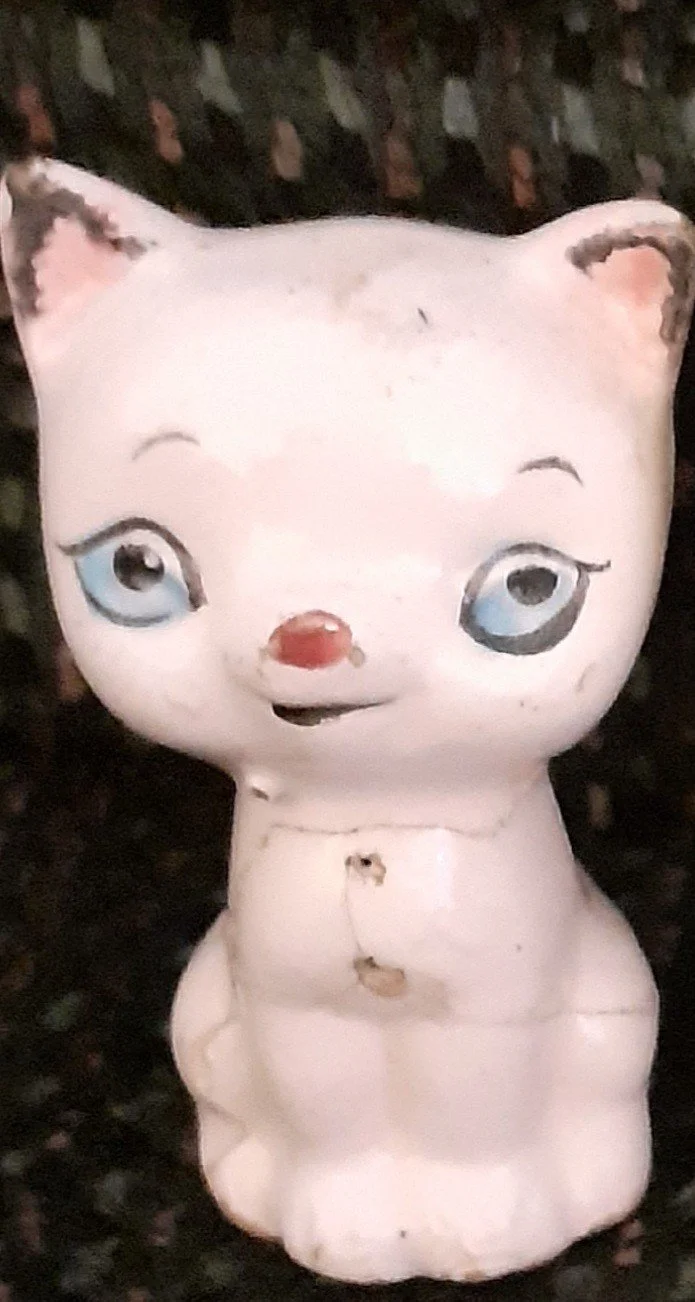
This figurine had large blue eyes, sitting under tiny, delicate eyebrows (just like real kittens possess, I know). And, likewise, there was also a tiny pink, delicate nose and small mouth, painted in a slight smile.
In my opinion, it was the sweet attunement look.
You may not have a cute kitten figurine like I did. There are, however, numerous examples out there of the sweet, attuned face. We can look up baby animal faces. We can even do an internet search, typing, “Loving faces/loving facial expressions.”
Usually, we discover numerous examples of kind eyes and gentle faces.
Perhaps, we could also put our spin on the dreadful wooden spoon. What if we change it from the “spank spoon” to that of the “Kind spoon?”
Maybe we could paste a photo of a soft smiling face on the wooden spoon.
Whether it is searching for internet images or altering a kitchen utensil, we can access our kind face through mirror work. These examples can be the starting point.
From there, we can practice an approving and loving facial expression at our own reflection.
The goal to strive for is that we become our mirror image. We look at ourselves kindly.
The goal, as ambitious as it sounds, is that we self-attune.
Attunement: We connect with ourselves and to Him.
“(Elohim) The LORD hath appeared of old unto me, saying, ‘Yea, I have loved thee with an everlasting love: therefore with lovingkindness have I drawn thee.’”
Jeremiah 31:3
Other peoples’ faces will come and go. Other faces will disappoint and fail us.
But our faces, even being imperfect and subject to failures, still stay with us lifelong.
How much more The Most High?
“I will mention the lovingkindnesses of (Elohim) the LORD, and the praises of (Elohim) the LORD, according to all that (Elohim) the LORD hath bestowed on us, and the great goodness toward the house of Israel, which He hath bestowed on them according to His mercies, and according to the multitude of His lovingkindnesses.”
Isaiah 63:7
Therefore, our faces need to be attuned to Him.
He is lovingly looking at us right now.
Copyright © 2025 by Sheryle Cruse
Zapped! (Book Excerpt from Cancerventures)
“My times are in Your hand...”
Psalm 31:15
Eight years ago, I underwent radiation. This is the start of that tale.
…(Before you undergo radiation, you will need stuff).
Radiation Get List:
A large tote bag, as there will be no Sherpa to help you lug your stuff around.
Any device which streams Netflix, Hulu, YouTube, etcetera, for all your waiting and distraction needs. (“Hubby” bought a Kindle Fire for me and it has been a sanity saver. I’ve watched a lot of bad television, cute animal videos and documentaries on it).
Aquaphor and Aloe Vera Gel, to keep your skin from bursting into flames.
Miaderm-especially when your skin starts tightening and cracking. (This product is a
Godsend).
Ice packs (again, for when your skin feels like it’s on fire).
Large soft cotton button- down shirts, because you will have difficulty putting things on and taking them off over your head.
Large, disposable T-shirts (because the Aquaphor and Aloe Vera goop will make your clothes greasy). Don’t wear anything silk when you’re this slimy!
Leggings and comfy clothes for radiation- comfort. (If you want to wear ballgowns and tiaras, that’s your business. But soft, lounge attire, verging on pajamas, is what is needed).
Alright, let’s get irradiated.
To me, this treatment was the lesser of some of the other evils from which to choose.
Nope, there weren’t a lot of great options out there.
Nevertheless, I embarked upon this experience and hoped I wouldn’t regret doing so.
First radiation business to tackle? Getting precisely measured. Elecktra, a British medical company that manufactures these machines, would do the honors.
I arrived at the clinic on a November day, and was greeted by Joani,* a petite nurse with light brown hair, soon approaching her maternity leave. She walked me back to the Cancer Care inner sanctum. I was in a dimly lit room with a slab-looking table and a giant machine hovering over it.
“That’s not what they’ll use for your radiation; this is an MRI. It just mimics the machine, getting the measurements we need.”
She then informed me, “We’re going to need to make three black dot tattoos, so we can accurately align you for each treatment. Or we can place these clear stickers on you. We just ask you don’t disturb them; they need to stay on. Please don’t scrub when you’re in the shower.”
Trying not to freak out, I opted to try the stickers because I hated needles.
She briefly left the room so I could disrobe and put on that clinic gown again. Because this was earlier in the morning, I had nice fresh Neosporin stain on my button-down shirt. Terrific. It’s a challenge to be stylish when you ooze on and stain things.
When she popped back into the room, she carefully placed the stickers in a weird triangle pattern. One was right above my right chest area, about four inches below my collarbone. The other two were just under the bra line, on both my right and left sides.
“I need to take some pictures, to make things easier to measure.” She grabbed her camera and clicked a headshot of me, against the wall. I then was told to get on the slab, (I’m sorry, that’s just what it reminds me of).
I told her about my concerns with the right side of my scar. It still looked like things hadn’t fully closed and I had to apply Neosporin and a lone bandage daily to it.
And then, she slowly peeled my bandage, “Wow, these are great. They come off easily.
Where’d you get them?”
“Oh, just at Walgreens, CVS, any place where you get bandages.”
Scintillating conversation.
From there, she had me raise my arms over my head. I was trying to make mobility progress with my breast surgery exercises and hoped I could endure being in this position.
Everything was tightly stretched, but I managed.
I grabbed the bars within my reach. Joani took more photos of me. As she and another tech kept circling me, I’d hear them saying, “Don’t move” and “I’m sorry” as they prodded and contorted my body into their ideal shape. This went on for about ten minutes. Already, I started experiencing a needles and pins sensation in my right arm and hand.
“Can I shake my hand?”
(In unison), “No.”
I tried to loosen my grip on those bars, but it didn’t help.
It was like Disney’s “Bambi.” You know, the scene with the birds being hunted and they freak out hiding in the brush. One poor bird, who, made the fatal mistake of panicking and flying into the hunters’ range, declared, “I can’t take it anymore!”
Yeah, I was feeling like that.
So, everyone in the room spent time and effort positioning and measuring me. I’d hear the occasional camera click. I stared at the waterfall image on the ceiling tile above me. As Joani hovered, attempting to line up my plastic-covered dots, I sensed her frustration.
Finally, Dr. B. entered the room, telling me, “We’d rather go with the tattoos; the stickers are just not staying on well and they’re not giving us an accurate reading. If you continued to go with them, it’d take much longer every radiation session.”
“Fine, tattoo me.”
I was pricked in two spots under my bra line. Joani then tried for the right-sided area, below my collarbone. That whole area was still too sensitive and, after a couple of attempts at the spot, and a couple of my ouch responses, she gave up. The plastic sticker went back on.
So, freshly tattooed, I stared at the waterfall ceiling tile as they connected the dots. The machine whirred and I glided into the tunnel. I heard clangs, the motor humming, and, in general, unfamiliar noise. I glided out of the tunnel.
Ta-dah.
Finally finished, I could get dressed, handing me my bandage to reapply. I was then given my own Elecktra card to scan into the clinic’s system when I arrived each day. It’d let the radiation crew know, yep, I’m a-ready for zapping.
That’s enough fun for today…”
Copyright © 2025 by Sheryle Cruse
My Radiation Nurse
“That which has been is what will be, That which is done is what will be done, And there is nothing new under the sun.”
Ecclesiastes 1:9
With Tonya, the radiation R.N., my first impression was a Snow White/Mary Tyler Moore hybrid. She was a beautiful brunette, possessing a girl next door vibe, complete with swinging shoulder length hair.
Yes, she was exactly the person you want in the health care field: a people person, upbeat, a social butterfly. From day one of meeting her, indeed, I saw her fluttering. She had these wonderful, draped long cardigans that gave her the appearance of gliding down the Cancer Care hallways. She is a glider, I guess.
(On her staff bio, she mentions she has bungee jumped from the world’s highest bungee bridge in South Africa. She probably glided there too).
But mainly, through all of my radiation adventures, she has answered my plethora of questions (I am the Question Queen). She did the occasional skin check, just to ascertain how fire- engine red I was at various points during my thirty sessions. She was all hugs, warm laundry and reassuring, “No, Sheryle, you’re not dying this second.” You cannot imagine how helpful this was to hear that reassurance at this insecure time.
As I burned, itched, and peeled, she was there, soothing voice, telling me how “normal” this was.
And then, there was the matter of my chin. Yes, you heard me correctly.
At the tail end of my radiation, I woke up to a belated Christmas present: a black mark on my chin.
What?
Every weird thing was getting my attention now, post-diagnosis.
What’s next? Five extra toes? A second head?
It appeared to pop up overnight. And no, it was not a mole. Those are dark brown. This sucker was jet black and noticeable even with makeup covering it.
After several unsuccessful attempts at scrubbing my face, I called Tonya. Perhaps, this was some stray radiation spray. I thought I was out of range to be hit though. We were targeting the right side of my chest.
She seemed unconcerned. Meanwhile, I’m wondering if this thing was going to spread further; I still had some radiation sessions to go. I envisioned my mug looking like Mike Tyson’s face tattoo- not a great look for me.
She offered to examine it when I came in later that day. Upon closer inspection, she remarked how she didn’t see it unless and until I pointed it out to her.
Calmly (because the woman is serenity), she mentioned how, once again, your favorite and mine, stress could change the pigment of the skin. So… black spots.
(I have just about had it with the wackadoodle things stress can cause).
She, once again, assured me I was not going to die, nor grow my own organic face tattoo. “In time,” she added, “it will fade.”
And yes, it has, although I still see a faint trace. Souvenir, I suppose.
Tonya has been a constant reassurance to my fussiness. She will insist she’s just “doing her job” here. But come on. After pesky, “the sky is falling” question after question from me, even that old sentiment wears mighty thin. Tonya is that reassurance; she is innate understanding.
And apparently, a great bungee jumper too.
Copyright © 2025 by Sheryle Cruse
Cinnamon Roll
“But whoever causes one of these little ones who believe in Me to sin, it would be better for him if a millstone were hung around his neck, and he were drowned in the depth of the sea.”
Matthew 18:6
When I was a Girl Scout, one of the activities we engaged in was something called “The Cinnamon Roll.”

In today’s language, I suppose, it could be considered “team building” or “morale boosting.”
My Girl Scout troop would designate one girl to be “the center” of “The Cinamon Roll.”
“She” would stand and clasp hands with another Girl Scout, who would grab another’s hand, on and on, until the entire troop, holding hands, stretched out the length of the room.
Then, the last girl would start “The Cinnamon Roll…” rolling.
She would move in on “the center” girl, and all subsequent scouts, holding hands, would gradually coil themselves around her.
The activity was not “complete” until the entire Girl Scout Troop had engulfed her. She felt the enclosing “hug,” being the center of the human cinnamon roll.
Each time we participated in this activity, there was always so much laughter. Sometimes, squeals.
And “the center,” while slightly squished, felt the warmth and the human contact of the Girl Scouts wrapped around her.
I’ve often thought about “The Cinnamon Roll” as life has rolled on.
I think about it, complicated, often viewing it through the lens of my abuse history.
I have suffered abuse, mostly from childhood. Emotional, mental, verbal, spiritual, and financial abuse have all been a part of my childhood experiences.
And there is yet another form of abuse that is not as widely discussed.
But it is widely, painfully felt: neglect.
Neglect IS abuse.
Neglect goes beyond not meeting food, clothing, or shelter needs. Yes, that is a part of it.
But Neglect covers the absence of loving, invested parenting and/or nurturing.
Neglect involves when someone does not have the ability to meet needs: the emotional, financial, spiritual, mental, or the personal needs of another person, like a child.
He/she doesn’t “know how to be a parent.”
He/she doesn’t “know how to love.”
You and I are familiar with that cliché. We have often heard the words, uttered as excuses, perhaps minimizing the impact on us.
That is painful.
We are in pain.
But there is another aspect to Neglect, within the abuse realm.
Yes, someone may not know how to show love or be a parent.
But what if they DO?
What if someone knows how to love, how to nurture, how to be a parent, but they are just unwilling to do it?
“When my father and my mother forsake me, Then (Elohim) the LORD will take care of me.”
Psalm 27:10
That is Neglect. And it’s painful.
It’s painful because the message, perhaps, is this: “other people deserve this, but you don’t.”
Preferential treatment.
Physical Touch…
“…‘Do not touch My anointed ones. And do My prophets no harm.’”
Psalm 105:15
Physical abuse is typically defined as harmful touch on the human body. The abuse causes broken bones, bruises, and bleeding, in its most obvious and severe forms.
Many of us experience that.
However, there is another kind of harmful physical touch: the absence of loving physical touch. Again, The Neglect.
Yes, it’s devastating when we are hit with a fist, slapped. It is devastating with we are overpowered, for instance, as children, by adults who cause physical harm in a myriad of ways. They are bigger and stronger than the child; they can use force to execute their plans and demands.
But how many of us… need a hug?
How many of us... are DENIED that hug?
We can be children; we can be adults. The need is still there, no matter our age
“Failure To Thrive…”
This phrase is often uttered regarding babies who just are not responding and growing as they should.
They are listless. They lose weight instead of gaining weight. They don’t “meet developmental targets.”
“Failure To Thrive.”
“…‘Do not touch My anointed ones. And do My prophets no harm.’”
Psalm 105:15
I think it was around the time of 1990 when there was news coverage of Russian babies in orphanages. Footage of numerous cribs, containing baby after baby, displayed this “failure to thrive.”
Indeed, some children were listless, just staring into space.
Others were rocking back and forth, sometimes violently, out of compulsion.
Still other babies could not- or would not- make eye contact with any human being around them.
Journalists wrote stories on these orphans, even noting the heartbreaking realities when, upon some of their adoptions, they displayed severe attachment issues, and even struck their caregivers.
In… anger? In… frustration?
These poor children did not respond well to physical touch. They screamed. They went limp. They hit the person trying to do the hugging.
Why was that?
Simple answer?
Neglect.
These poor children only knew neglect as normal. They didn’t recognize loving human physical contact as normal.
And that goes beyond Russian orphans. It is human vulnerability. And we can all be subject to it.
Forsaken…
“…‘(Elohim)The LORD has forsaken me. And my (Elohim) Lord has forgotten me.’”
Isaiah 49:14
Feelings of being forsaken are part of Neglect.
Again, it’s the message conveyed to us: “You are not important enough to take care of.”
As a child. As an adult.
“Not important enough.”
Forsaken.
This is abusive. It’s harmful. And it involves the harmful aspect of touch.
Therefore…
“…‘Do not touch My anointed ones. And do My prophets no harm.’”
Psalm 105:15
It is rejection when we experience someone withholding love and affection from us.
It can be subtle. It can be obvious.
It is painful.
Physical touch is a human need.
Therefore, to be on the receiving end of a message like “I’m not going to meet this need for you” can be devastating.
Devastation involves someone’s willful choice to deny us our need for love, nurturing, protection, and provision.
And that’s yet another unmet need.
Our soul cries out.
He is Our Cinnamon Roll...
The Most High, Our Father, hears that cry.
“When my father and my mother forsake me, Then (Elohim) the LORD will take care of me.”
Psalm 27:10
He holds us; He touches us…
“‘Fear not, for I am with you; Be not dismayed, for I am your (YAH) God. I will strengthen you, Yes, I will help you, I will uphold you with My righteous right hand.’”
Isaiah 41:10
He wants each of us to experience and feel that right now.
“He heals the brokenhearted And binds up their wounds.”
Psalm 147:3
Neglect is a painful part of so many of our lives.
But He desires to surround us with His Love.
He never neglects.
Let’s pray.
ABBA-
We come to You, in The Name of Your Son, Our Savior, Yahshua.
We need Your help when it comes to matters of touch and neglect.
You know fully how we have been hurt by these issues.
You know how we have been neglected by others, including family and “loved ones.”
We ask that You hold us lovingly right now. Help us to feel and experience Your Loving, Healing Touch.
Heal us of all neglect and the pain associated with it.
Thank you for always loving and holding us, in Your Mercy.
Forgive us of our sins, including neglect of You.
Help us to know, to love, and to connect with You.
We thank You and receive it all, In Yahshua’s Name.
Amen.
Copyright © 2025 by Sheryle Cruse
Tiny Tim’s Crutch
This time of year, it’s impossible to avoid the literature classic, “A Christmas Carol.” Charles Dickens shows us Ebenezer Scrooge’s introspective redemption process, courtesy of three strategic ghosts who stage a much needed intervention.
And a major character involved in that intervention is that of Tiny Tim, the lame child of Bob Cratchit, Scrooge’s clerk.
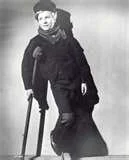
In a conversation between Ebenezer and the one of the Ghosts, we are confronted with consequence- and mortality:
Ghost of Christmas Present: “…I see a crutch without an owner, carefully preserved. If these shadows remain unaltered by the future, the child will die.”
Ebenezer Scrooge: “No. Say he'll be spared.”
Ghost of Christmas Present: “If these shadows remain unaltered by the future, none other of my species will find him here...”
This dialogue examines personal choice, as it dovetails from one year into the next. It challenges us to reflect on our ways, on what is serving us and what is destroying us.
“If these shadows remain unaltered by the future...”
And the presence of the crutch is front and center to that reflection.
Indeed, we first come across Tiny Tim- and his crutch- in the story as he for his father...
Tiny Tim: [outside Scrooge's office] Merry Christmas, Mister Scrooge.
Ebenezer Scrooge: Don't beg on this corner, boy.
Tiny Tim: I'm not begging, Sir. I'm Tim Cratchit. I'm waiting for my father.
Ebenezer Scrooge: Tim Cratchit, eh? Well you'll have a long wait, then, won't you?
[he walks off]
The strong presence of the crutch is evident. It represents powerlessness and disease.
And, yes, concerning our recovery, it is further translated into the Twelve Steps...
1. We admitted we were powerless over our addiction - that our lives had become unmanageable.
Like Tiny Tim, we are dependent upon it. Without our crutch, indeed, we’d fall over. And yet, with our crutch, we still find ourselves crippled and limited. If we liken it to mobility issues, our crutch simply does not empower us to walk or run effectively. Yes, it may appear to prop us up. But it doesn’t allow for positive movement beyond that.
We came to believe that a Power greater than ourselves could restore us to sanity.
We made a decision to turn our will and our lives over to the care of (The Most High) God as we understood Him.
Steps two and three confront our crutch perspective: do we see The Almighty in The Most High, or only our higher power in our addiction or vice?
It’s not an easy question to answer.
For, let’s face it, our crutch, is tangible evidence of an answer, a cure. It is three- dimensional. We can touch it; we can access it. We can lean on it. Therefore, the decision to choose to depend on something unseen over our comfortable, visible remedy, is a daring, scary experiment, rife with insecurity and discomfort. It’s no wonder why we fight this decision- and the ones which follow.
We made a searching and fearless moral inventory of ourselves.
We admitted to (The Most High) God, to ourselves, and to another human being the exact nature of our wrongs.
We were entirely ready to have (The Most High) God remove all these defects of character.
We humbly asked Him to remove our shortcomings.
We made a list of all persons we had harmed, and became willing to make amends to them all.
We made direct amends to such people wherever possible, except when to do so would injure them or others.
We continued to take personal inventory, and when we were wrong, promptly admitted it.
“…I see a crutch without an owner, carefully preserved. If these shadows remain unaltered by the future...”
Steps four through ten address what can happen if we separate crutch from owner. What happens when we make decisions based on our repentant departure from addiction, instead of being fueled by it?
Therefore, the classic work’s “carefully preserved” component reminds us of our addiction crutch’s consequences: wrecked health, ruined relationships, careers and finances, etcetera. These realities drive our need for surrender, change, humility, amends to others and the newer, lifelong commitment we make to Elohim and to ourselves.
We sought through prayer and meditation to improve our conscious contact with (The Most High) God as we understood Him, praying only for knowledge of His will for us and the power to carry that out.
Having had a spiritual awakening as the result of these steps, we tried to carry this message to addicts, and to practice these principles in all our affairs.
Steps eleven and twelve, therefore, round things out, focusing on that imperfect, yet still real commitment and its daily practice in our lives. These steps, again, recalibrate our attention from our addiction-shaped idol to that of a real Loving Heavenly Father, playing a real part in our lives.
These last steps continue to challenge the role “crutch” dictates. This is hard work; it is a constant presence, begging our decisions concerning it.
Will we choose it?
What will we choose concerning it?
Will The Most High be The Most High?
Will our crutch be our god instead?
And, with that being said, let’s again return to the dialogue between Tiny Tim and Scrooge...
Ebenezer Scrooge: Don't beg on this corner, boy.
Tiny Tim: I'm not begging, Sir. I'm Tim Cratchit. I'm waiting for my father.
Again, this waiting of Tiny Tim illustrates our reality concerning the Most High and addiction issues...
“Truly my soul waiteth upon (The Most High) God: from him cometh my salvation.”
Psalms 62:1
“Trust in (Elohim) the Lord with all your heart; and lean not on your own understanding. In all your ways acknowledge Him, and He shall direct your paths.”
Proverbs 3:5-6
Our own understanding equals our crutch?
So, yes, again, it comes back to choice.
The crutch, indeed, is ever-present. And, in its presence, a decision is asked of us...
“If these shadows remain unaltered by the future...”
It’s there, each day of the year, each year of our lives.
Unaltered?
Or changed?
Copyright © 2025 by Sheryle Cruse
Our Survival From Abusers: A Case Against the Good and Happy Times?
“Do not remember the former things, Nor consider the things of old. Behold, I will do a new thing, Now it shall spring forth; Shall you not know it? I will even make a road in the wilderness And rivers in the desert.”
Isaiah 43:18-19

How many of us have encountered advice from well-meaning, but often clueless individuals, offering their perspectives on enduring a toxic person, because, among other things, “life and time are precious?”
“Remember the good, happy times.”
Beautiful, in theory, not so great with a disordered Narcissistic abuser.
Those good, happy times?
Also known as intermittent positive rewards.
Also known as abusive.
We are encouraged to stick with that insufferable, perhaps, abusive person, all in the name of love, family, doing what we “should” because we “owed it” to that person to make the most of whatever time was left.
“Remember they’re old.”
“You’ll miss them when they’re gone.”
“Do right by them.”
And of course…
“Remember the good, happy times.”
But what were those good, happy times? What was the euphoric recall- or the euphoric amnesia that keeps us from admitting that things weren’t really so good, so happy, or so healthy, after all?
Let’s break these sentiments down a bit; let’s decipher the pressuring, maybe, gaslighting, subtext.
“Remember the good, happy times:”
(“Remember they’re old.”)
Abuse can often get portrayed as something for which only the strong, vital, and young perpetuate. Surely, a sweet four-foot ten grandma wouldn’t be vicious, right? Only the most obvious, snarling villain, wearing, appropriately enough, a torn and stained “wife beater” undershirt would be capable of creating misery, torture, and violence, right?
“Vulnerable adults” or “Senior citizens,” yes, get a certain respect and ranking. We, overall, recognize that they have special needs, wisdom, and issues that can make us protective and accommodating of them. We forget and forgive, perhaps, past cruelties of such persons, because we disconnect their younger selves causing damage from their older, current versions who may be still inflicting sadistic actions, while hiding behind their age.
Many “vulnerable adults," indeed, can worsen their bitterness and their abusive streaks with age. “Collapsed Narcissist,” for example, is an often-used term to describe many nursing home residents who are beyond “ornery.” They are hateful, spiteful, and resentful of how their lives turned out, and of how “everyone” abandoned them, so much so, that they become hellbent and gleeful about exacting revenge on those who fail them, according to their often demanding and unrealistic specifications.
It can become personal in its cruelty is a way that is discombobulating.
Indeed, these older abusers can feel entitled, above reproach, and free from obeying facility rules, let alone, treating others with human decency.
This, of course, is not to say that all old people are evil. There are some truly loving, kind, helpful, and wise Seniors out there. I’m speaking of a special group of older people who weaponize the age card. Something about them is far from feeble; they can display manipulative tactics of helplessness, forgetfulness, and being filter-less, all to fulfill their own plans.
They can get away with it because “they’re old.”
And we, after all, are supposed to defer to that old designation.
What To Remember About These “Good, Happy Times…”
Perhaps, this older person we’re entangled with, was never kind or loving, in either their younger or their older years. Perhaps, they were abusive from start to finish, without any explanation, not that any explanation justifies abuse in the first place.
Perhaps, there were no good or happy times, or, at least not enough of them.
Many of us can get tied to an abusive older person, like a parent, or a grandparent, because there was just enough sprinkling of what appeared to be good and happy times. Birthdays. Holidays. Special occasions. Times in which they were loving and kind to us.
An “and” kind of approach. A cognitive dissonance kind of thing, one can argue. This and this, two completely opposite situations, involving behavior and experience can be true at the same time.
No problem there.
The challenge is to get comfortable with the uncomfortable premise that 1) maybe nothing about them was real, 2) maybe only one situation was real and true, and, of course, there’s a third option, that neither experiences, nor portrayals of them were real and true.
I know. Maddening.
Yet, that can be the necessary wake up call we need to remind us that an old person doesn’t always show up as loving.
And if, for our own wellbeing, that means we need to cut ties, we have not failed in the situation. If a person is toxic, there’s no age limit on that. Deliberate, sadistic abuse is not acceptable… even from an elder. Our health and sanity deserve the right to be prioritized and protected.
“Remember the good, happy times.”
(“You’ll miss them when they’re gone.”)
Ah, great. Here we go.
Death.
That’ll shut down an argument, huh?
Call it “F.O.D.,” “Fear of Death,” like “FOMO,” “Fear of missing out.”
It’s the great anxiety of designating a person to be so important, so sacred, they will be miss-able when they die.
And here’s a tricky thing; we can, and do, miss toxic people when they die. We grieve them. We have regrets concerning them. All of the “shoulds” come out to play, torturing us for being the awful excuses for human beings who “let” our own pettiness get in the way of the more important matters of life and death, of appreciating this human soul, flaws and all, even IF they were nothing but cruel and hateful to us in our lives.
There is the ultimate preferential treatment going on here, isn’t there?
What To Remember About These “Good, Happy Times…”
Exacting some unrealistic, unattainable, and, for that matter, undeserved preferential treatment, making their impending death more important than our lives, lived in the present, is not our purpose in life. And it’s ridiculous and cruel for anyone to expect that of us.
Death doesn’t erase the experience we endured, be it good or abusive. And because we can tend to have a warped perspective, convincing us that their life is more valuable than ours, we can minimize the bad and idealize the good to epic status.
Was it really that bad?
Was it really that good?
Both questions can be confusing and painful to honestly assess and answer. And then it’s difficult to live with the answer.
Challenging the “good and happy times” may show more of an underbelly than is comfortable to face.
But facing it, beginning to take the tiny step of facing it, can be liberating.
Perhaps, we didn’t have a happy childhood after all. Perhaps, we knew there was something “off” about a certain person.
Perhaps… there’s something to our perspective on our own lives.
That perhaps is powerful.
“Remember the good, happy times.”
(“Do right by them.”)
Translation? Sacrifice yourself, big time, even to the point of placing yourself, your life, your finances, and your health in harm’s way, just so the “good and happy times” can be allowed to be created and protected for the abuser.
Turn your frown upside down, all so the toxic person will be saved from ever frowning themselves.
What To Remember About These “Good, Happy Times…”
Let’s just put it out there. “Their” definition of “doing right by them” means we are willingly putting up with abuse.
From anyone. From everyone. Just taking it.
Because it benefits them.
Does that sound sane to you?
Remember, our abuse and mistreatment can be beneficial to someone else’s agenda. Someone wants to control you and I; someone wants to exploit and use us. And there are endless ways that can happen. It’s disturbing.
There can be a payoff for someone else if we are stuck in am impossible situation in which we are constantly trying to “do right by them.” It will never be enough; it’s designed that way. We keep trying, spending ourselves, exhausting ourselves, and someone else can reap that benefit. Endless amounts of attention, resources, finances, sex, protection from negative consequences, and a warped kind of companionship are some of those benefits. We experience it, however, as one-sided. Somehow, these toxic and abusive individuals never quite get around to “doing right by us,” do they? It’s haphazard and spartan, at best.
That’s the point; that’s the red flag. That’s the lesson.
Are we learning it yet?
Remember Ourselves:
We can easily get amnesia when we forget ourselves in the middle of the toxic promise of happiness. We can pin that on someone else, while abdicating ourselves in the process. We get lost.
The antidote, easier said than done, is to remember ourselves. That requires self-awareness. That requires self-valuing. That requires we not get swept away with the obligations and expectations unhealthy people place upon us.
We must remember.
Who are we? What do we want? Is it what we experience from this person and the life choices associated with them? Do we forget ourselves when we love, serve, help, and obsess about them? Is that what we want?
Is that our good and happy life?

“But forget all that— it is nothing compared to what I am going to do. For I am about to do something new. See, I have already begun! Do you not see it? I will make a pathway through the wilderness. I will create rivers in the dry wasteland.”
Isaiah 43:18-19
(New Living Translation)
Copyright © 2025 by Sheryle Cruse
Ignorance and Want
One of my favorite holiday stories is “A Christmas Carol,” the timeless classic, written by Charles Dickens. I’ve seen many adaptations of it; there have been numerous stage and screen versions, rolled out each December.
One of the constants in the story, however, is that of the boy character, Ignorance and the girl character, Want, introduced to the Scrooge character via the Ghost of Christmas Present. They’re portrayed as creature-like, snarling, hissing and clawing for attention. They make their dramatic appearance, hidden underneath the Ghost’s robe.
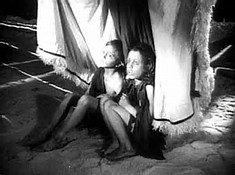

And the drama queen in me loves that poignant, uncomfortable scene because it’s a wakeup call reality check for humanity. According to the literature classic, here’s the exchange between Scrooge and the Ghost:
"Beware them both, and all of their degree, but most of all beware this boy, for on his brow I see that written which is Doom, unless the writing be erased."
(Merry Christmas, how’d you like some social justice?)
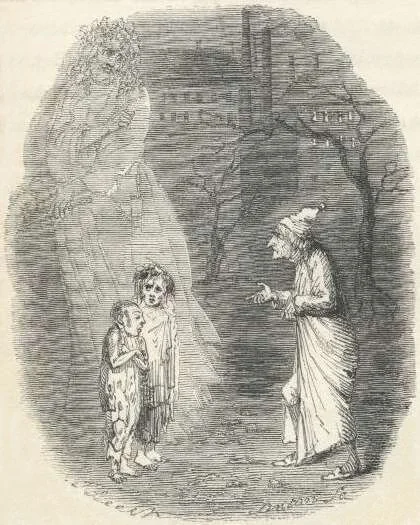
And Scrooge chimes in, ever so reasonably, with the following response…
"Do they have no refuge, no resource?"
To which the Ghost sends a zinger, using Ebenezer’s own thoughtless words from earlier against him…
"Are there no prisons, no workhouses?"
Ouch. Talk about having your tuchis handed to you!
Anyway, as I’ve been making my way through at least four versions of the story this holiday so far, I’ve been struck by the power of the Ignorance and Want words and what they represent- and not just in social justice issues either. I’ve been viewing them through the prism of recovery. First, let’s look at Ignorance, defined as being…
A lack of knowledge or education
An unawareness of something, often of something important
That’s quite direct, isn’t it?
How many things, even such horrible things like injustice, abuse, and addiction, have been done in the name of ignorance? Yet the wreckage is still apparent and devastating.
“My people are destroyed for lack of knowledge: because thou hast rejected knowledge…”
Hosea 4:6
I know that for me, personally, this lack of knowledge- this ignorance- was the gradual descent into my eating disorder behavior. Already mired by food, weight and body image issues since childhood, an “innocent” diet led me down a dark path. When I started the diet as a teenager, my goal was not to develop Anorexia and Bulimia; my goal was to be thin. But I was ignorant of exactly what I was doing. And, before long, I was ensnared. It’s since been a continuous and imperfect extrication, now, years later into my recovery.
The ignorance was built on the lie that my determined “answer” of being thin would make everything right, perfect and pain-free in my life. Indeed, using the word’s definition, I certainly was not aware of the truly important real significance to my issues. To paraphrase the Ghost of Christmas Present, “Doom was waiting for me.”
Goody.
Like Dickens’ classic, the Ignorant creature in me was snarling and hissing, clawing to get away from Truth.
Can you relate in your life? What are you ignorant of, right now, in your family, your recovery and your personal issues?
But wait, we’re still not done. Let’s head on over to Want.
Ah, yes, Want. The word is defined as such:
To desire something: to feel a need or desire for something
To wish something done: to desire to do something or that something be done
To miss something: to feel the lack of something
Want and hunger are often represented as the same animal, aren’t they?
And so, like the character from “A Christmas Carol,” the want is the parasite which drives its host to obsession and compulsion. It won’t stop until “it” gets what “it” wants.
Is anyone else recognizing themselves here?
In issues like addictions, vices, and drives, there’s this never-ending black hole element, promising us-lying to us- stating we’ll be satisfied once “this or that” happens.
“There is a way which seems right to a man, But its end is the way of death. A worker's appetite works for him, For his hunger urges him on.”
Proverbs 16:25-26
And so, we turn to drugs, alcohol, food, sex, relationships, and self-destructive choices, hoping our pursuit of that chosen thing will make us feel complete and healed.
“Everyone's toil is for their mouth, yet their appetite is never satisfied.”
Ecclesiastes 6:7
And cue the snarling, hissing and clawing creature of Want. Isn’t she adorable?
Each of us needs to get real with that greedy, grabby, selfish creature within us. We are fallible human beings, after all. Hate to break it to you.
“For He knoweth our frame; He remembereth that we are dust.”
Psalms 103:14
Nevertheless, we need to acknowledge those unmet needs- or perceived unmet needs which drive us; we need to deal with our creatures. And then, to use an often quoted statement, we need to “check ourselves before we wreck ourselves.”
It’s not always perfectly accomplished; we fail repeatedly. Again, hate to break it to you.
But let’s allow “A Christmas Carol” serve as a reminder concerning Ignorance and Want: yes, they are creatures, but they are children as well.
That’s part of why they are, indeed, so relatable. At the end of the day, that is who WE are: we are children…children of The Most High. And Dickens, himself says about that reality…
“It is good to be children sometimes, and never better than at Christmas, when its mighty Founder was a Child Himself.”
Ignorance? Want? Are these creatures actively in our lives? Join the club. And don’t despair. We can be mindful of them and tend to them as needed in our lives WITH Elohim’s help.
“(The Most High) God is our refuge and strength, a very present help in trouble.”
Psalms 46:1
Let’s NOT be IGNORANT of THAT! Let’s WANT THAT!
Copyright © 2025 by Sheryle Cruse
Kunte Kinte (IF You Know? Book Excerpt)
…What’s in a Name?
“…What is His Name, and what is His Son’s Name, if you know?”
Proverbs 30:4
Most of us are familiar with the book, inspiring the 1970s television miniseries, “Roots: The Saga of An American Family,” by Alex Haley.
The character, Kunta Kinte, shook the world, as we are confronted by a disturbing scene, brilliantly enacted in the miniseries by a young LeVar Burton.
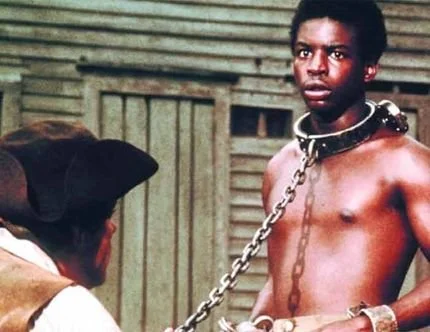
In this scene, Kunta Kinte, who was enslaved in 1767, is flogged mercilessly, punishment for not accepting his new name, “Toby.”
We see him put up a defiant fight against having his identity changed.
Against having his name changed.
The depiction showcases the brutality of a slave being beaten and humiliated into submission. That was the reality of a slave’s life.
After many rounds of whipping, while repeatedly demanding that he submit and say his new name, Kunta Kinte can hold out no longer.
The scene ends, at his breaking point, when asked what his name was, he replied, in a weak voice, “Toby.”
(Viewer discretion is advised. This scene is quite distressing).
Kunta Kinte - Whooping Scene - What Is Your Name (Roots 1977) HD
It resonates.
And how much more, for slave, after slave, “The People,” a People called by the Name Of YAH?
Let’s not forget. Our Savior.
Also beaten. Whipped.
“So then Pilate took (Yahshua) Jesus and had Him scourged (flogged, whipped). And the soldiers twisted together a crown of thorns and put it on His head and put a purple robe around Him. and they kept coming up to Him, saying [mockingly], ‘Hail, King of the Jews [Good health! Peace! Long life to you, King of the Jews]!’ And they slapped Him in the face.”
John 19:1-3
(Also see, for example, Matthew 27:26; Mark 15:15; Matthew 20:19; Mark 10:34; Isaiah 50:6).
Scripture mentions flogging. The whipping. The humiliation. The taunting. The mockery. The horrifying experience of a slave?
Yahshua experienced that.
His experience was eternal. It was the Redemptive Work of Humanity’s Salvation.
He endured not just the beating, but the full sin, with every lash, bleeding wound, and taunt.
“The plowers plowed on my back; They made their furrows long.”
Psalm 129:3
This scripture prophesied Him…
Navigating with the Navigator
“…‘Fear not, I will help you.’”
Isaiah 41:13
Joy*, my breast nurse navigator, kept me sane (well, as close to it as possible) during my 2017 Breast cancer diagnosis.
She was the one who did all three of my biopsies and made that dreaded cancer phone call one Tuesday morning. Joy walked me through the overwhelming gauntlet of tests, appointments, surgery, radiation and “survivorship.”
She did this all while being a girlfriend. I’d like you to know about her heart and her impact in my life.
First, after my biopsies, I asked her for a copy of my MRI. I wanted a still image of my breasts and I asked if she could rustle one up for me. I knew this request was a little out of the ordinary. Doing biopsy stuff, getting me test results, sure. But this?
“Hi, Joy-
….Is it possible to get a copy of my MRI scan you showed me on Friday? There is method to my madness- this year's Christmas card.😜...”
“Hi Sheryle!
You can absolutely get your imaging for future purposes-whatever those may be! I will have a CD made... The Christmas card idea truly made me laugh out loud. What better way to spread Christmas cheer than a glossy breast MRI photo? Ha!…”
But we’re not done yet.
“Hi Sheryle,
…The lady who works in the CD and medical records assured me that images can be printed from the CD’s, but the file size of an MRI is extremely large (read: might crash the average computer). So, I went ahead and did a screen-shot of what I consider the ‘money shot’...”
The money shot!
Yes, Joy was going to great lengths for me.
So, I wondered, how did that all start?
She began, in high school, as a home health aide for disabled children. Her official nursing career later started in pediatrics, at a children’s hospital. But, because of the taxing reality of its heart-wrenching pediatric patients, she applied for the navigator position she has now and voilà!

So, what is a breast nurse navigator, anyway? We can posit, it’s the ultimate connector and guide through one’s diagnosed paces.
“… The nation's first patient navigation program was initiated by Harold Freeman in 1990 at a public hospital in Harlem, New York… The philosophy of patient navigation encourages a system of health care delivery, which supports timely movement of the individual patient through an often complex and fragmented health care system...”
“The Origin, Evolution, and Principles of Patient Navigation” By Harold P. Freeman; http://cebp.aacrjournals.org/content/21/10/1614
Used with permission.
Joy is, indeed, passionate about her work. Her enthusiasm for it is infectious.
She told me how she loved being there for women at this most scary time. She makes it a point to study each patient during the biopsy, gathering as much intel about her support structure and life circumstances as possible.
That, in fact, taps into the downside of her job, mainly, her frustration of not being able to meet the overwhelming demand of all cancer-related issues. Joy often feels spread thin. Diagnosed women move along to another facet of their treatment plans, like chemotherapy or radiation, and there, indeed, is no breast nurse navigator in place to support them there.
So, she usually gets a phone call from a distressed woman, asking for help. She has to not only do her job, centering on diagnosis and biopsies, but also tend to all other areas of cancer as well.
It’s too much. And we can’t clone her.
Therefore, logically, one would think this reality would be a gigantic impetus for the medical community to instate navigators in all clinic/ Cancer Care areas. Well, unfortunately, not quite.
Frequently, it comes down to the bottom line.
Clinics will assert, however legitimately, they simply don’t have the funds for that scope of care. Or, another possibility? Sometimes, clinics are clueless this is even a problem. They simply don’t hear about the in-need patients, asking for and requiring specific support. They, perhaps, don’t see a problem because nurse navigators, like Joy, are in clinics running around like chickens with their heads cut off, trying to be all cancer things to all cancer patients, getting the various needs met.
And then there’s the reluctance to do a more ambitious sweep of all interconnected clinics. One theory, in dealing with powerful people making these decisions, states that if navigators are fully implemented in one individual clinic, they’d then need to be implemented in all clinics. It’s a matter of standardization. And, what’s more, the argument declares standardization can kill innovation. Therefore, a hesitant response may occur.
Another possibility? Navigator installation may be deemed unnecessary, especially since there are already roles such as radiation nurses and social workers commonly in place in clinics.
Maybe the powers- that- be see it as redundancy.
Perhaps, it’s simply too intimidating a prospect, as this nurse navigator would not only need expertise in all things cancer, but also in coordination, networking and scheduling responsibilities.
In essence, the navigator acts as an omnipotent cancer concierge. Would this, then, be too much to ask of one individual?
Or, could there, indeed, be an emphasis on training, incorporating the “many hands make light work” theory, while working as a cohesive Cancer Care relay race?
Part of Joy’s vision includes a regular meeting of all navigators, sharing information and updates. Whether that’s on a weekly or a daily basis, it still calls attention to the interconnection of everyone, cross pollinating and meeting the needs of the patients in their care.
She has presented her wider installation proposal to her own clinic. She sees potential. She desires this navigator role to be installed, at every phase of treatment, for ALL cancers, not just Breast cancer.
Joy envisions the navigator acting as a hands-on advocate, for each diagnosed person, even going so far as to accompany the patient in her appointments. The ultimate support person. The importance of that cannot be overstated.
For there are too many women, unfortunately, who have no such person in the room with them. Navigators, therefore, would guarantee the patient would not be left alone, to face her intimidating reality. They would do the emotional handholding, as well as the practical matters of taking notes, deciphering the daunting cancer language and coordinating the next appointment, test or procedure.
Again, the powers- that- be might prefer to see the evidence- based practice; they want concrete results.
But, throughout the country, navigators are in place. It IS happening already.
It is why Dr. Harold Freeman was inspired in the first place. In his work, he saw a direct correlation between navigation and increased survivorship.
“After the implementation of patient navigation for breast cancer, the number of women seeking treatment for late stage (stage 3-4) breast cancers decreased from 49% to 21%.”
“Cancer of the Breast in Poor Black Women,” By Harold P. Freeman and Tarik J. Wasfie, 1989; https://www.ncbi.nlm.nih.gov/pubmed/2720605?dopt=Abstract
Harold P. Freeman Patient Navigation Institute; http://www.hpfreemanpni.org/resources/
Used with permission.
As it stands now, Joy is currently awaiting a response from those powers- that- be.
And, in the meantime, she’s still the only breast nurse navigator I’ve encountered, thus far. But her dream of an official navigator, stationed at every port? It’s not happening yet.
So, she works to the best of her ability, trying to meet patient needs.
As I endeavor to maintain my survivorship, Joy and I still keep in touch, dealing with everything that Breast cancer entails. We’re friends, but with that being said, she is still every bit the professional nurse navigator. She executes both beautifully.
So, beyond the clinical, the real value I’ve experienced of nurse navigators, through Joy, is the human, compassionate component. She has been there through the terrifying. She not only scheduled appointments, but she also listened to my fears and concerns. That element of care was more important to me than any cancer test. I needed the “friend” results much more than anything from a lab. Seriously.
Therefore, if/when, you are given an unfortunate diagnosis, I hope you stumble upon a nurse navigator like Joy in the process.
It will make all the difference.
*(Name changed for privacy).
Copyright © 2025 by Sheryle Cruse
A Child’s First Gaslighting?
“For (The Most High) God is not the author of confusion but of peace, as in all the churches of the saints.”
1 Corinthians 14:33
With this festive time of year, I’m certainly a sucker for nostalgia and memories.
And, as I delve into them, it usually is not too long before I bump into, your favorite and mine, some early childhood gaslighting.
I recently discovered an old photo of me, being visited by “Santa” (a family friend who agreed to play the role for my six-year-old self’s benefit).
He showed up at my house, of course, bringing his bag of gifts. Santa had made a few of these holiday stops over the years, ever since I was old enough to grasp the “gimme gimme” concept of the holiday season. Usually, he’d give me a brown bag of peanuts before, drumroll please, the presentation of my desired presents.
As a four and five-year-old, I knew the drill. Endure the peanuts; get to the good stuff.
There I was, a sophisticated six-year-old, dressed in a royal blue, high neck dress, with my mother’s opulent brooch (because what six-year-old doesn’t enjoy an opulent brooch?).
I did the Santa pleasantries and awaited my gifts with as much polite patience as a child could muster.
Finally, Santa reached into his bag and pulled out my present. It was a medium-sized box, wrapped in beautiful wrapping paper. I remember absolutely loving the wrapping paper.
I fixated on the paper; it was filled with beautiful angels scattered all over the surface.
But it was more than that. I had seen this wrapping paper before. My mother had wrapped our other Christmas presents under the tree with it!
As the outspoken girl I was, I IMMEDIATELY brought this to Santa’s attention. The photo my mother took, that I include here, captures that exact moment.
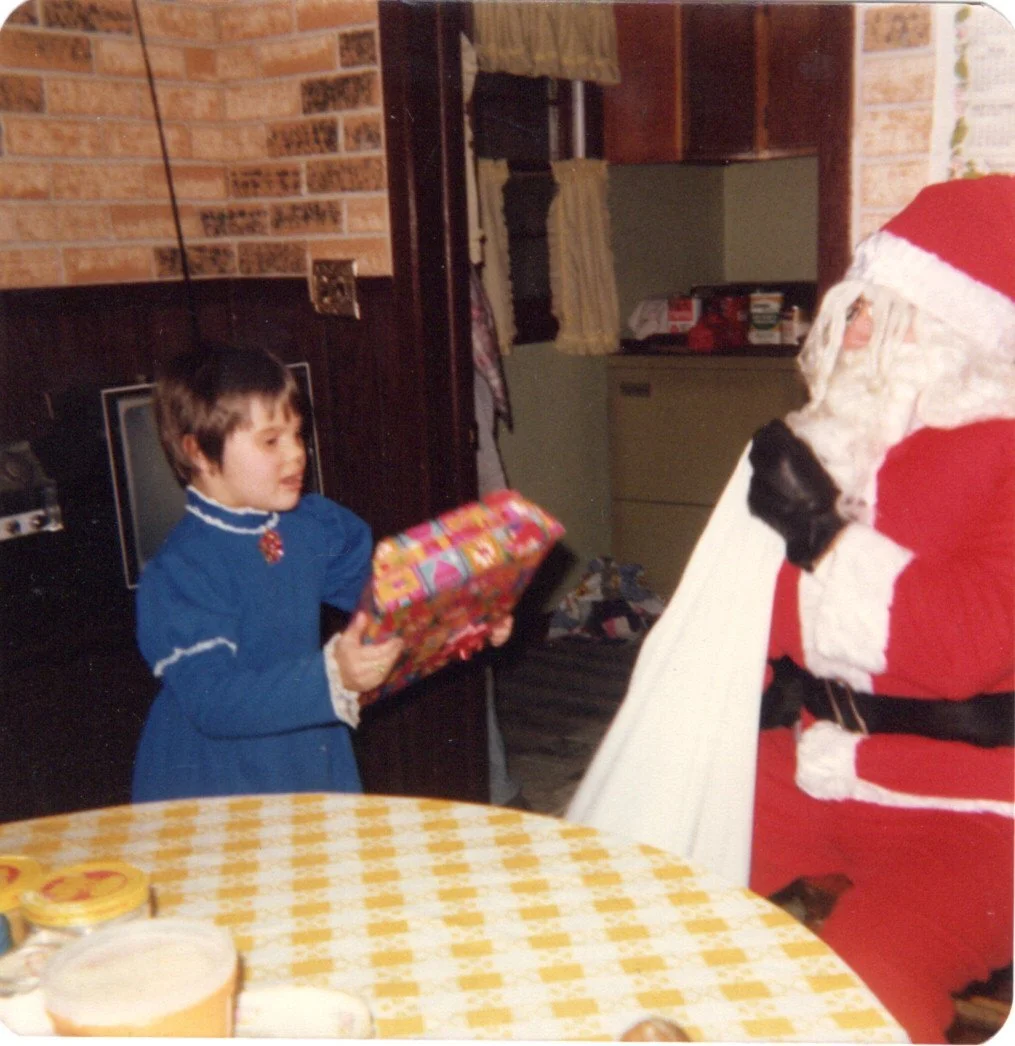
I thought Santa should really know he was using the same wrapping paper as that of mere mortals. I considered it a public service bringing the issue to his attention.
That moment, I remember, instantly created an awkward pause, along with my mother’s nervous laughter and Santa’s stuttering. I guess I “busted” them. For a good thirty seconds, both Santa, his one blue eyeball peeking from underneath his hat and strategically placed white wig, and my mother, fumbled for explanations…
“Ah-well- Honey… people use the same wrapping paper… all of the time. It’s not that unusual for Santa to wrap his presents with the same paper Mommy uses- uh- it’s very common…”
Santa chimes in…
“Why- uh-yes, I use… wrapping paper that other families use… all the time!”
Uh-huh.
Something in me wasn’t buying it. All I had to do was go to our Christmas tree and pick a present for proof.
However, because I was raised to be “a good girl,” meaning, don’t question the adults, especially not Santa, I let it go. Thank you very much for coming. Please say “hi” to Rudolph.
Keep it moving.
But, however sweet, innocent and endearing this incident was, it was still gaslighting. For my mother wrapped the gift, gave it to this Santa-posing friend ahead of time, all for the purpose of reinforcing the entire Santa narrative.
Make it believable; sell it!
Something many a parent has done over the decades.
But here was the thing. At six, I was already starting to question Santa’s validity. Some things already were not adding up. Even though we had a chimney, why didn’t he ever use it? He always knocked loudly on our front door.
And even though I heard sleigh bells, why did I never SEE Rudolph? Wouldn’t he want me to feed him some carrots? I could pet him, along with the other reindeer.
No, everything seemed very controlled.
Don’t rush to look out the window or go outside to check the roof. It’s “too cold” and “too snowy.”
Yeah, I know. It’s Minnesota in winter. Christmas, remember?
No, no, stuff was not adding up. I was taking mental notes since I was four.
So, the angel wrapping paper was the tipping point. I KNEW what I saw!
Yet I was dissuaded from believing my experience. They tried to talk me out of it.
I know, I know, I know, it’s all in the name of childhood wonder and memories. And, overall, with this gaslighting incident, I got off light. After all, there was no abuse, no molestation. It could have been a lot more traumatic.
But still, the lesson that incident taught me was… to doubt myself.
And that’s what I’m getting at.
Gaslighting children to disbelieve what they see, hear, think and feel is harmful.
Years later, I’m not bitter about this memory. I know there was childhood innocence permeating it.
But there was a cost. However unintentional, it still laid the foundation for me to distrust what I knew, to forfeit my experience for someone else’s, someone “who knew better.”
Each of us can have that first moment of gaslighting. And, for many of us, that moment can exist within the vulnerable time of childhood.
Gaslighting does, after all, start somewhere.
Rolodex your own holiday and/or childhood memories. See anything? Remember anything?
How about, right now, giving yourself the gift to own and to acknowledge that yes, you KNEW what was going on! You were RIGHT!
You weren’t silly; you weren’t crazy!
You were a gaslit child.
And now, you’re so much more!
It’s now time to heal.
Happy holidays!
Copyright © 2025 by Sheryle Cruse
Abba Father Prayer (IF You Know? Book Excerpt)
ABBA FATHER-
In YOUR NAME AS FATHER, in the Name of Yahshua, Your Son, Our Savior, we come to you.
We are trying to learn this Name of Yours.
For so many of us, it may be the most painful and difficult Name to ever learn.
Help us.
Forgive us.
Lead us into being Fathered YOUR Way.
What does that LOOK like, for each of us?
Please adopt us.
We NEED Your Spirit of Adoption.
You know we struggle.
We have not just been hurt by our earthly fathers, but also by the traumas and the lies they carried and passed onto us.
We have been hurt by the wrong identity we believed in and inhabited, because our fathers did not know or did not accept the truth about who they were.
Many of them did not accept You.
And that damaged EACH of us.
Heal that damage, now, As Father.
And even more so, as “Abba.”
“Daddy.”
We need our Daddy.
Be that for each of us now, not just IN NAME, but in a Loving Reality that we can experience from You.
Thank You for loving and healing us.
We receive it all, by faith, in Your Fatherly Name, expressed through the Fatherly Love of Your Son.
Amen.
“Teach me thy way… I will walk in Thy Truth: unite my heart to fear Thy Name.”
Psalm 86:11
Copyright © 2025 by Sheryle Cruse
The Sleepiest Soldier