Grandma’s Hair? (IF You Know? Book Excerpt)


Grandma’s Hair? (IF You Know? Book Excerpt)


…Grandma’s Hair?

Physically, Grandma possessed darker features. She had dark brown, curly hair, deep brown eyes, and copper- colored skin.

I looked at different photographs of her, including a toddler portrait, her adolescent “flapper” appearance in the 1920s, her bridal image, a few photos of her as a young mother and, of course, in her later years, when she reached “Grandma” status.

Through each photograph and era, I wondered if “there was something there.”

As I emailed these images to Raqel, especially a Polaroid taken months before her death, she insisted, “That looks like a little old black woman to me!”

What, exactly, was it about her appearance that triggered that response?

Yes, she had dark eyes and dark hair, hair faded grey by aging.

Raqel insisted my grandmother’s hair texture, not just hair color, was a large clue.

What had been described to me, since childhood, as “wire-y and coarse,” according to Raqel, was “kinky” instead.

When I was nine, Grandma spoke to me about one of her hair adventures.

During the long car ride of a family vacation, I was the restless kid, incessantly asking, “Are we there yet?”

Therefore, Grandma tried to keep me occupied with stories of when she was young.

She would have been an adolescent around the time of the late roaring twenties. The few photos I have of Grandma at this age confirm this.

She bobbed her hair in the fashion befitting the times. In these faded, sepia-toned images, she did resemble that stylish flapper. Chin length, dark hair was coiffed in gentle waves.

To achieve this look meant manipulation.

And my grandmother insisted her thick, coarse “wire-y” hair needed to be tamed by some extraordinary measures beyond simple curlers. Grandma bemoaned some hot curling instruments that she, her sister, and her friends used at that time to achieve the flapper hairstyle.

Again, we’re talking about the late 1920’s era. This would have been the time of all kinds of torture regimens, like permanents. I’ve seen horrifying old photos of women connected to contraptions which, to me, looked like they were rigged to an electric chair.

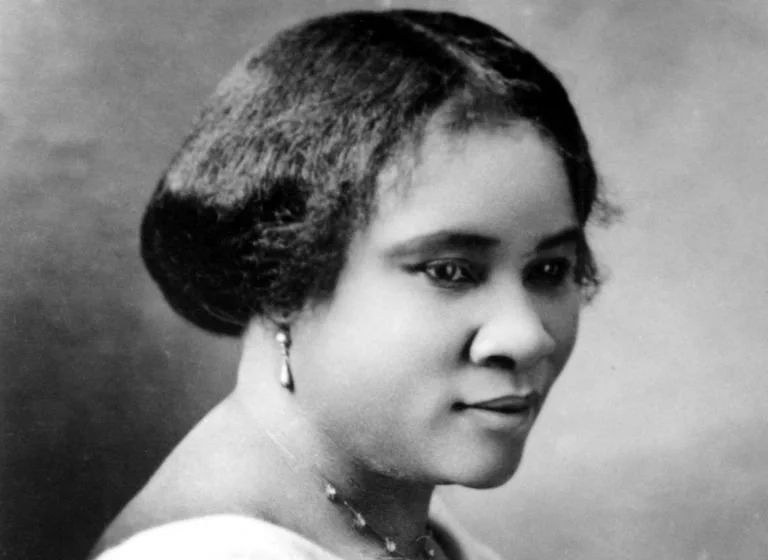
But, according to beauty history, this was also a boom time for hair care products and devices like hot combs. Hot combs were a particular staple for black women in dealing with their own hair. The revolutionary black entrepreneur, Madame C.J. Walker made a fortune on her products, including treatments and styling tools, like hot combs.

Was this what my grandmother used?

If the answer is “yes” to that question, then, again, my curious mind leaps to another thought: did Grandma use this possible hot comb device on her unruly hair because it was “black hair?”

She complained about how the beauty tool had to be heated before it was used. And she further complained about burning her scalp using it.

My memory of her storytelling emphasized the heat and the burned scalps, but not the device itself.

But it wasn’t curlers.

It was some kind of curling iron or today’s more modern “flat iron.”

What DID she use to tame her hair?

This faint memory may be quite a stretch in me making any connection to the black ancestry question.

Yet, again, specific products and treatments, like hot combs, were used by black women.

Was my grandmother aware of this?

Was this part of her arsenal to keep her secret and “be white?”

Was her hair, indeed, my maternal grandmother’s physical “tell?”

Was genetics peeking through, telling the truth about who she was?

Yes, a big question mark seemed to hinge on my grandmother.

And, again, it was accentuated by her behavior.

“…In the mouth of two or three witnesses shall every word be established.”

2 Corinthians 13:1…
Previous
Previous

Amputated/Also Known As “Pruned”

Next
Next

Baby New Year