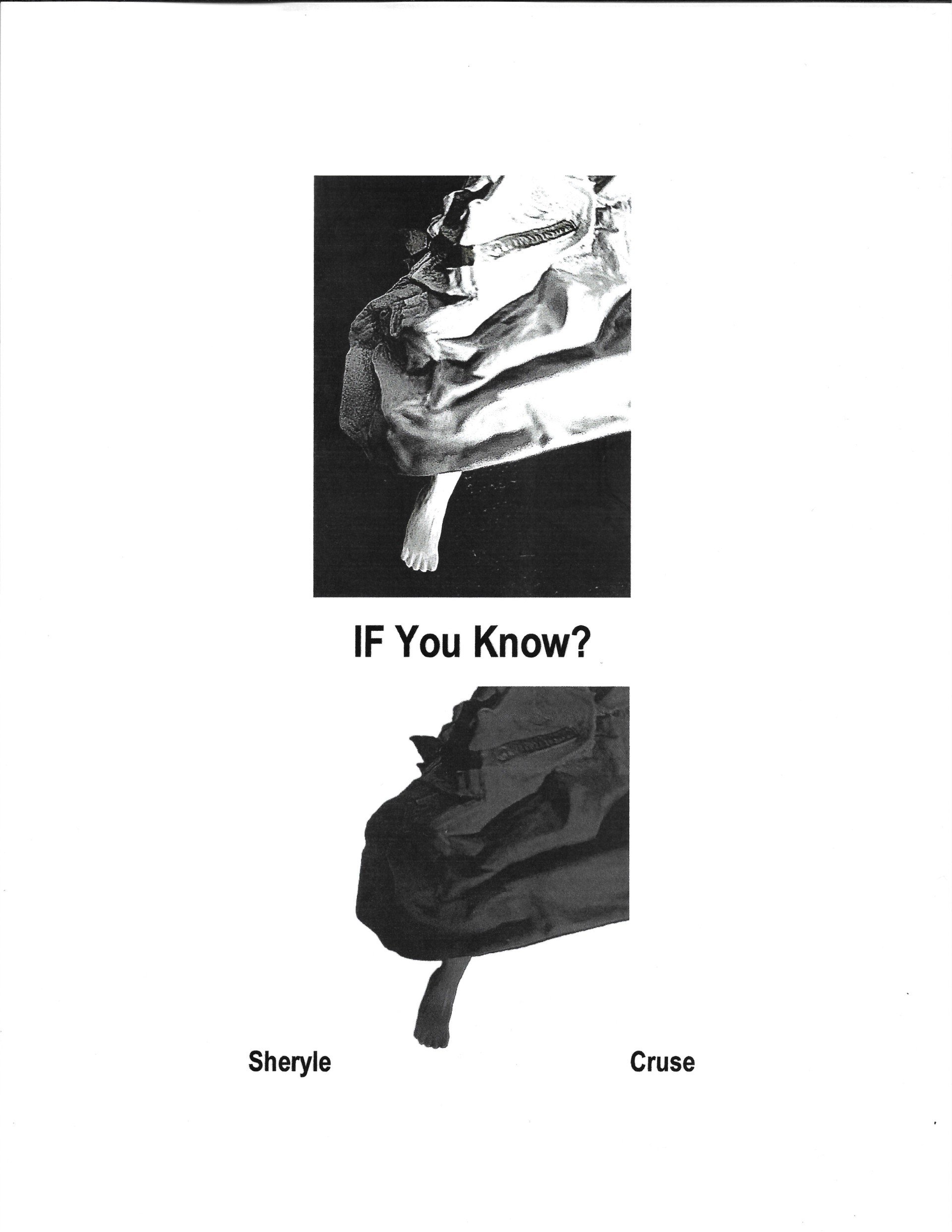
In Your Small Town? (“IF You know?”)
Are you from a small town?
Do you think you know where you come from?
Or is there more to the story?
What ELSE is going on?
(“IF You Know?” Book Excerpt)
“In the Beginning…”
Genesis 1:1
The small, rural community I come from is from another era.
And even circa now, with the more modern updates of cable television, the internet, and cell phones, it still possesses its “frozen in time” character.
Growing up, spending my first eighteen years in that place, there were its bankable qualities. The town had a post office, a public school, one restaurant, a barbershop, a small grocery store, and some churches (they were all Protestant; if you wanted a Catholic Church, you had to go to the next town, about five miles over).
And its population was “white.”
The Norwegian and Swedish nationalities were present in most everyone’s heritage, including yours truly (Norwegian). The Irish and German nationalities were expressed in the town’s cultural backgrounds as well.
But was that all there was?
“Thou shalt not bear false witness against thy neighbor.”
Exodus 20:16
My hometown, established in the 1870s, boasted about its history on its Wikipedia page.
Its population was over 700 in its last census.
The racial makeup included 97% White, 0.3% Native American, and 2.5% from “other races.”
And that sounds accurate.
Everything skewed “white.” The Protestant churches, the school, the restaurant, the grocery store, the barbershop, and the post office all were frequented by “white” people.
I attended the school with white kids and a few adopted Asian students. At the time, there was no Hispanic presence; that has changed within the past twenty-five years (now, over 10 percent of the population).
And, except for two black children, adopted decades ago by a white couple, there were no black people in the town.
I have often wondered about those kids. I wonder about their experiences living there.
What was school like for them?
What was church like?
Were they bullied by the white kids?
Was “The N- word” ever used against them?
And what happened with all the white adults of the town? Having no black adult role models around had to have been intimidating, right?
How did these kids even view their own “white parents?” What were the racial discussions between the children and their parents- or their teachers?
Was there anything?
Were these children encouraged to learn about who they were and where they came from?
I suspect the answer to that question is “no.”
And this brings me to a troubling issue, largely connected to the mindset of the town: the whitewashed education experience.
“My people are destroyed for lack of knowledge: because thou hast rejected knowledge, I will also reject thee, that thou shalt be no priest to me: seeing thou hast forgotten the law of thy (YAH) God, I will also forget thy children.”
Hosea 4:6
I had that white education in the town’s small school system.
My history class recollections include outdated textbooks from at least ten or twenty years earlier.
And, concerning the American history textbook, there was page after page, mention after mention, of white Founding Fathers and Presidents. There was not much discussion about the 1960s civil rights movement. Yes, we knew about Dr. Martin Luther King, Jr.
But anyone else? If you brought up Malcom X or Medgar Evers, there would be blank expressions on our faces.
Freedom Riders? Same thing.
And even concerning the Civil War, the education was woefully sparse.
First, there was a vague explanation of slavery. No one was looking deeper at its origins and its influence. We learned the North fought and won against the South, over the slavery issue and Abraham Lincoln was a Messiah President who made this enlightenment happen.
However, no images of black leaders could be found or discussed. Of course, there was nothing about Nat Turner; that was a little too disturbing, I guess, for any teacher to explain to a student. Booker T. Washington and W.E.B Du Bois, likewise, may have been viewed as too complex and impractical for white students.
And what about the very “white” abolitionist, John Brown? Are you kidding?
Nope, the only black leader, Frederick Douglas, was taught in my history class because of the one obligatory photograph of him in my outdated American history textbook. His image took up three-fourths of the page. Perhaps, this large-sized picture “made up” for the absence of other information.
So, what was the reason for this absence of information anyway?
“Wisdom is the principal thing; therefore, get wisdom: and with all thy getting get understanding.”
Proverbs 4:7
Was it because the teachers weren’t educated properly themselves? Was it the ignorant teaching the ignorant?
Or was it simply understood that all these white students, children of white farmers and homemakers, didn’t need to know anything beyond a white experience? After all,most of them will stay in the area and make similar choices to those of their parents…
If You Know?: Cruse, Sheryle: 9798272042019: Amazon.com: Books